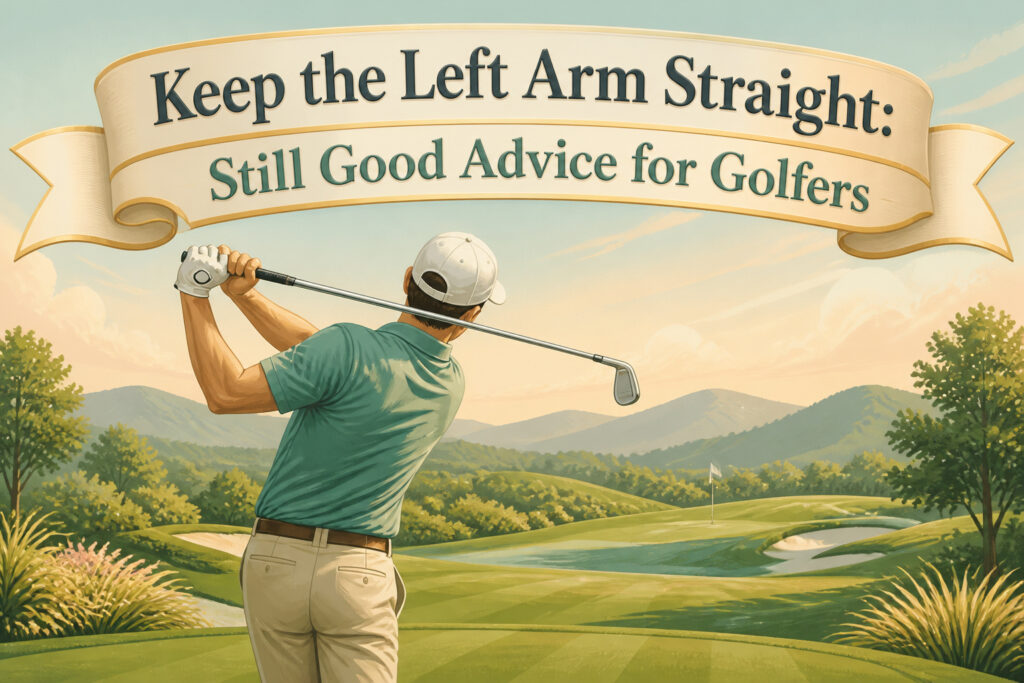
Keeping the left arm straight is still good advice for golfers, but only when it means relaxed extension rather than locked tension. The moment you treat it as a command to rigidify, your shoulder turn seizes and your arc collapses to half its width. At P2, with the shaft parallel to the ground, the left arm’s position already reveals whether your swing arc will hold or buckle by the top.
Start With Address Position
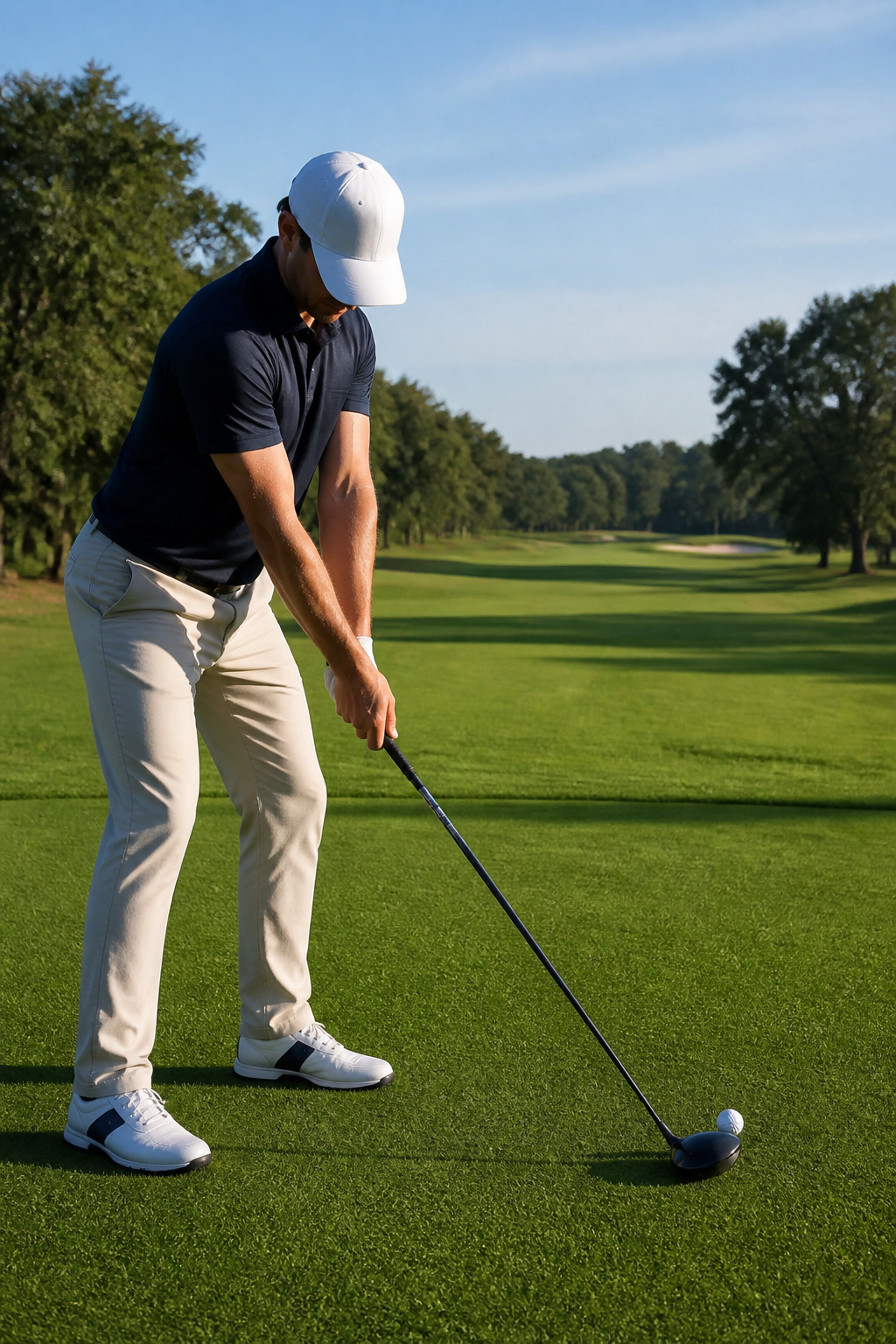
Both arms should be fully extended but relaxed at address. This sets the foundation for keeping the left arm straight throughout the swing. Too many golfers don’t start with a straight left arm to begin with, which means they’d need to extend it during the backswing.
Tension at setup defeats the purpose before the swing even begins. A small amount of bend is okay, and you don’t want to lock your arms and elbows, but the goal is to keep it as minimal as possible. Your arms should be rotated more underneath your body so your forearms point toward the sky. If the top of your arms are showing more at address, you will round your shoulders.
The goal is to keep your arms in this connected position throughout the swing. Always check your arms at address before trying to fix anything in the golf swing.

Professional Golf Swing Training Aid for Consistent Strikes: Eliminates the common "chicken wing" flaw by locking arms in sync promoting proper swing mechanics through our golf swing trainer—deliver cleaner contact every time

Golf Training Aid: Our golf swing aid reinforces one of the key fundamentals of a good golf swing

[Breathable Nylon Cloth]: swing elbow aid is made of premium nylon breathable cloth; and lightweight, won't give much pressure to your elbow
Check Position Two
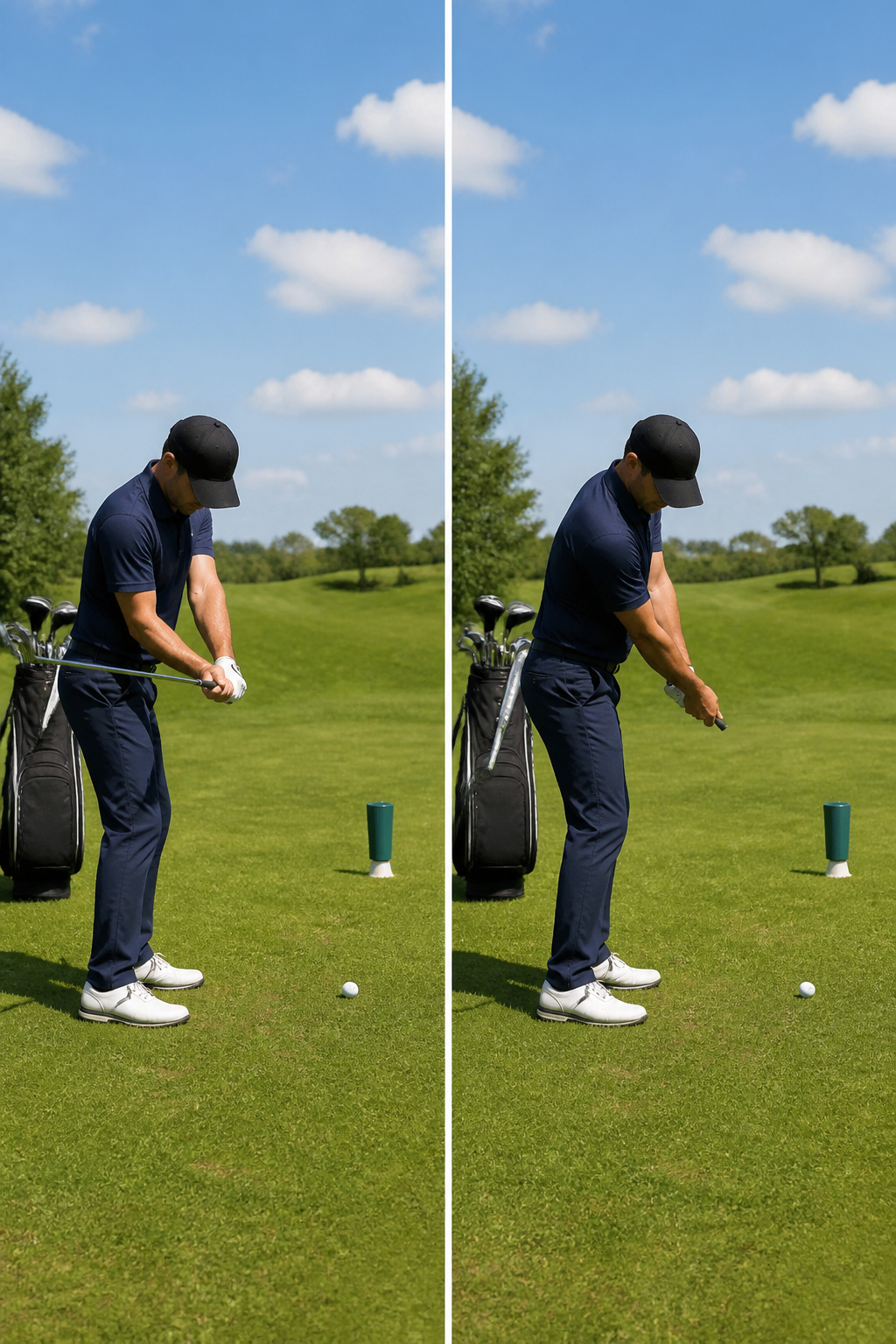
At P2, the club shaft runs parallel to the ground, and this is where the left arm’s position reveals what kind of swing arc you’ve set up. The arm should stay stable and close to the body, not drifting outward or collapsing inward. I check this in my own swing by pausing at that checkpoint, shaft horizontal, and noticing whether my left arm has maintained its extension from address or started to buckle.
If the arm breaks down here, the radius between shoulder and clubhead shrinks, and the problems compound by the top of the backswing. The spacing you create at P2 determines how wide your arc can stay through the rest of the motion. A bent left arm might feel like it adds speed, but it costs consistency. The arm doesn’t need to be locked rigid; tension kills fluidity. What matters is structure without stiffness, the elbow staying unhinged until well after impact. Feeling the left arm connected to the chest at this early stage trains the body to keep that relationship intact when the club travels higher.

[Application]: Through Tik-tok sound to warn their incorrect posture to golfers, and then correct by self to make arm in straigh, therefore it can gradually form effective and desired hitting; Fit all golfers or instruction, especially works great for beginners

[Golf Swing Trainer ] This golf straight arm trainer is designed for golf beginners that can't swing in a proper way, if you do it in a worry way, the alarm would make sounds to remind you to keep your elbow straight while your swingi.

Made in South Korea with High-Quality Materials and Expert Craftsmanship
Avoid Tension
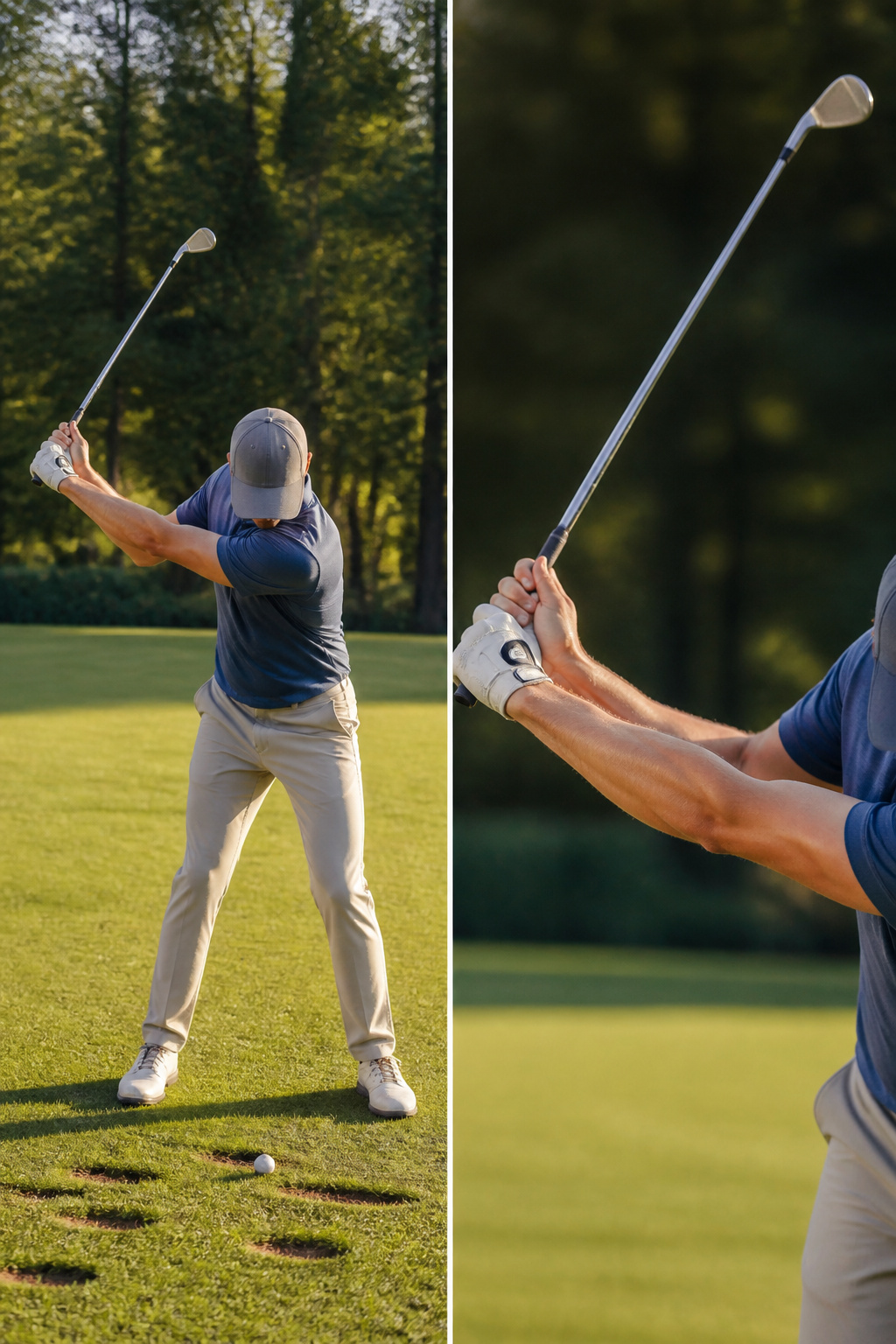
A wide swing beats a forced straight left arm every time. The moment I started treating "keep it straight" as a command to lock up, my shoulder turn seized and my arc shrank to half its size. Tension from trying too hard does that; it travels straight from the elbow into the ribcage and kills the very width the advice was meant to create.
While the arm is straight, it isn’t utterly rigid. Rigidity restricts the flow that you need in your swing, hampering your rhythm.
The mental backfire is just as real. Over-focusing on rigidity turns the swing into a checklist of positions instead of a motion, and a motion is what sends the ball. Width, not rigidity: push the handle away from your body and let the left arm straighten on its own terms. The goal is reaching wide, not holding stiff.

Helps prevent the "Chicken Wing" Swing by keeping your arms together and in sync during your swing

CORRECTS HAND POSITIONING ON EVERY SWING: Molded guide attaches to your club and places your fingers, thumbs, and palms in the correct neutral grip position; helps eliminate common faults like a strong grip, weak grip, or open right hand that lead to slicing and hooking
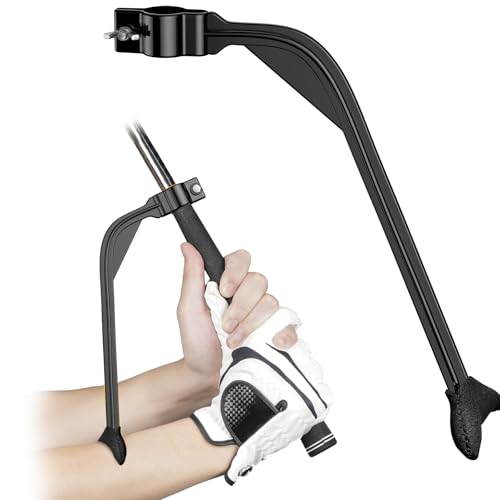
Ideal Swing Training Aid: By adjusting the angle between the shaft and your forearms, this wrist hinge helps strengthen your muscle memory for back swing. Restrain “chicken wings” and reduce problems of “Slice and Hook”.
Monitor Impact Position

The left arm should be straight at impact to transfer power and square the clubface. This is where the width built in the backswing pays off, keeping the swing arc wide so the club releases through the ball rather than after it. A bent left arm delays that release and costs both distance and accuracy.
For context, the average amateur drives the ball 214 yards at 93.4 mph swing speed. Better players create more efficient energy transfer through the hitting zone, and proper arm position is part of that gap. When the left arm stays extended through impact, the clubface returns to the ball on a more consistent path and from a more powerful position. The elbow should not hinge until the follow-through. A slight bend is acceptable, but tension is not; the arm stays relaxed and mostly straight.

【Instant Swing Feedback for Precision Training】A practical golf gift that can be used right away. This golf swing trainer delivers instant feedback during practice, helping you build core strength and upper body stability. The retractable shaft clicks when your swing mechanics are correct, helping refine rhythm, balance, and swing consistency. Ideal for indoor and outdoor practice, this training aid helps golfers of all levels improve accuracy, swing power, and control with every swing.

⛳ Improve Swing Tempo & Accuracy Fast——The Balight Golf Swing Trainer Aid builds consistent swings fast with its 2.5lb weighted head that develops muscle memory, improves weight transfer, and corrects swing plane alignment. The flexible shaft mimics real clubs, instantly fixing swing path errors while developing perfect rhythm/tempo. Just 10-15 minutes daily at home, your yard, or driving range delivers noticeable improvement in clubhead speed and shot consistency.

Get Rid of the Chicken Wing by keeping your arms together and in sync during your swing,Keep your arms Straight and body in sync during the entire swinging motion and creates muscle memory for a better swing
Follow Through Fully
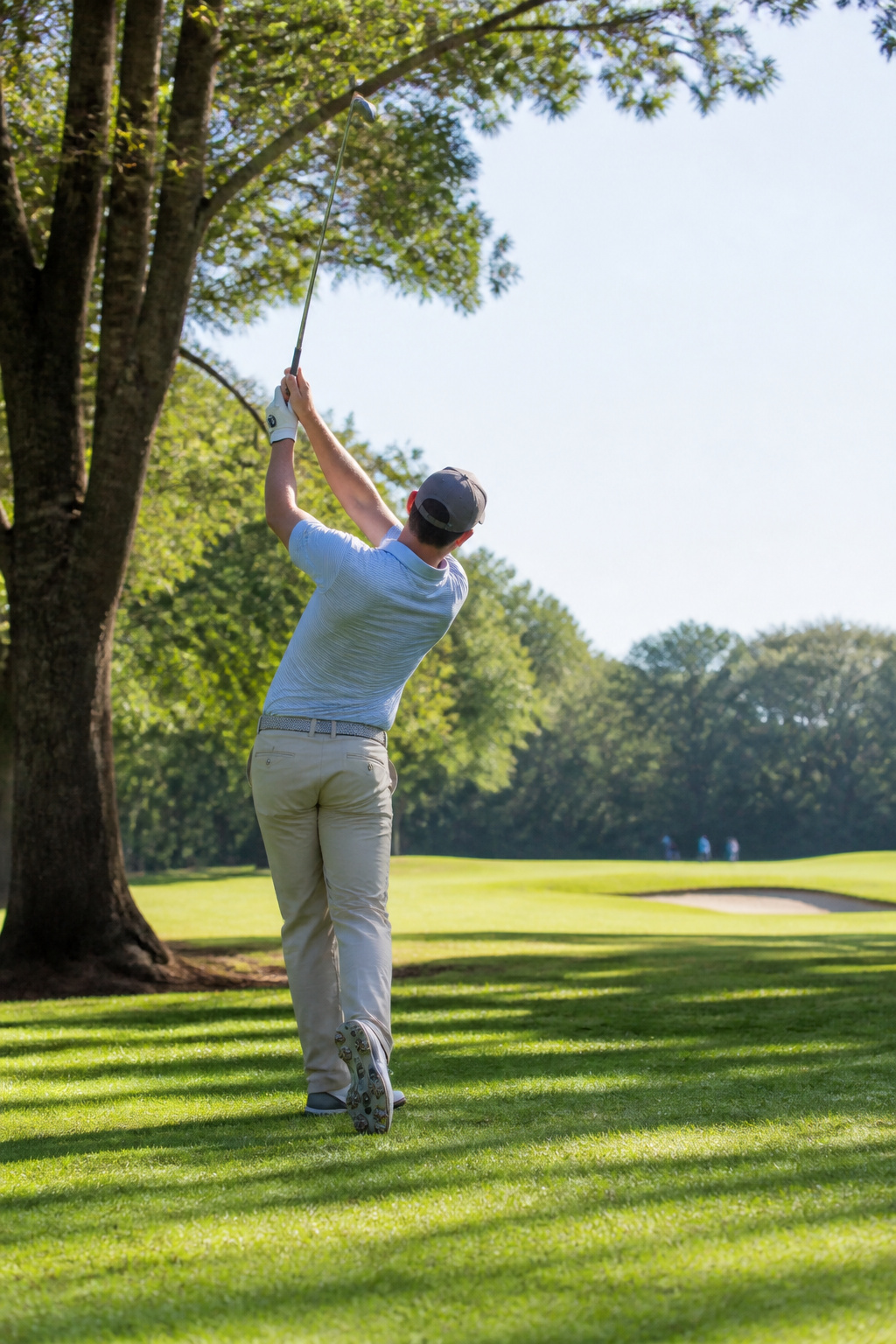
The follow-through is where the habit of a straight left arm either locks in or falls apart. Most golfers I watch at the range focus so hard on impact that they let the left elbow collapse the moment the ball is gone, which trains the same breakdown under pressure. Keeping that arm extended as far after impact as possible is what actually builds the pattern.
A full finish means both arms reach out toward the target, not folding into the chest. The left arm stays straight through the strike and only begins to bend near the very end of the swing, when the right arm has taken over and is mostly straight itself. If you slow down after impact to "guide" the shot, you are working against yourself; acceleration through the ball is what lets the extension happen naturally.
Two ways to self-check without a mirror: hold your finish and look down. If your left forearm is pressed against your chest, you pulled the arms in. Or set your phone behind you and watch whether the clubhead keeps traveling on an arc well past the ball before the wrists release. The left arm should look long and unhurried, not like it is trying to fold back to your ribs.
A little bend at the finish is acceptable, even for the 95% of PGA Tour players who keep the lead arm straight through the shot. The bend just needs to arrive late, not at impact.

Package Contents: You will receive one golf swing arm band, approximately 33 inches in circumference and 3.15 inches in width. The purpose of this swing sync golf trainer is to correct a golfer's swing posture, allowing you to hit a smooth and accurate shot every time.

TRAIN A CONSISTENT WRIST HINGE: The rigid back-of-hand support gives a clear physical cue when the lead wrist begins to cup or break down. Rehearse a steadier wrist angle from takeaway through impact, build swing awareness and muscle memory, and practice a more repeatable release for more consistent contact.
Drills for Practice
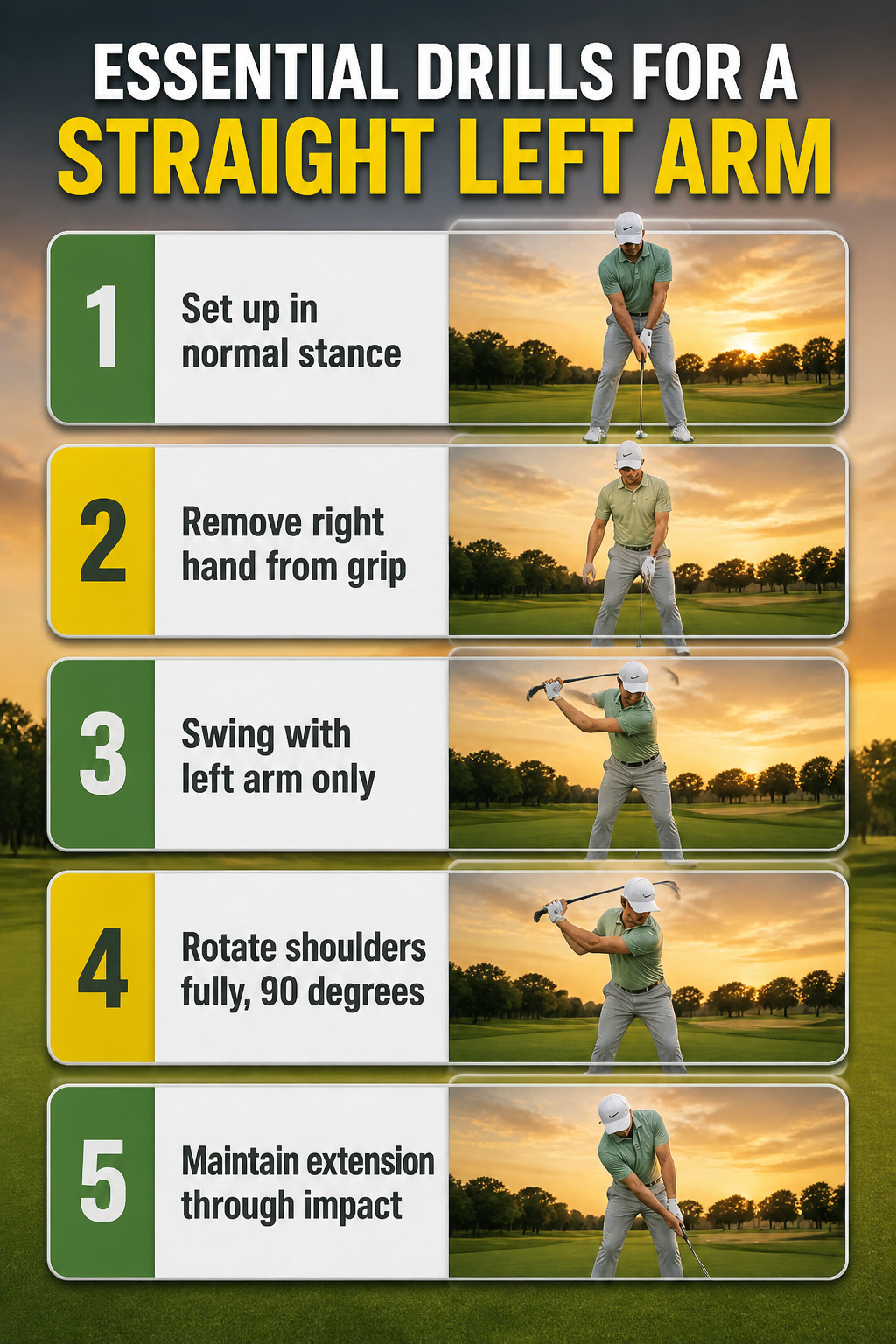
The left-arm-only swing drill strips everything down to the bone. Take your normal setup, drop your right hand off the grip, and swing with just the left arm guiding the club. Without the right arm to rescue a lazy turn, your body has to rotate fully through the shot. The first few swings feel awkward and weak. Stick with it. The drill forces shoulder rotation to at least 90 degrees and teaches the arm to stay extended because collapsing it mid-swing simply stops the club.
For feedback between range sessions, two training aids help. A weighted elbow brace at two pounds straps just past the left elbow with weight distributed toward the end of the swing motion. The heft creates an isometric contraction in the left arm muscle group, which over repeated practice builds both the flexibility and the strength to keep the arm straight through impact. A smart ball, held between the forearms or against the chest, gives a simpler cue: if it drops, the arm structure broke down.
Neither aid replaces the drill itself. The brace and ball tell you what happened; the left-arm-only swing makes the right position feel automatic.

Purchased for a beginning golfer with the common left arm problem, a good golf training aid improve your swing, Strengthen the power of your swing.
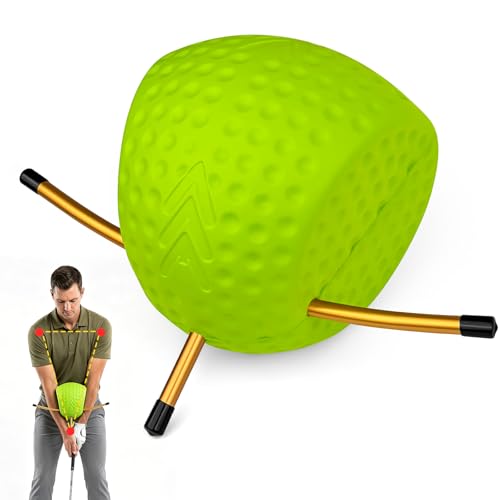
ELIMINATES SWING ERRORS: Using this golf swing trainer helps correct common swing flaws like “chicken wing,” elbow flare, scooping, and disconnected swings. It promotes smoother rotation and better swing mechanics, helping your arms and body move as one while building muscle memory for a smooth, controlled swing.

golf plane trainerMASTER THE PERFECT "TRIANGLE" FORM: Tired of the "Chicken Wing" swing? Our upgraded connector locks your arms in the ideal triangular structure from address to impact. It prevents arm separation, ensuring a synchronized, powerful swing every time.
Proper Grip

A grip too buried in the palms locks the wrists, which sends the left arm folding to force the backswing to completion. That collapse at the top costs you the angle you need coming down, and the downswing becomes a cast rather than a release. Pressure from the trail hand into the lead hand, pushing the lead hand away from the body, keeps that lead arm extended without thinking about the arm itself. The right grip lets the left arm stay long because the hands are already set for the turn to do the work. If mobility limits your backswing, a compact swing with the wrist hinge intact beats reaching the top by bending the elbow. Straight lead arm, shorter arc now; lengthen it later once the structure holds.
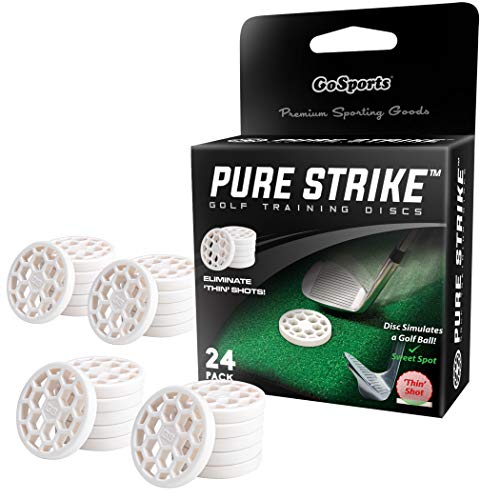
IMPROVE BALL CONTACT: Pure Strike Golf Training Discs help golfers practice cleaner ball-first contact and more consistent strikes while improving swing path, low point control and compression

【Eradicate "Chicken Wing" Swing Instantly】 Corrects arm misalignment with ergonomic design, keeping elbows locked and arms in perfect sync for a natural, power-driven swing. Ideal for eliminating common swing flaws and building muscle memory.
Wrist Hinge
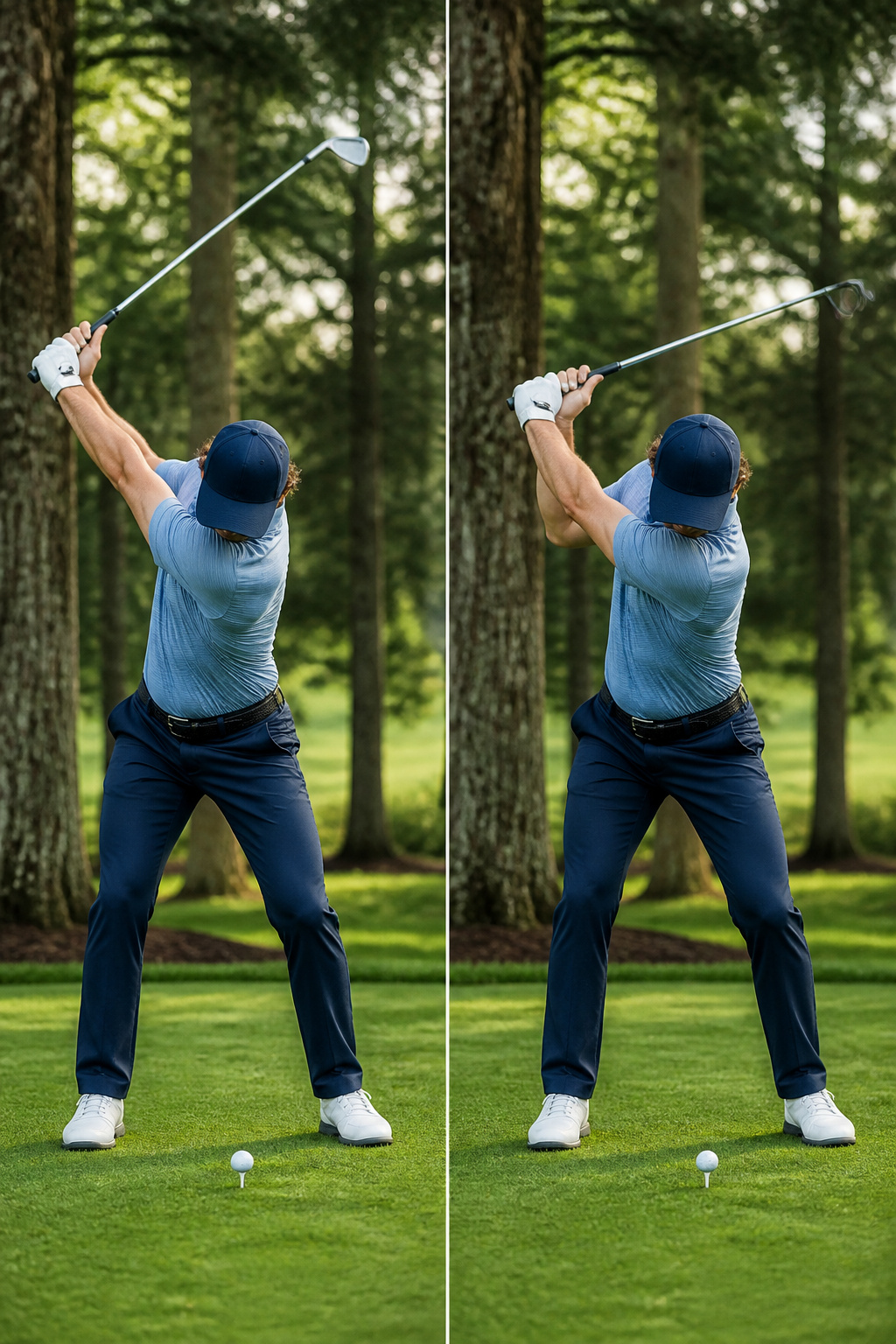
The wrist hinge is what lets the club climb to the top without the left arm folding. When the wrists set properly around hip height, the shaft angle creates leverage; the left arm stays extended because the club is rising on that hinge, not on elbow bend. Without that hinge, the arm collapses at the elbow to finish the backswing, and the radius of the swing arc shrinks.
Most amateurs break down right here. A grip too deep in the palms blocks the wrists from hinging, so the body completes the motion by bending the lead elbow instead. That folded elbow throws away the power already stored, and from the top the downswing starts with casting: the angle in the lead wrist releases early, the club cuts across the ball, and contact suffers. Poor mobility does the same damage. A tighter shoulder turn makes the elbow fold to reach a full backswing, when a shorter, compact swing would have kept the wrist hinge and the structure intact.

MASTER HIP & SHOULDER ROTATION - Train proper body turn to eliminate early extension, improve swing mechanics, and generate effortless clubhead speed.

Improves Swing Mechanics: Trains proper arm positioning and full shoulder turn for better ball striking.

Golf Training Aid: Our golf swing aid helps groove a proper swing path for wedges and short irons
Body Rotation

A straight left arm lives or dies in the torso, not the elbow. The shoulders have to carry it around, and the turn needs to be big enough that the arm never feels tempted to fold for extra reach.
Dustin Johnson turns his shoulders 100 to 110 degrees, which sits at the outer edge of what a human backswing can hold. Most weekend players stop well short of that number, and the mistake is usually sequencing, not flexibility. They lift the arms first and let the shoulders play catch-up, so the left arm collapses to buy the radius the body failed to create.
The trail arm is the other half of the equation. It generates power by folding, but let it bend past 80 degrees and the lead arm has no chance. Keeping it closer to 90 degrees leaves enough structure that the left arm can stay extended without fighting for space. Width at the top comes from the turn, not from reaching, and the radius you build there is what carries speed back down to the ball.

Wrist Brace with Arm Correction Band: Includes a golf wrist brace and swing correction arm band to help guide wrist position, reduce chicken wing, and build more repeatable swing habits during practice.

Packing List: You will receive 1 golf swing arm band with a circumference of approximately 83cm/32.68in and a width of 7.5cm/2.95in. It is specifically designed to help golfers correct their swing posture and achieve a smooth, accurate swing every time.
Training Aids

Weighted braces and smart balls give tactile feedback when the left arm bends, which is the whole point: the mistake has to feel wrong before you can correct it. The two-pound elbow brace sits just past the elbow, and that weight is distributed toward the end of the swing motion. Deviation becomes obvious immediately because two pounds of moving mass makes a bent arm laborious in a way a coach’s verbal cue never will.
The brace also enforces a full shoulder rotation, at least 90 degrees, by keeping the arm connected to the torso through the backswing. Repeated swings against that resistance create an isometric contraction in the left arm muscle group. Over time, that builds the strength and flexibility to maintain width at the top without tension.
Smart balls work on a smaller scale, tucked between the forearms so any separation signals the breakdown. Either tool replaces the vague "keep it straight" with a physical argument your body understands.
Flexibility Exercises
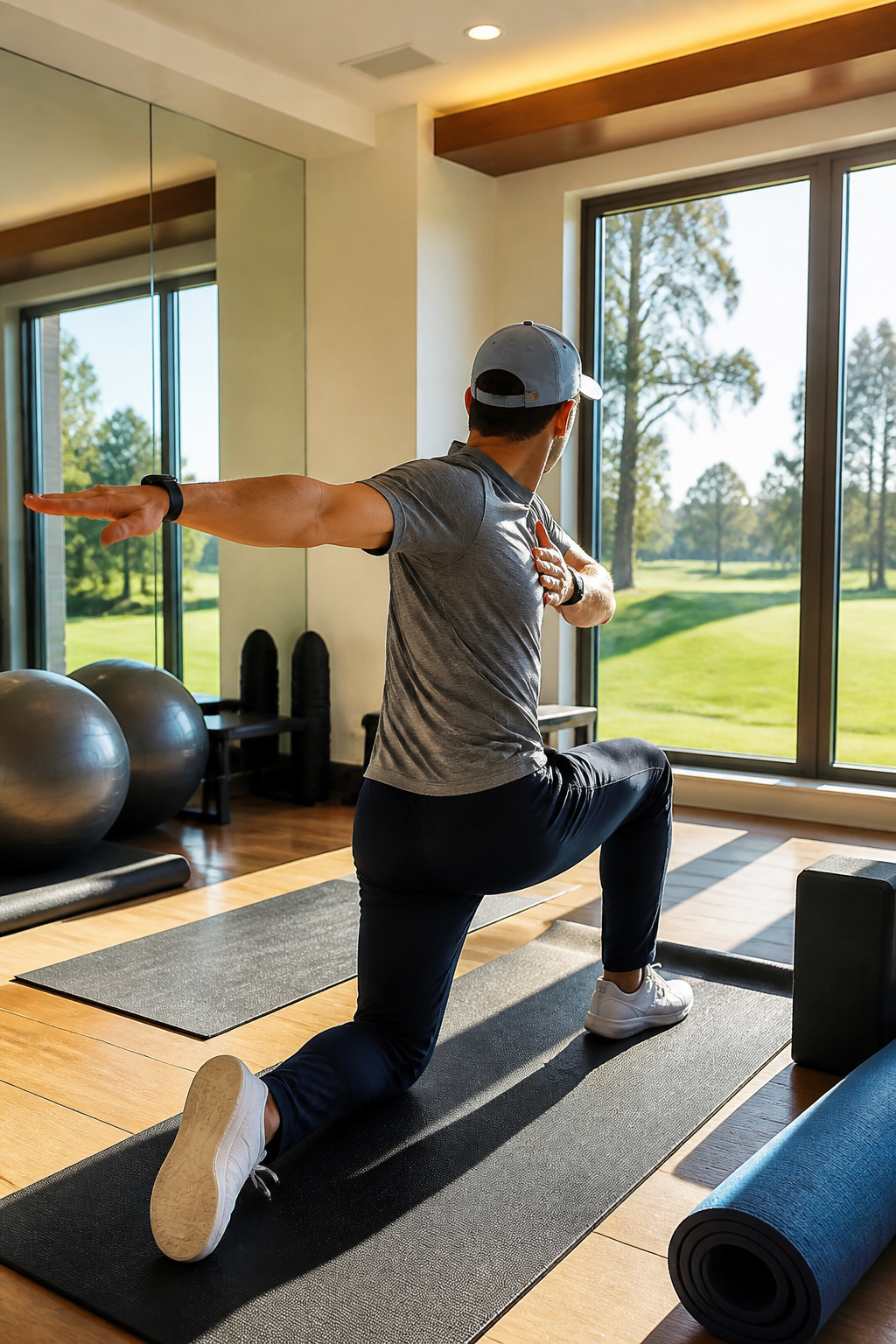
Limited flexibility may require a slight left arm bend, especially for older players or those with physical restrictions. This is a legitimate adjustment, not a failure.
Before accepting that bend, shoulder stretches, thoracic rotation work, and hip mobility deserve an honest try. The left arm stays straightest when the body behind it can turn. Curtis Strange won back-to-back U.S. Opens with a bent left arm, so the rule has never been absolute. What matters is creating width in the swing, and a straight arm is one path to that, not the only one.
Better players tend to show less lead elbow flex, while less experienced golfers often pull their hands toward the body and increase it. Pushing the arms outward through the swing helps keep that lead arm extended and reduces the elbow angle. When the elbow bends on the backswing, the downswing usually compounds it, pulling the club too close to the trail shoulder and producing fat or thin shots.
If the stretches and rotation work do not come, the slight bend is fine. The yardage and coil matter more than the shape of the arm itself.
Benefits of a Straight Left Arm
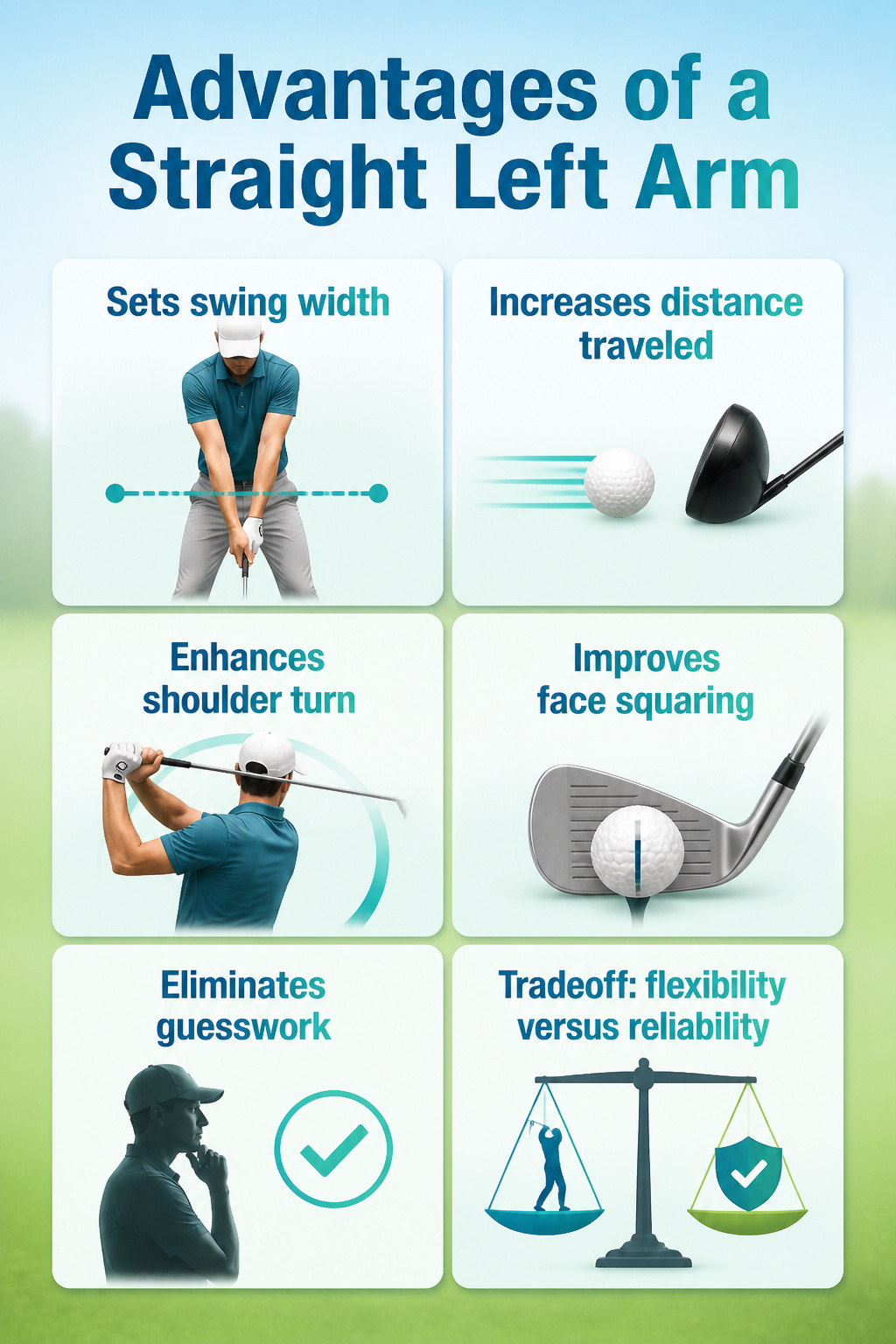
A straight left arm at address sets the width that carries through the entire backswing. That width forces the hands to travel the farthest possible distance from the body, and distance traveled equals arc. The wider the arc, the more speed you can generate at the bottom without swinging harder.
Most of the power and accuracy gains come from what the straight arm enables upstream: the full shoulder turn. When the left arm stays extended, the upper body sequences properly and the club returns to impact from a stronger, more repeatable position. Squaring the face gets simpler because the geometry hasn’t changed mid-swing.
Bending the left arm introduces a variable that’s tough to gauge consistently. You’d have to judge exactly how much bend, then adjust timing to compensate, all while the club is moving. Keeping that angle at zero removes the guesswork. The tradeoff is real: some flexibility in the backswing, a lot more reliability coming down. For golfers who already prioritize visible results over marketing claims, the straight left arm still delivers the measurable outcomes: width, arc, speed, and a square face at impact.
Common Mistakes
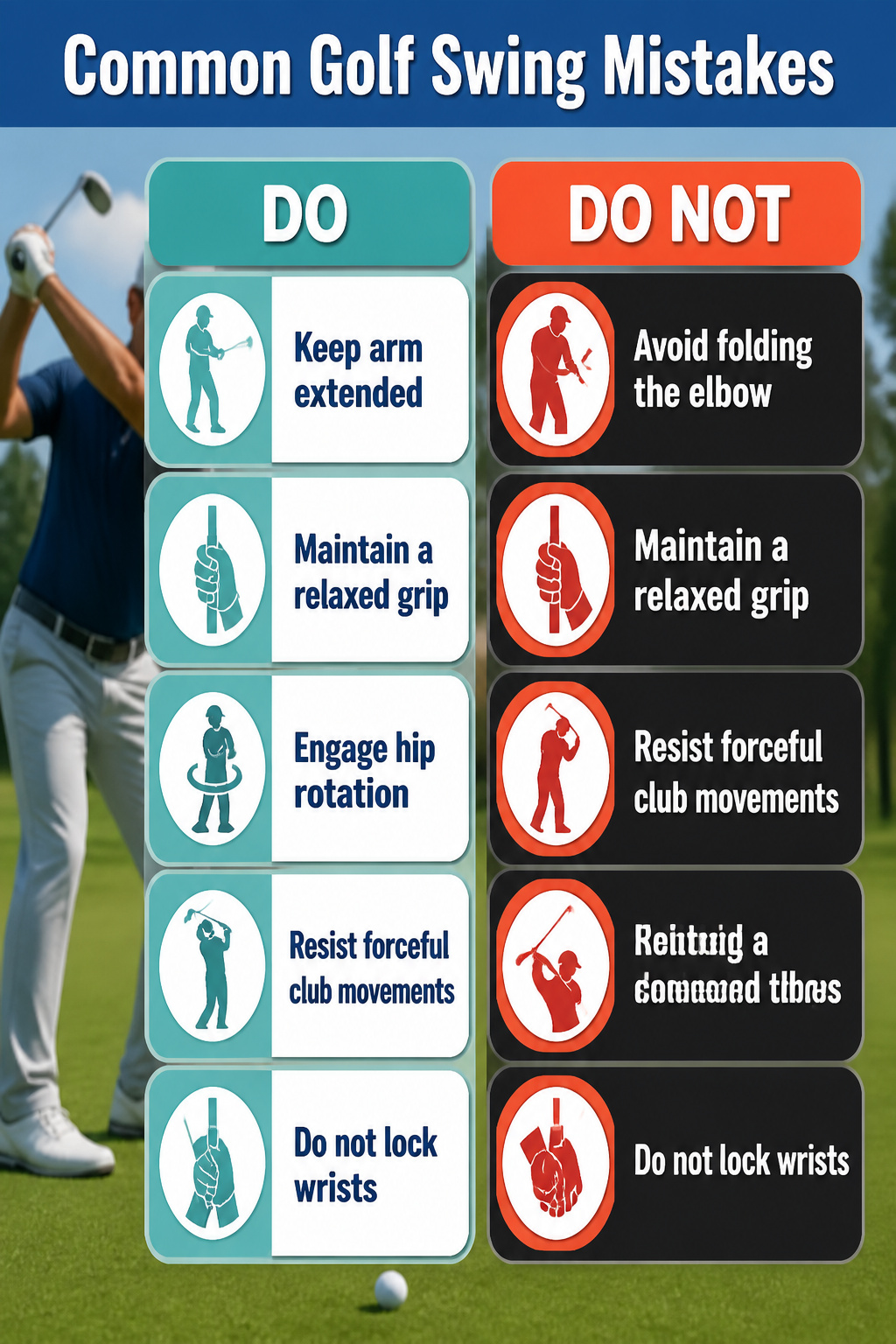
Most swing flaws that break the left arm trace back to a few repeat offenders. Here is how to spot them in your own motion:
- The chicken wing through impact. The lead elbow folds outward after contact, pulling the clubhead off line and killing both distance and face control. This usually means the trail arm is doing too much work while the body stalls.
- Over-folding the trail arm. When the right elbow gets buried behind the ribcage on the backswing, the left arm has no room but to collapse at the top. The swing arc shrinks and timing falls apart on the way down.
- A palm-heavy grip. Holding the club too deep in the palms locks the wrists, so the left elbow bends to finish the backswing. From there, casting the club early is almost guaranteed.
- No wrist hinge. Stiff wrists force the arm to fold as the only way to lift the club. The resulting backswing is cramped, and the downswing loses the lag that stores real power.
- Chasing rotation you do not have. Poor shoulder or thoracic mobility makes the left arm buckle to reach an artificially high position. A shorter, compact swing with the arm extended beats a full one that breaks down.
Straight Arm Versus Bent Arm
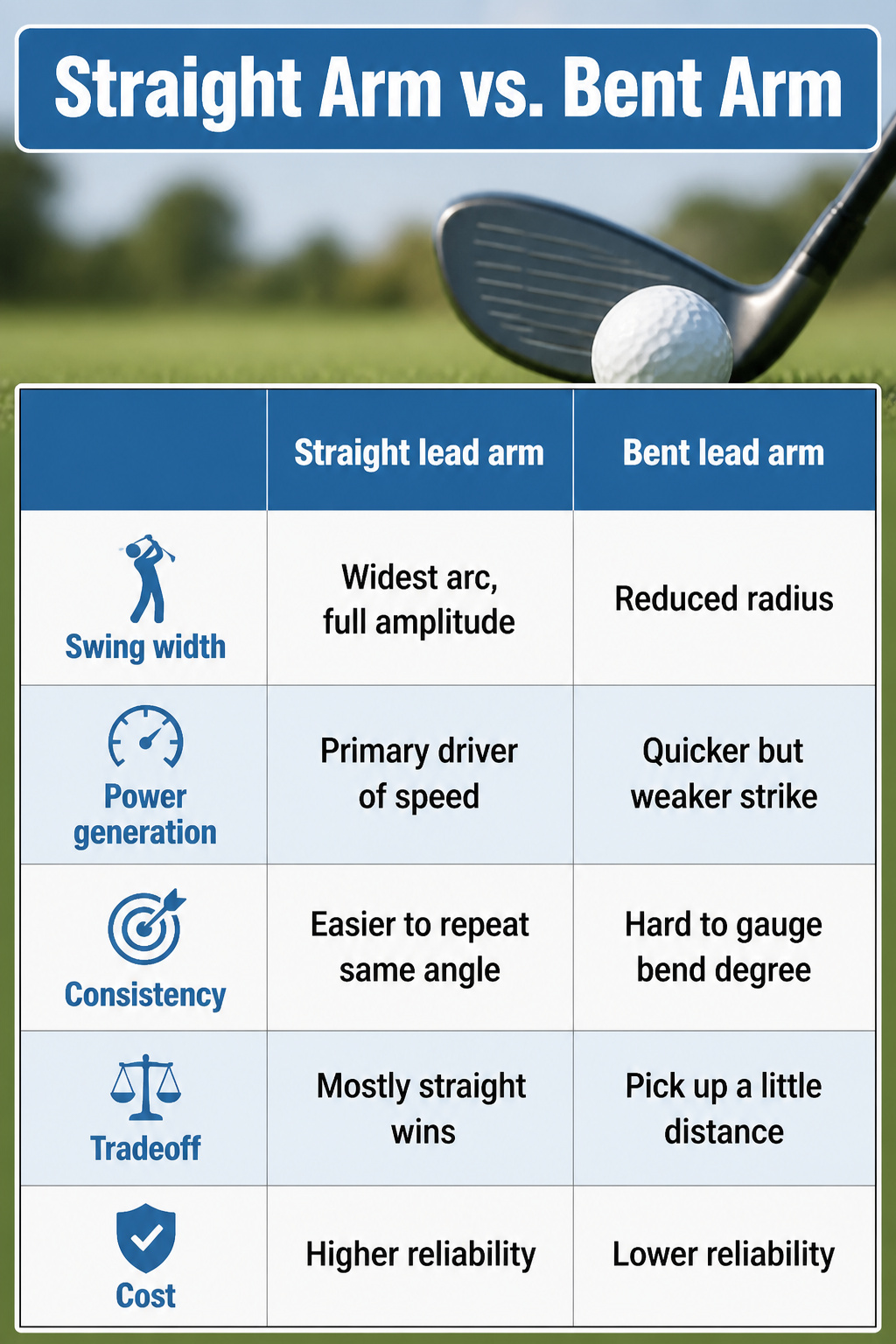
A straight left arm at address sets the widest possible arc, which is where the power comes from. The farther your hands travel from your body, the more room the clubhead has to build speed. Bend that lead elbow and the radius collapses, the arc shrinks, and the strike gets thin or fat depending on how much you folded.
That said, a slight bend is playable; tension is the real enemy. The arm should feel relaxed and straight, not locked like a board. What kills consistency is a full collapse at the top, where the elbow hinges before the follow-through and the clubface goes rogue.
| Straight lead arm | Bent lead arm | |
|---|---|---|
| Swing width | Widest arc, full amplitude | Reduced radius |
| Power generation | Primary driver of speed | Quicker but weaker strike |
| Consistency | Easier to repeat same angle | Hard to gauge bend degree, adjust shot to shot |
The tradeoff is real: some players pick up a little distance by letting the elbow flex because the club moves faster. The cost is reliability, which matters more when you are still fighting a slice or a pull. For most golfers, mostly straight wins.
Frequently Asked Questions
Should the left arm be straight in the golf swing?
Yes. A straight left arm creates the widest possible swing arc, which builds speed through the hitting zone and helps square the clubface at impact. The arm should stay relaxed and mostly straight, not locked rigid with tension. A slight bend is acceptable, but full collapse at the top of the backswing costs both power and consistency.
How do I get my left arm straight in my golf swing?
Start at address with both arms fully extended but relaxed, forearms pointing toward the sky. Push the handle away from your body throughout the motion rather than focusing on locking the elbow. Let the right hand pressure into the lead hand to keep that arm extended without conscious effort. A proper wrist hinge around hip height also prevents the elbow from folding to lift the club.
What is the best training aid to keep my left arm straight?
A two-pound weighted elbow brace strapped just past the left elbow gives immediate physical feedback when the arm bends, and repeated use builds strength through isometric contraction. A smart ball held between the forearms or against the chest offers a simpler cue: if it drops, your arm structure broke down. Neither replaces actual practice; they only tell you what happened after the fact.
Why does the lead arm bend?
The lead arm bends most often from a grip buried too deep in the palms, which locks the wrists and forces the elbow to fold to finish the backswing. Over-folding the trail arm past 90 degrees also crowds the lead arm into collapsing. Poor shoulder or thoracic mobility makes the left arm buckle to reach an artificially high position that the body cannot actually support.