A dewy makeup look takes about fifteen minutes and $60 in skincare if you buy the name brand, closer to $20 if you don’t.
The part most people skip is also the one that ruins everything after it: exfoliation. Dead skin blocks every hydrating layer you pile on top, so the glow never fully arrives no matter how much shimmer you add.
I learned that after years of illuminating primers over tight, flaky skin, watching the radiance turn to grease by noon.
1. Prep the Skin
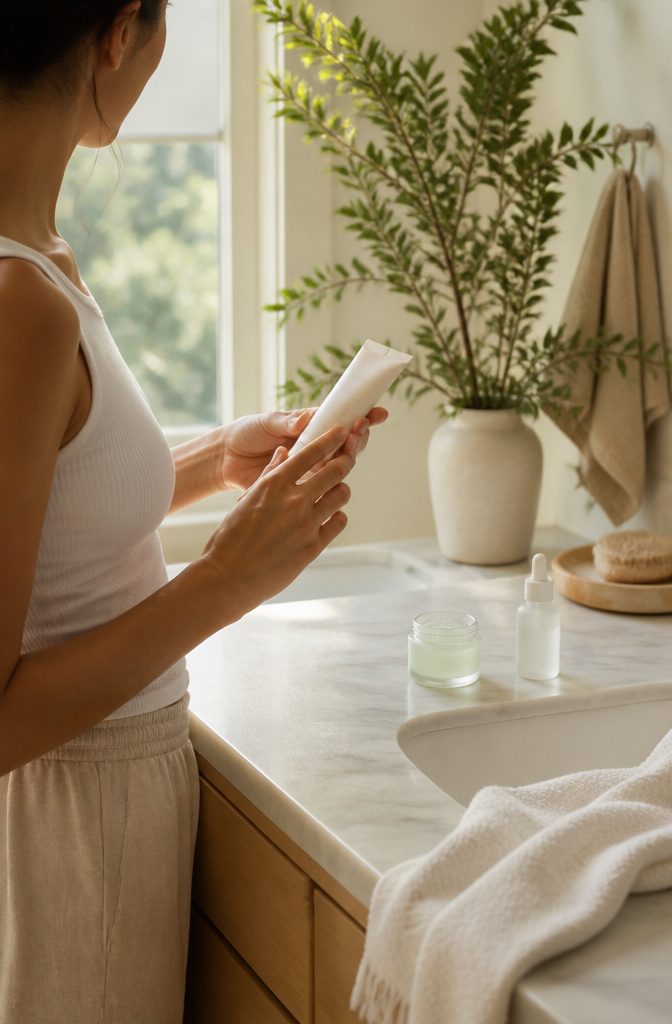
A dewy makeup look starts with water, not with makeup. I learned this the hard way after years of layering illuminating primers over tight, flaky skin and wondering why the glow read as grease by noon.
Two products keep coming up in the routines that actually work. Clinique’s Moisture Surge 100H Auto-Replenishing Hydrator runs $60 at Nordstrom, though I’ve spotted it for $14 on Amazon.
The formula leans on aloe bioferment and hyaluronic acid, plus vitamins C and E, so the hydration lasts through the day rather than evaporating by the time you reach for foundation.
For an oil layer, Youth To The People’s Superberry Hydrate + Glow Dream Oil sits at $49 most places. One makeup artist presses it all over before foundation, then dabs the apples of the cheeks afterward for a second hit of light.
The order matters more than the brand.
Skin that is already holding water reflects light differently than skin that is merely coated in shimmer. Without that base, every subsequent step fights dryness instead of building luminosity.
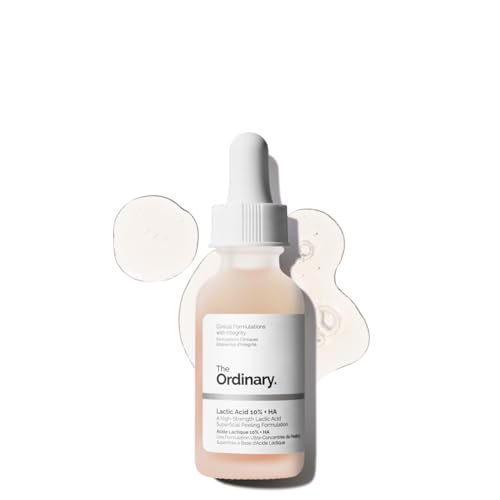
EFFECTIVE EXFOLIATION: A high-strength exfoliator with 10% lactic acid that smooths skin texture, visibly evens tone, and enhances luminosity.
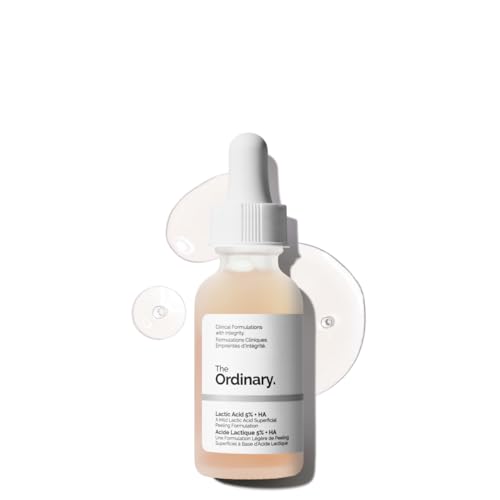
GENTLE EXFOLIATION: A milder alpha hydroxy acid solution with 5% lactic acid that gently smooths skin texture and reveals a brighter complexion.

Bye bye bumps: This potent moisturizing cream exfoliates while it hydrates in one easy step – no scrubbing or rinsing required – so you can finally say goodbye to KP, chicken skin, strawberry skin, whatever you want to call it
2. Exfoliate First
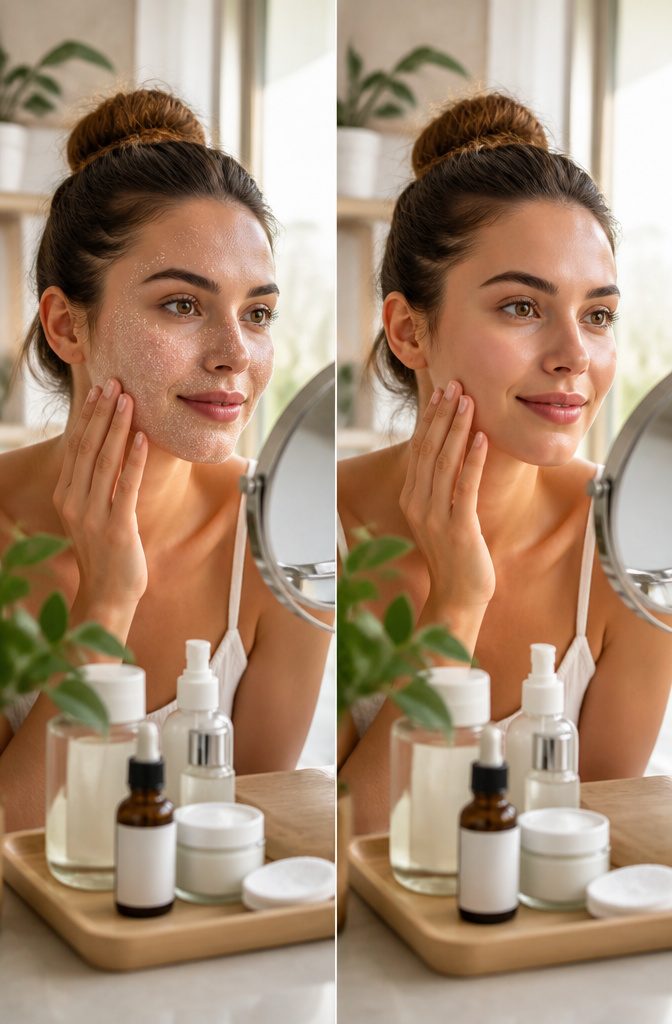
The step most people skip is also the one that makes every product afterward work harder.
Dead skin cells sitting on the surface block serums and moisturizers from penetrating, so the glow you are after never fully arrives. Exfoliating first removes that barrier and lets hydration actually reach the skin.
"Exfoliating before any hydration allows removal of any dead skin cells, lets the serums and moisturizers really penetrate the skin’s surface, and allows products to do their thing."
— Vogue
For a quick two-minute treatment, ExfoliKate Intensive Pore Exfoliating Treatment runs $78 at Nordstrom and $85 on Amazon, powered by lactic acid, salicylic acid, and fruit enzymes to smooth enlarged pores.
Glow Recipe’s toner is another option worth considering for this step. Either way, the two minutes here save you from layering product on top of product that never fully absorbs.

GENTLE NON-ABRASIVE LEAVE-ON EXFOLIANT: With 2% BHA (Beta hydroxy acid), to unclog & diminish enlarged pores, exfoliate dead skin cells, smooth wrinkles, and brighten and even out skin tone. Combats redness, wrinkles, aging, enlarged pores, and blackheads.
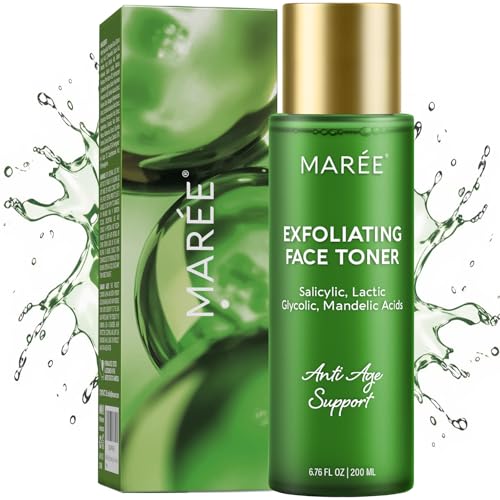
Exfoliating Salicylic Acid Toner — A lightweight AHA BHA exfoliant that helps sweep away dull surface cells for smoother-looking, more even skin. A perfect face exfoliant and exfoliante facial to refresh and upgrade your daily routine.

ALCOHOL-FREE BLEMISH TONER PADS FOR FACE: Thayers Alcohol-Free Blemish Toner Acne Pads clear acne blemishes, blackheads and whiteheads, while actively preventing new breakouts. Clear acne-prone skin without wrecking your skin's moisture barrier with this women’s and men’s skin care favorite.
3. Apply Foundation
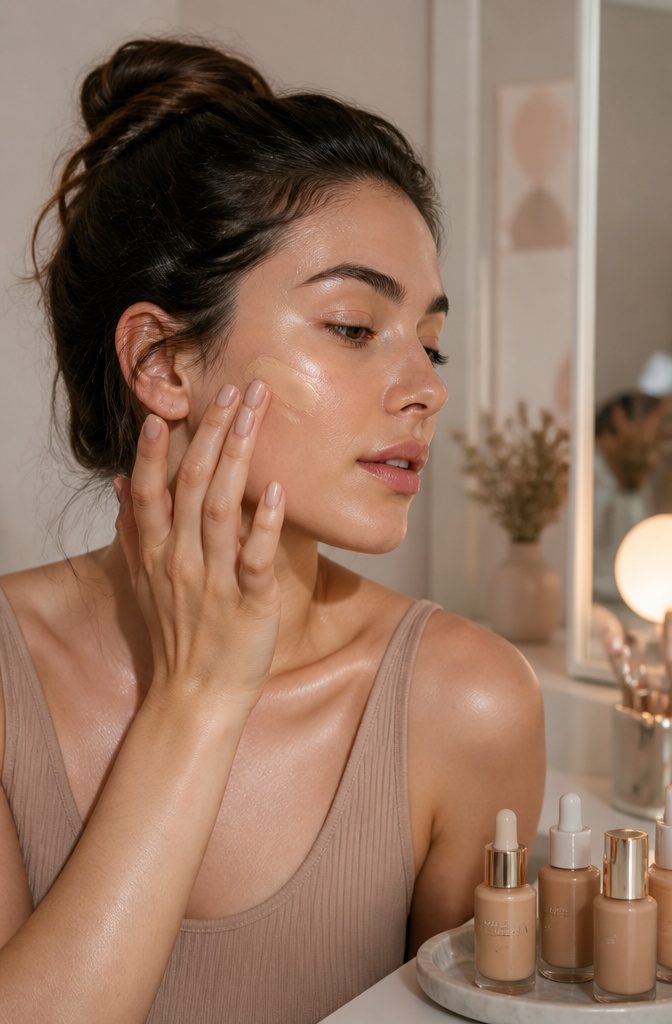
Foundation choice makes or breaks the dewy makeup look before anything else goes on. A matte formula will kill the glow no matter what skincare sits underneath, so lightweight options with luminous finishes are the only ones worth considering.
Start with a pea-sized amount and build up if needed; sheer coverage that lets skin texture show through keeps the effect believable.
Tinted moisturizers and tinted serum formulas both hydrate while they cover, which matters for that fresh-faced result.
L’Oréal Paris True Match Nude Hyaluronic Tinted Serum works well here: the hyaluronic acid gives skin a plumped, hydrated feel and the mineral pigments add sheer luminosity without turning greasy.
For more polish, Giorgio Armani’s Luminous Silk Foundation offers that silky, airbrushed finish at medium coverage while still reading as skin rather than mask.
The real decision is coverage level versus maintenance.
A tinted serum keeps things minimal, almost like improved skin rather than makeup. A true dewy foundation gives more evening power but needs the same light hand, a sheer layer that blurs rather than obliterates.
Either way, spot conceal afterward where you need it rather than blanketing the face in product; the dewy finish lives in the gaps where skin still breathes.

[Up to 120 Hours of Deep Hydration] Powered by 10 types of Hyaluronic Acid to deliver lasting hydration and visibly plump skin.

DAILY FACIAL MOISTURIZER: This moisturizing face cream delivers a powerful boost of hydration to nourish and plump skin for a firmed-up, bouncy complexion with a luminous finish that lasts all-day and feels soft.

[PDRN Daily Hydration] Formulated with PDRN derived from salmon DNA, this daily moisturizing cream helps maintain long-lasting hydration while enhancing a healthy, natural glow.
4. Add Blush and Bronzer
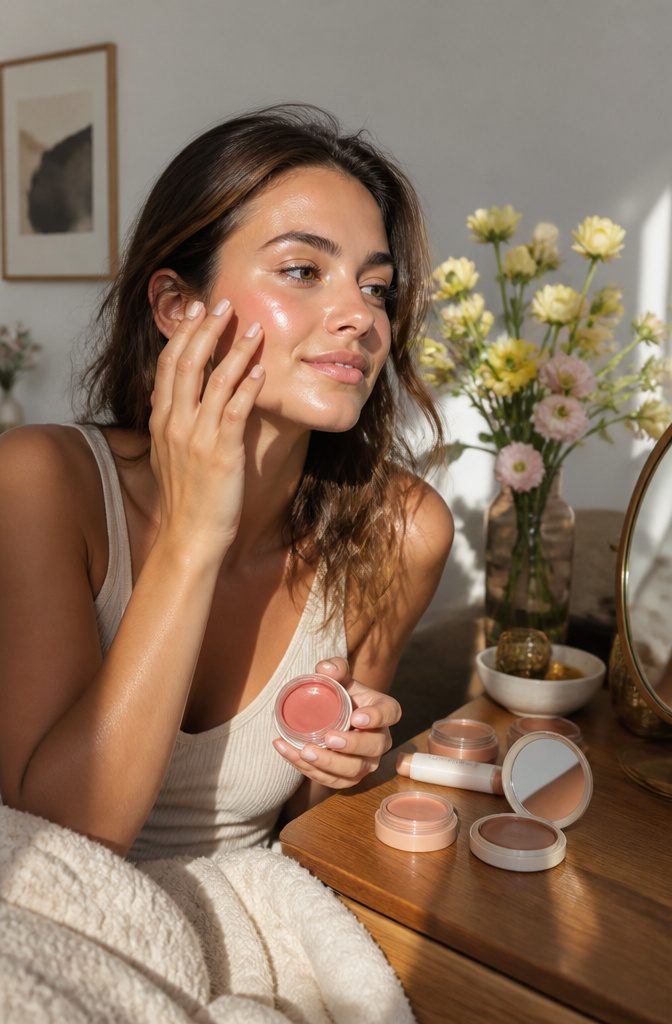
Powder blush and bronzer are the fastest way to kill a dewy makeup look before it starts.
The matte particles settle into every bit of luminosity you’ve built and read flat on camera and in daylight. Cream or liquid formulas melt into skin and keep the glow intact, which is why they’re non-negotiable for this step.
L’Oreal Paris Lumi Le Liquid Blush comes in three finishes worth knowing: Dewy Worth It, Dewy Bright Pink, and Dewy Rich Coral.
The doe-foot applicator deposits more pigment than you’d expect, so wiping excess before dotting onto cheeks saves the repair work later.
Two or three dots per cheek, patted in with fingertips or a damp sponge, gives that weightless flush the look depends on.
For bronzer, RMS Beauty Buriti Cream Bronzer at $28 is the one that keeps coming up.
The buriti oil base adds its own subtle sheen rather than just depositing color, so the warmth looks like it originates from within the skin rather than sitting on top of it.
Powder versions of either product demand dry skin to cling to; on dewy-prepped skin they grab unevenly and turn patchy by hour three.
Liquid takes more control during application, cream forgives a heavier hand and blends out with less precision required. Either wins over powder for this particular finish.

Maybelline Fit Me Dewy Foundation With Spf: Ideal for normal to dry skin, this liquid foundation hydrates and smoothes skin texture for a natural-looking, luminous finish; Protects with SPF 18

Maybelline Fit Me Dewy Foundation With Spf: Ideal for normal to dry skin, this liquid foundation hydrates and smoothes skin texture for a natural-looking, luminous finish; Protects with SPF 18

DEWY, RADIANT FINISH: This glow makeup setting spray completes your look with a fresh, luminous finish. Fine pearlescent shimmer reflects light subtly, adding soft radiance without the appearance of large or chunky glitter
5. Highlight
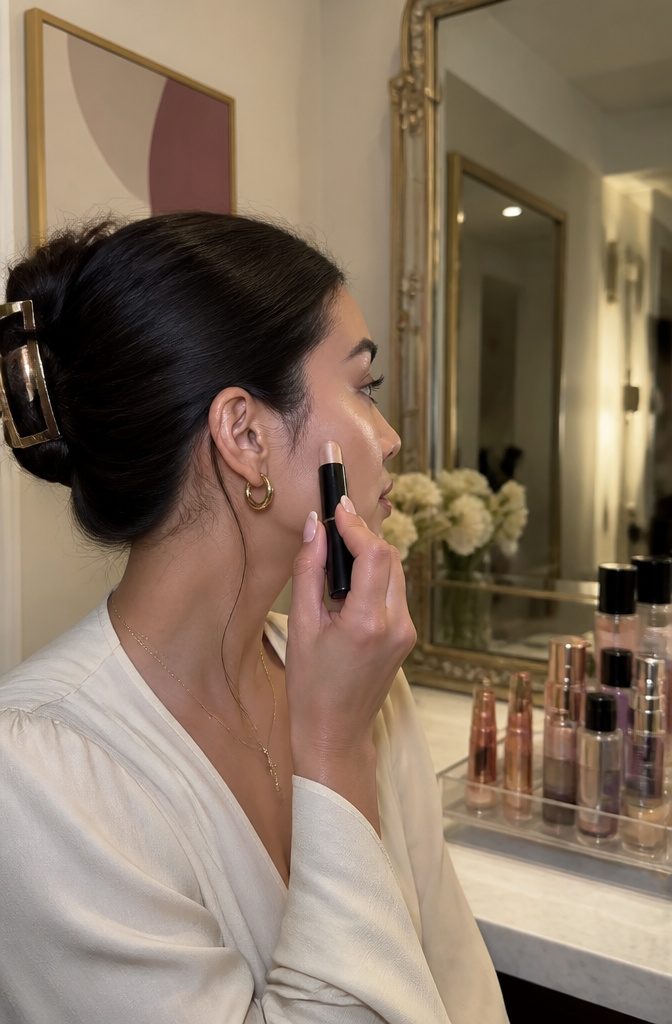
A cream or liquid highlighter is what holds the dewy makeup look together; powder will kill the glow you spent three steps building.
I tap it onto the high points where light actually hits: the top of each cheekbone, the brow bone just beneath the arch, the bridge of the nose, and the cupid’s bow.
That last spot is easy to skip, but it catches light when you talk and keeps the face from looking flat.
Chanel’s Baume Essentiel Multi-Use Glow Stick, at $47, is the one that comes up repeatedly for this; the stick format means you can draw it on and tap with a fingertip, no brush required.
For a softer wash, Tatcha Luminous Dewy Skin Mist at $49 works as a finishing layer over highlighter rather than replacing it, though some mornings I mist first and let the highlighter melt into damp skin for something closer to glass skin.
The bridge of the nose needs the lightest touch, one tap and blend, or you end up with a stripe that reads oily instead of luminous under office light.

Drop Into Your Dream Glow: This ultra-enriched, flash-absorbing face oil leaves skin velvety soft, hydrated, and glowing. Wear alone, as a hydrating primer, or mix with foundation or blush for an instant, natural dewy complexion finish without the shimmer.

GRANACTIVE RETINOID: Gentle overnight face oil with 1% granactive retinoid.
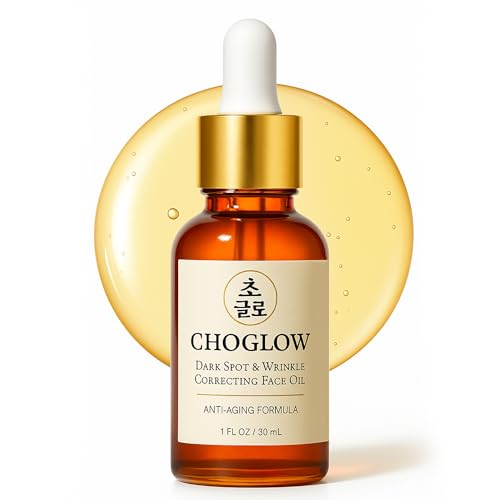
🌿 Plant-Based Retinol Alternative – No Peeling, Just Glow Skip the harsh side effects of retinol. Choglow uses powerful natural oils like rosehip & sea buckthorn to smooth fine lines and brighten skin — without irritation.
6. Set the Makeup
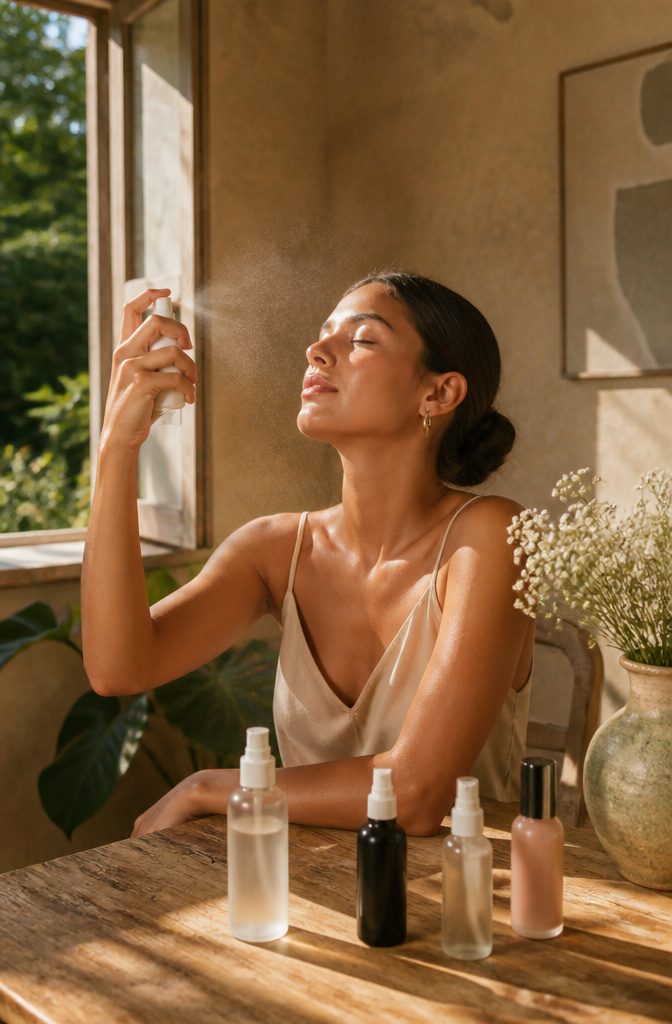
A setting spray is what keeps the glow from evaporating by noon. I learned this the hard way after dusting on powder to "set" a dewy base and watching the radiance flatten into something matte and mask-like.
Powder mattifies, which is exactly what a dewy makeup look does not need. If your T-zone gets slick, blotting sheets soak up excess oil without touching the finish.
L’Oréal Paris Infallible 3-Second Setting Mist With Microfine works differently. The microfine mist extends wear up to 36 hours, prevents cracking or caking, and leaves a natural-looking glow rather than sealing it shut.
Four seconds in a circular motion is all it takes. The product name is clunky on the tongue, but the formula does what a dewy finish requires: it locks the work in place while the skin still looks like skin.

[ NIGHT SERUM FOR FACE ] Gentle exfoliating treatment with lactic acid and glycolic acid serum, reduces dark spots and enhances radiance, ideal as a night face cream

Chemist at Play Body Wash Exfoliating For Dry Rough Bumpy Strawberry Skin With 1% Salicylic Acid 2% Lactic Acid And Ceramides For Men And Women (8 FL Oz)
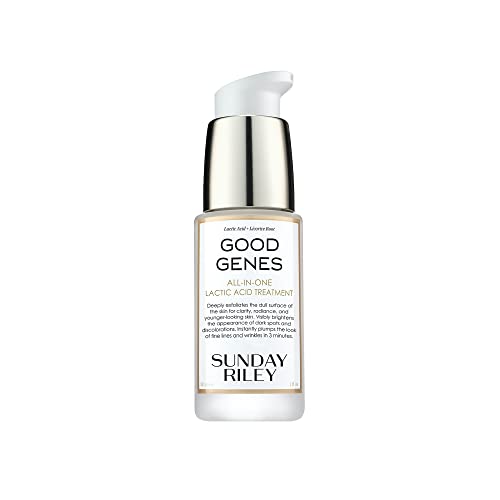
Multi-tasking, targeted lactic acid treatment rapidly exfoliates and boosts naturally youthful radiance, while visibly reducing the look of lines, wrinkles and dark spots.
7. Final Touches
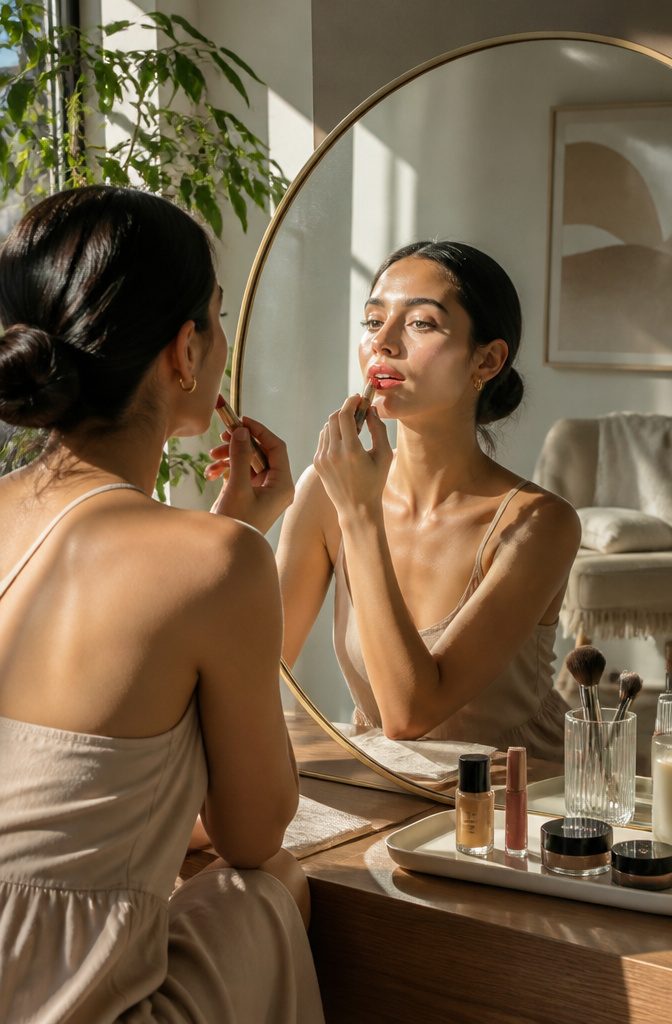
The eyes and lips frame everything, so the last products matter more than their order suggests.
A dewier finish needs lashes that read soft, not spiky, which is why I switched from my usual volumizing formula to something with a wetter, darker cast.
The Korres Black Volcanic Minerals Mascara builds thick without the glam swoosh; it keeps the look in daytime territory unless you add liner later.
For the mouth, gloss beats anything matte. Chapped lips under dewy skin reads like a category error.
I smooth on a tinted balm-in-gloss, something with pomegranate extract that weighs almost nothing. Twelve shades exist, so matching undertone is straightforward.
The point is shine, not color competition. Let the skin hold the spotlight.

[ SMOOTH & REFINE TEXTURE ] Unclog pores and visibly minimize blackheads to smooth skin texture. 95% agree skin texture looks smoother in 1 week.

Exfoliates and Refines Pores - Perfect for those concerned about enlarged pores, seeking smoother skin, battling greasy skin from excess sebum
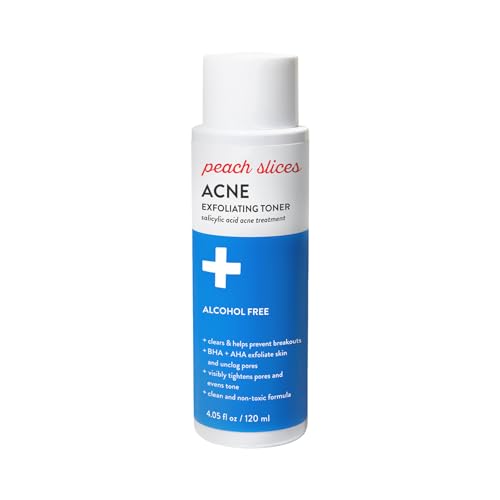
Stubborn Breakouts? - Break out of the acne cycle with our gently exfoliating toner. A combination of 2% salicylic acid, glycolic acid, and lactic acid targets breakouts, without over-drying or stripping the skin.
Cream vs. Liquid vs. Powder
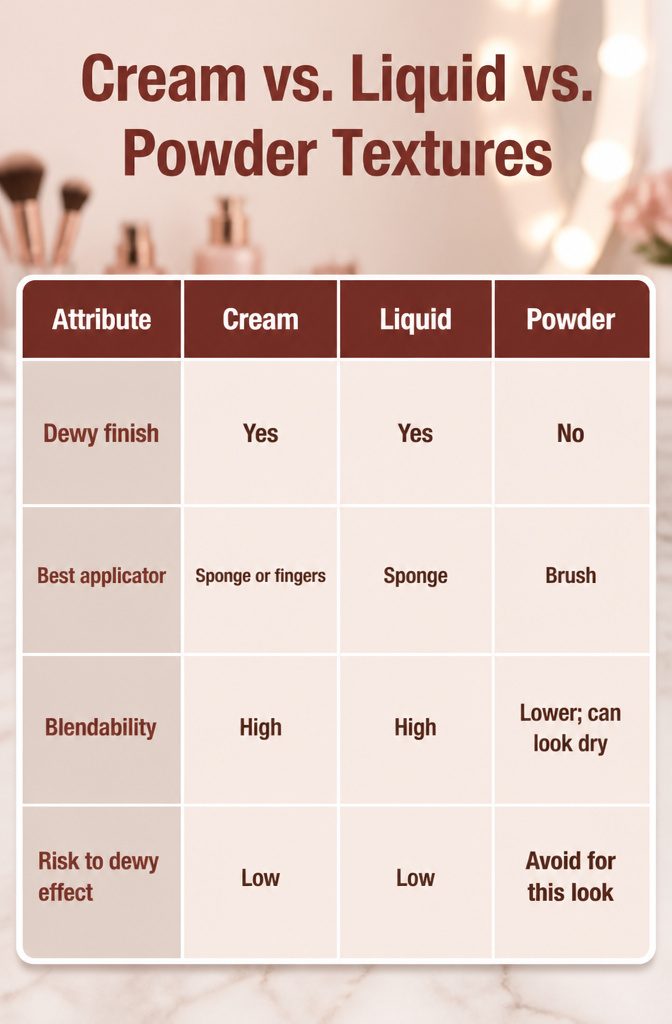
A dewy makeup look lives or dies on the textures you choose.
Powder blush and powder highlighter sit on top of skin and catch light in flat, dry planes; cream and liquid formulas melt in and reflect the way healthy skin actually does.
The tool matters as much as the product.
A sponge like the Beautyblender pushes liquid or cream into the skin so the finish stays mobile and luminous, while brushes tend to leave pigment sitting on the surface where it can turn streaky or matte down.
Fingertips work in a pinch, though they often deposit too much color in one spot.
| Attribute | Cream | Liquid | Powder |
|---|---|---|---|
| Dewy finish | Yes | Yes | No |
| Best applicator | Sponge or fingers | Sponge | Brush |
| Blendability | High | High | Lower; can look dry |
| Risk to dewy effect | Low | Low | Avoid for this look |
If you already own powder products, you can still use them, but keep them to the perimeter of the face and away from the high points where you want that glow to read as skin, not product.
A setting spray with a dewy finish can sometimes recover a look that went too matte, though it will not undo the flatness of powder placed dead center on the cheekbone.

DEEP, LASTING HYDRATION: Hyaluronic acid serum that delivers deep hydration to plump the appearance of fine lines and leave skin looking smooth.

HYALURONIC ACID HYDRATION LOCK — Advanced HA technology delivers intense moisture retention that locks in hydration from the first application. Creates a powerful, non-sticky hydration barrier that keeps skin deeply moisturized, smooth, and supple throughout the day without any heavy residue or tackiness.

[Instant Glow] Capsule facial mist with PDRN 2,000ppm, hyaluronic acid, and collagen to boost hydration for a dewy glow and firmer-looking skin.
What I Use and What Costs
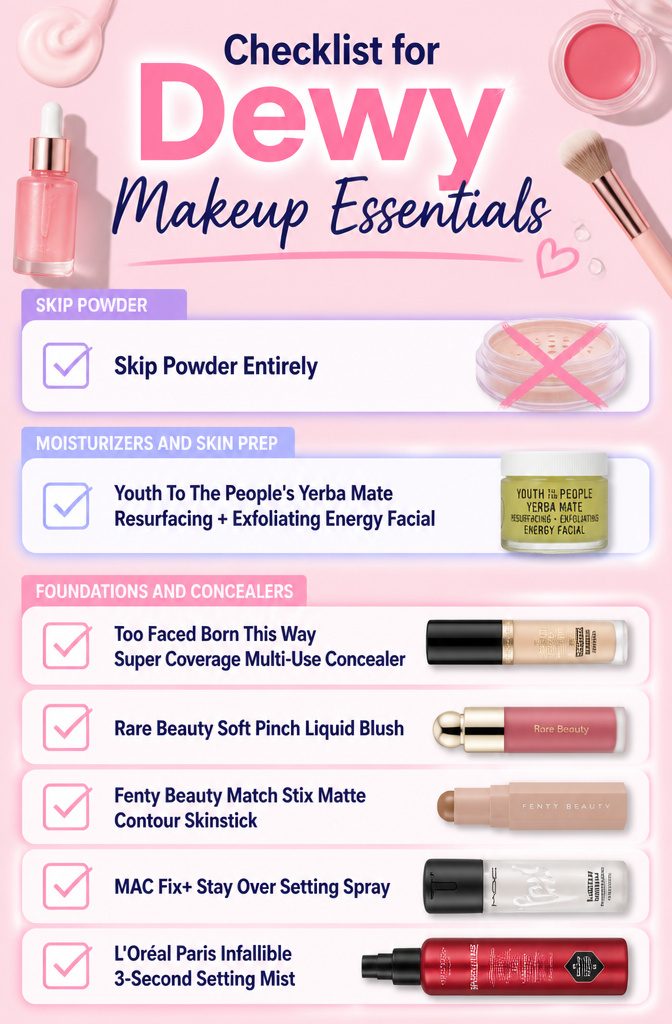
The products that show up across dewy makeup tutorials fall into clear groups, and the overlap is smaller than the marketing makes it look.
Skip powder entirely; it mattifies, and mattified skin is the opposite of what you’re after. Blotting sheets handle excess oil without killing the finish.
Moisturizers and skin prep:
- Youth To The People’s Yerba Mate Resurfacing + Exfoliating Energy Facial, $59
Foundations and concealers:
- Too Faced Born This Way Super Coverage Multi-Use Concealer
Blushes and contours:
- Rare Beauty Soft Pinch Liquid Blush
- Fenty Beauty Match Stix Matte Contour Skinstick
Setting sprays:
- MAC Fix+ Stay Over Setting Spray
- L’Oréal Paris Infallible 3-Second Setting Mist With Microfine, up to 36H Wear
One practical note on application order: a TikTok hack that went around had people dotting all cream and liquid products on at once, then blending.
The products listed above were the ones tested in that method. Whether the speed matters to your morning is your call, but the product list itself is solid either way.

Maybelline Fit Me Dewy Foundation With Spf: Ideal for normal to dry skin, this liquid foundation hydrates and smoothes skin texture for a natural-looking, luminous finish; Protects with SPF 18

INNOVATIVE COMPLEXION BOOSTER: Achieve a flawless glow with the only filter you’ll ever need. This makeup-skincare hybrid works to enhance the overall look of your skin for a glowing, dewy complexion.

Tinted Serum with 1% Hyaluronic Acid: Skincare meets makeup. True Match Nude Hyaluronic Tinted Serum instantly brightens and evens skin while it hydrates, for a nude, radiant finish. Skin feels plump and hydrated in a 3-week consumer test.
Hydration and Exfoliation
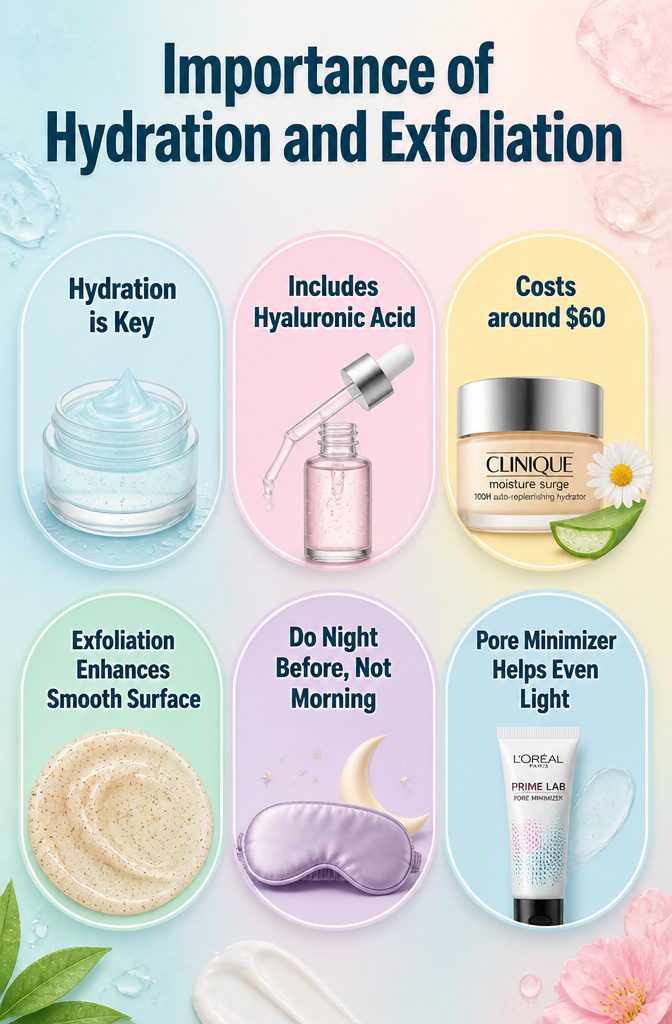
Skin that drinks up moisture holds the glow far longer than any highlighter layered on top.
Hydration is the actual base layer of a dewy makeup look, not a marketing extra. I start with something containing hyaluronic acid, which pulls water into the skin rather than sitting on it like an oil slick.
Clinique’s Moisture Surge 100H Auto-Replenishing Hydrator runs about $60 at Nordstrom and uses aloe bioferment plus vitamins C and E to keep that plumpness going for hours.
A $14 Amazon option exists if you’re testing whether your skin agrees with the formula before committing.
Exfoliation matters just as much, because light bounces off smooth surfaces and catches on flakes.
Without it, foundation catches on texture you might not even notice in the mirror. The timing is where I tripped up for months: exfoliate the night before, not the morning of.
Freshly exfoliated skin can turn reactive under makeup, and that redness reads as patchy, not dewy. Give it the overnight buffer, then moisturize before primer so the surface is even but settled.
Primers that extend wear up to 24 hours, like L’Oréal Paris Prime Lab Pore Minimizer, also help light reflect evenly. For oily skin with visible pores, the pore-blurring version stops the glow from tipping into shine by midday.
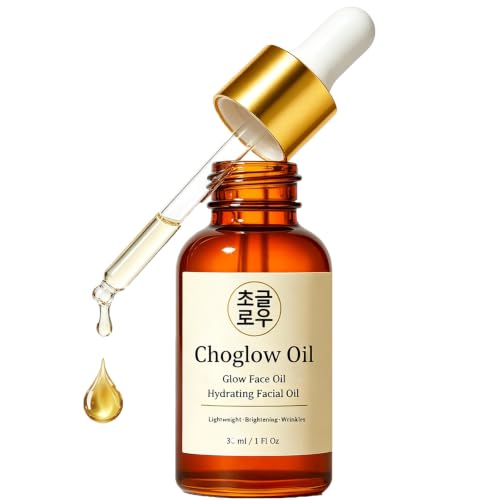
【Deeply Hydrating & Lightweight】Experience the hydration without any heavy or sticky residue. This brightening facial oil delivers intense moisture that your skin can fully absorb within seconds.

REDUCE THE LOOK OF FINE LINES - Gives skin a hydrated feel throughout the day while helping support the skin’s moisture barrier, reducing the appearance of signs of aging, helping even the look of skin tone, and leaving skin looking more luminous. Non-GMO and third-party tested for purity.

Revitalizing Skin Formula: Our Rosehip and Turmeric Face Oil contains an abundance of skin loving oils and botanical extracts to help give a revitalized, rejuvenated and nourished look to your skin and complexion
Application Techniques
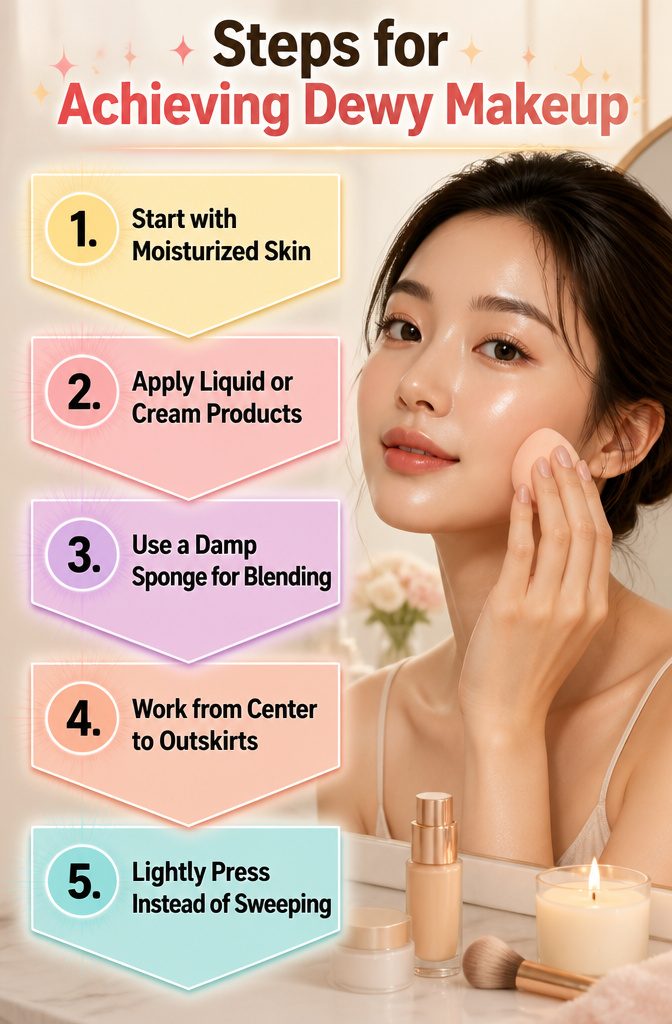
A damp sponge presses product into skin instead of pushing it around, which is why the finish reads as melted rather than sitting on top.
Celebrity makeup artist Grace Pae builds her dewy makeup look this way, working from the center of the face and blending outward so coverage stays light where it can and builds only where it must.
Brushes leave more texture, more movement on the surface, and some pros prefer that control. The dot method falls somewhere between: small deposits placed and then pressed, not swept, so the skin’s own surface shows through.
I tried both tools on the same foundation last year and the sponge side looked like I’d spent the morning in humidity I hadn’t, while the brush side looked like I’d done my makeup, period.
The choice is genuinely personal, but the tool changes the finish as much as the product does.
Seasonal Adjustments
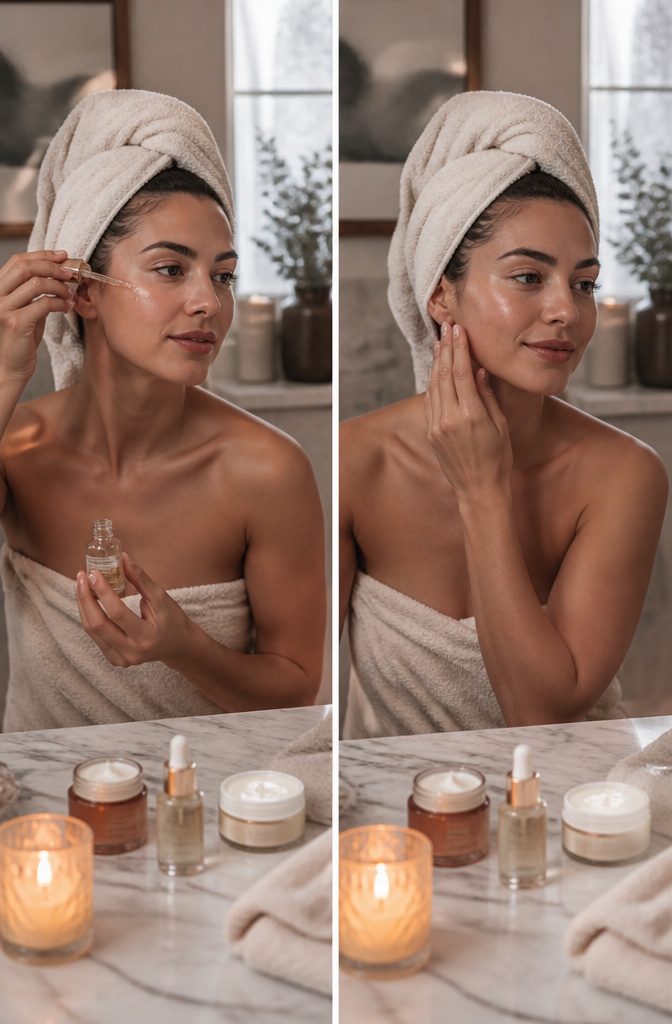
Winter strips moisture from skin faster than any other season, and a dewy makeup look built on dryness cracks by noon.
The fix starts before foundation: swap your regular moisturizer for something intensive, the kind made with over 90% organic ingredients if your skin leans reactive, and let it sink in until the surface no longer feels tacky.
On the driest days, a single drop of beauty oil on each cheek, pressed in with your hands and given time to absorb, creates a base that actually holds glow.
A second layer of oil before foundation is the difference that saves the look when the heating system never shuts off.
Lighter oils work better here than the heavy ones that feel right in theory; one-ingredient moringa oil sits under makeup without sliding.
The rest of the routine stays the same, but that base of nutrient-rich skincare is what keeps the radiance from turning into irritation by three o’clock.
Frequently Asked Questions
How do I achieve a dewy makeup look?
Start with hydrated skin, not shimmer on top of dryness. Exfoliate first so products absorb, then layer a water-based hydrator, a lightweight luminous foundation, cream blush and bronzer, and a cream highlighter.
Set with a dewy setting spray instead of powder. The glow comes from moisture held in the skin, not from products sitting on top of it.
What products are best for a dewy finish?
Clinique Moisture Surge 100H Auto-Replenishing Hydrator for skin prep, L’Oréal Paris True Match Nude Hyaluronic Tinted Serum or Giorgio Armani Luminous Silk Foundation for base, cream or liquid blush and bronzer like RMS Beauty Buriti Cream Bronzer, and Chanel Baume Essentiel Multi-Use Glow Stick or Tatcha Luminous Dewy Skin Mist for highlight.
Skip powder entirely; it mattifies and kills the effect.
How do I set my dewy makeup without losing its glow?
Use a dewy-finish setting spray like L’Oréal Paris Infallible 3-Second Setting Mist With Microfine, misted in a circular motion for about four seconds. Avoid powder, which mattifies.
If your T-zone gets oily, blot with sheets instead of dusting on product. The spray locks wear up to 36 hours while keeping skin looking like skin.