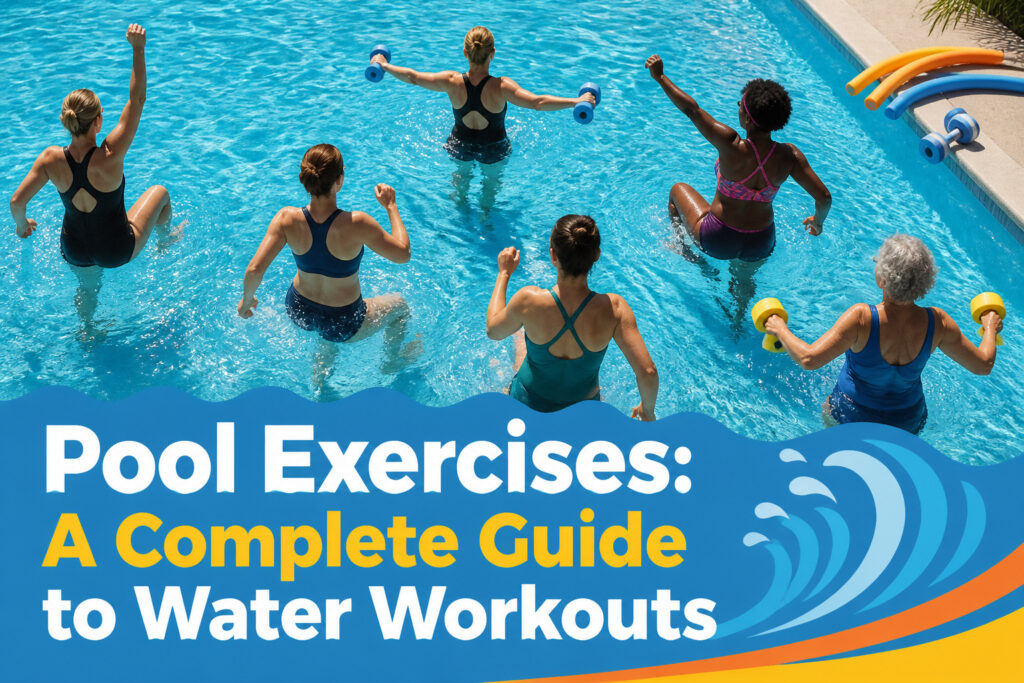
Pool exercises are structured movements performed in water that use buoyancy and drag to build strength and cardio fitness without joint impact. The catch is that water resistance works both directions, so every motion fights back on the way up and the way down, which means form matters more than speed and beginners often exhaust themselves by day two without knowing why. A 2019 study found water walking built more leg muscle than land walking in older adults, with none of the joint stress.
Water Walking
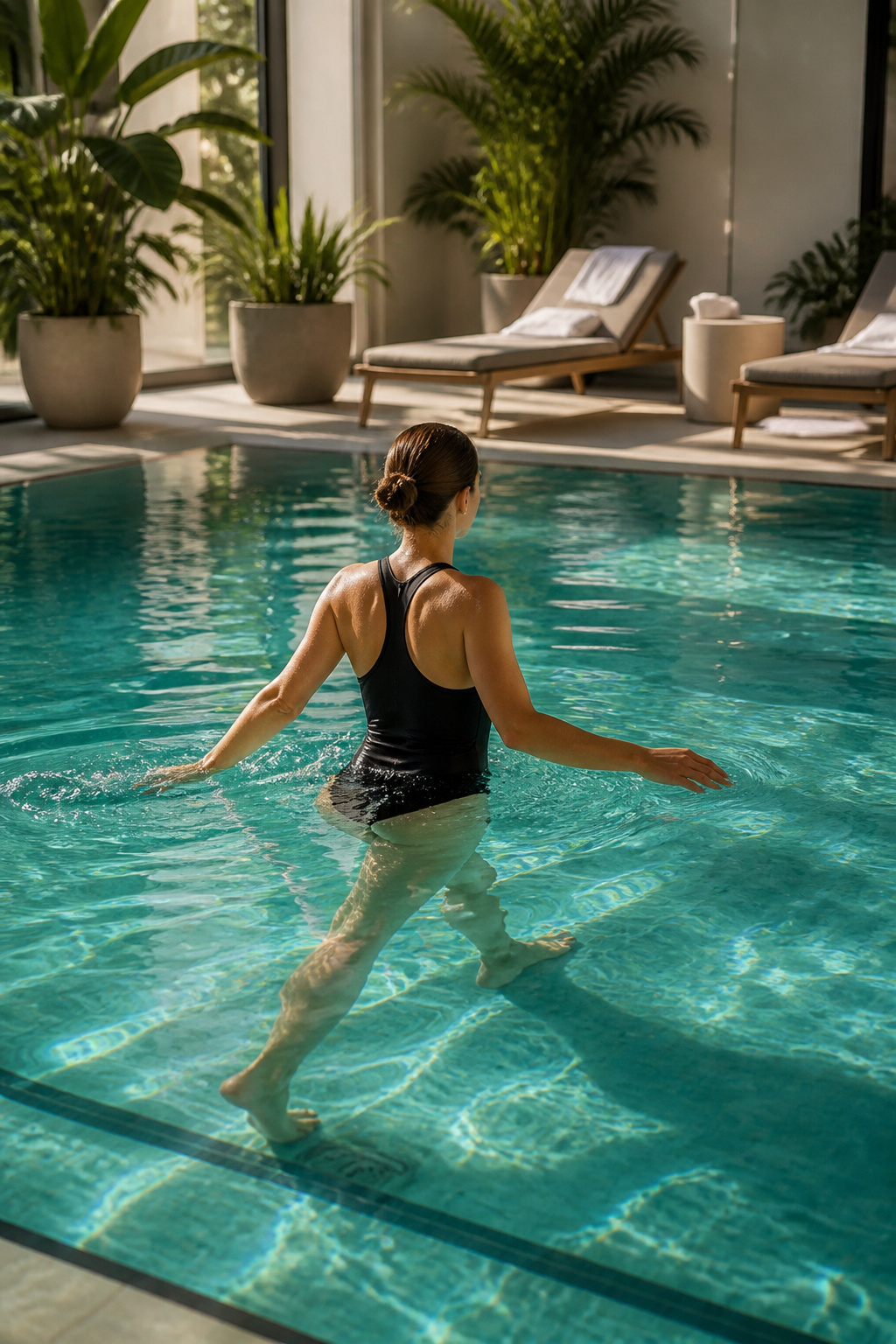
Water walking is where every pool workout should start, and 5 to 10 minutes is the right opening block. The water’s buoyancy takes roughly ninety percent of your body weight off your joints, which is why this lands in so many routines written for seniors or anyone stepping into pool fitness for the first time. That same buoyancy does not mean free pass on effort: drag through the water engages your core, hip flexors, and lower body with each step, and keeping your arms submerged and moving adds work through the shoulders.
Waist-high water is the standard starting depth. Walk heel-to-toe rather than on your tiptoes, spine lengthened, core braced. A 2019 study in older adults found water walking built more leg muscle mass than land walking over the same period, without the joint stress. Forward, backward, or sideways all work; the direction changes which muscles take the load. If you are already a land walker, the resistance is noticeable immediately, but the absence of impact is what keeps people coming back.

Strengthen and Adjust: our pool exercise equipment has good buoyancy, which can work well underwater, and offer a good amount of resistance in your workout, bringing you a nice and satisfying experience

Low-impact exercise: Challenge yourself with fun, low-impact pool exercise to alleviate stress on your joints; swim belt is great for cross-training, rehabilitative water exercises, and water jogging/walking; fits 20-60 inch waist with adjustable strap and buckle

Water dumbbells: Two dumbbells with ergonomic, multi-grip-position; total length: 13.5 inches (34 cm)
Jumping Jacks
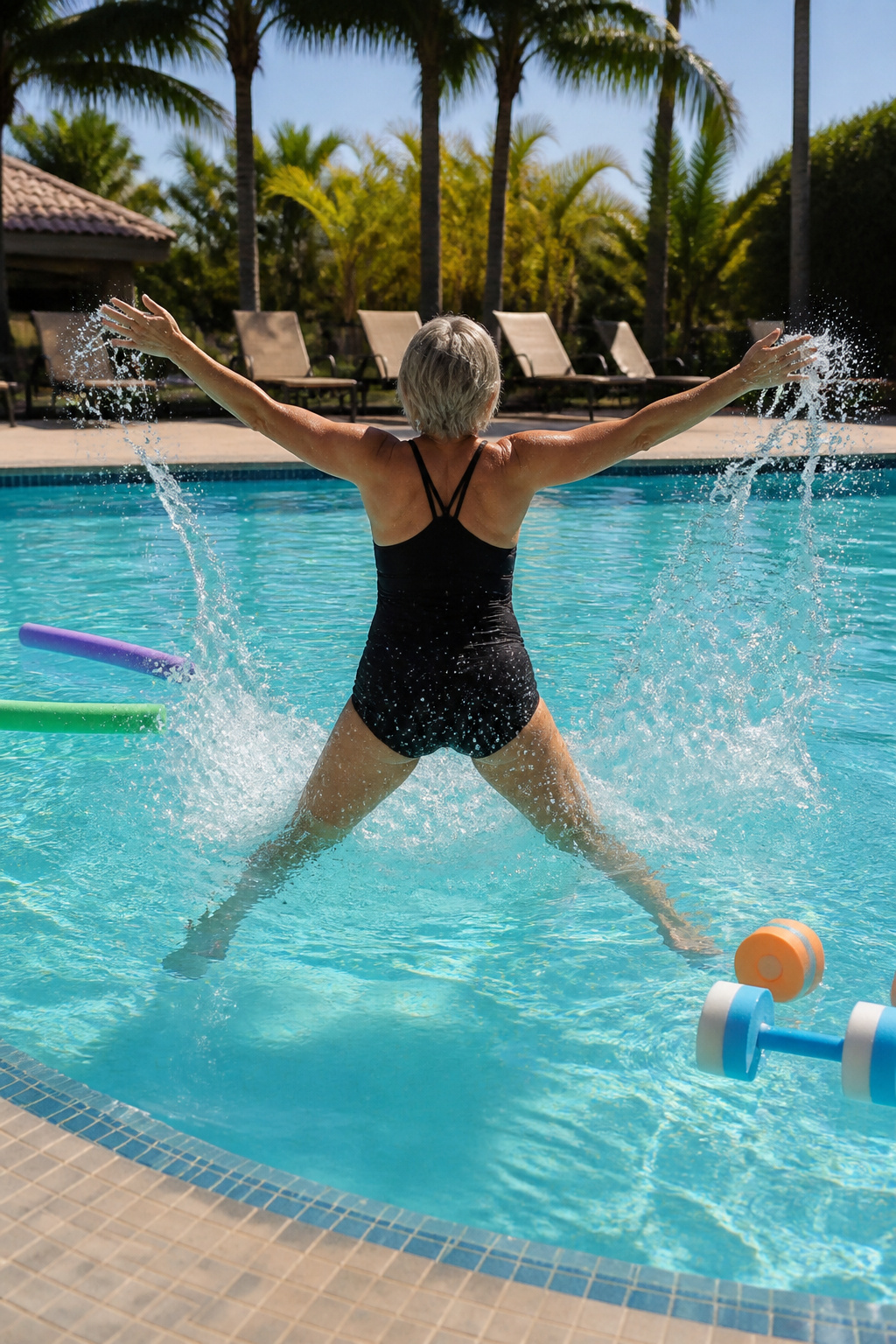
Water resistance turns a familiar move into something that actually fights back. In chest-deep water, the arms and legs still sweep open and closed, but every inch outward pushes against drag that air never creates. The landing matters too: instead of concrete or hardwood, the pool cushions each return so the joints absorb almost none of the shock that makes dry-land jumping jacks a problem for knees and ankles over time.
Most recommended pool routines include this one because it engages both upper and lower body in a single motion. The shoulders work to press the arms through the water, the adductors and abductors fight to open and close the legs, and the core stays active to keep the body upright against the buoyancy that wants to tilt you. For anyone counting, 1 to 3 sets of 8 to 12 reps is the standard starting point. Wrist and ankle weights add another layer if the water alone starts feeling too easy.

Ergonomic and Secure Grip: The water dumbbells feature ergonomic dimensions with durable PC tubes covered in soft foam. Two handle strips provide a firm yet comfortable grip, ensuring secure and effective movements during exercise

Soft and durable neoprene casing with Velcro buckle for a secure comfortable fit

Comes in a Pair: Each ankle weight weighs 5 lbs, and one pair weighs 10 lbs
Arm Circles
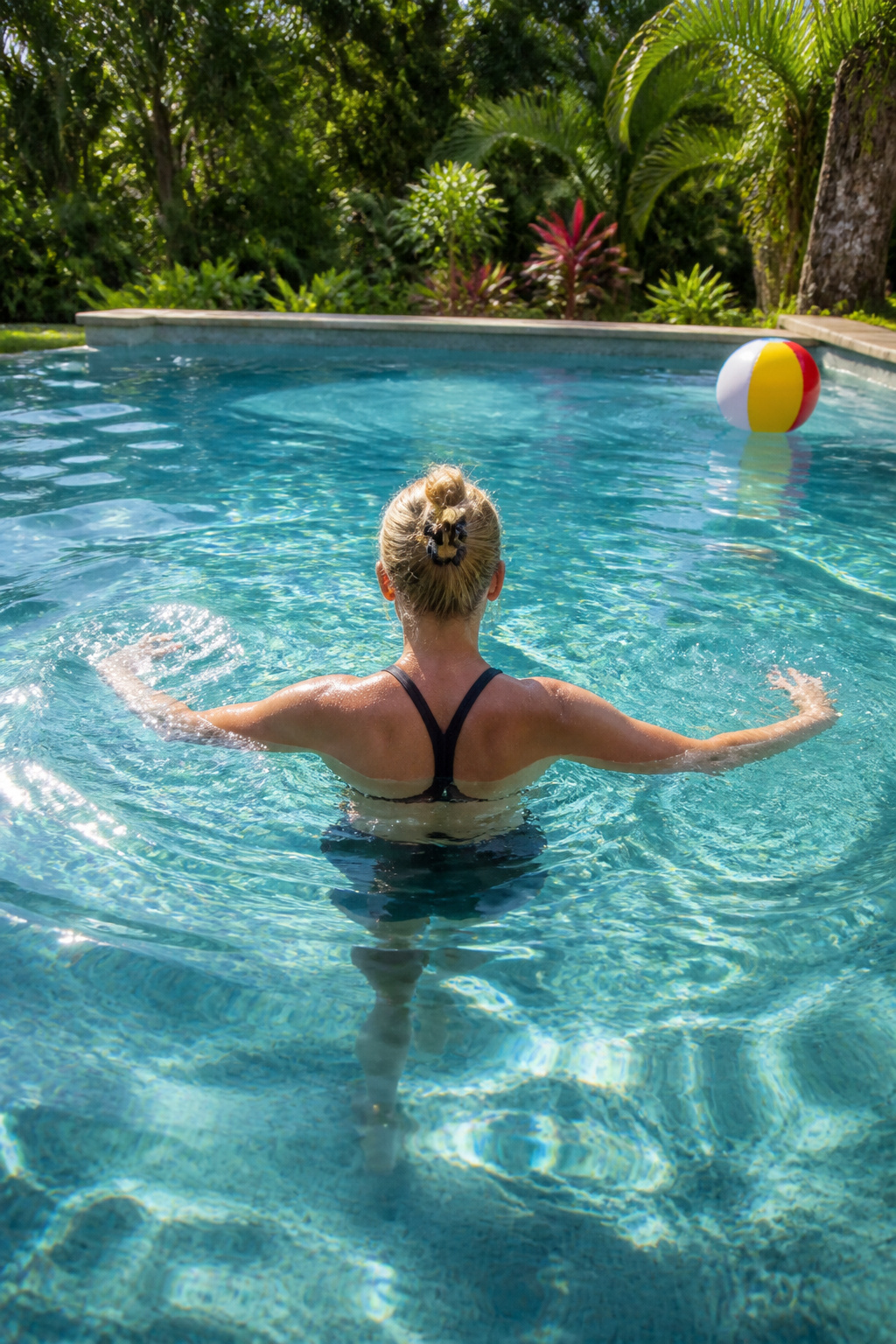
Arm circles in water build shoulder strength through resistance that land-based versions simply do not offer, and the joint impact that makes dry-land circles risky for aging shoulders disappears once you are submerged. Start with arms extended at shoulder height, moving in small controlled circles forward for one to two minutes, then reverse. The University of Washington rehabilitation program recommends beginning a few inches below the surface with elbows straight, making circles about the size of a softball, then gradually widening to basketball diameter before shrinking back down. The real control comes from depth: arms near the surface meet minimal resistance, while pushing them deeper increases the load substantially without ever adding weight. This is why physicians routinely prescribe water arm circles for senior patients recovering from shoulder surgery or managing osteoarthritis. The deltoids still work, flexibility still improves, but the water bears what the joint cannot.

HIGH QUALITY FOAM & COMFORTABLE GRIP - HOXHA aquatic dumbells are made of high quality EVA material, tasteless and waterproof,the resistance of the barbells will provide an overall workout for your upper body, lower back and other parts.

Fitness pool dumbbells for workout sports water fitness dumbbells suit foam dumbbells fitness resistance barbell floating water aerobic fitness equipment for weight loss

【Free to Assemble】You can choose the number of foam plates you want to assemble on each side.In addition, we also offer long-handle sets, short-handle sets and individual two-piece EVA foam sheets for sale.
Flutter Kicks
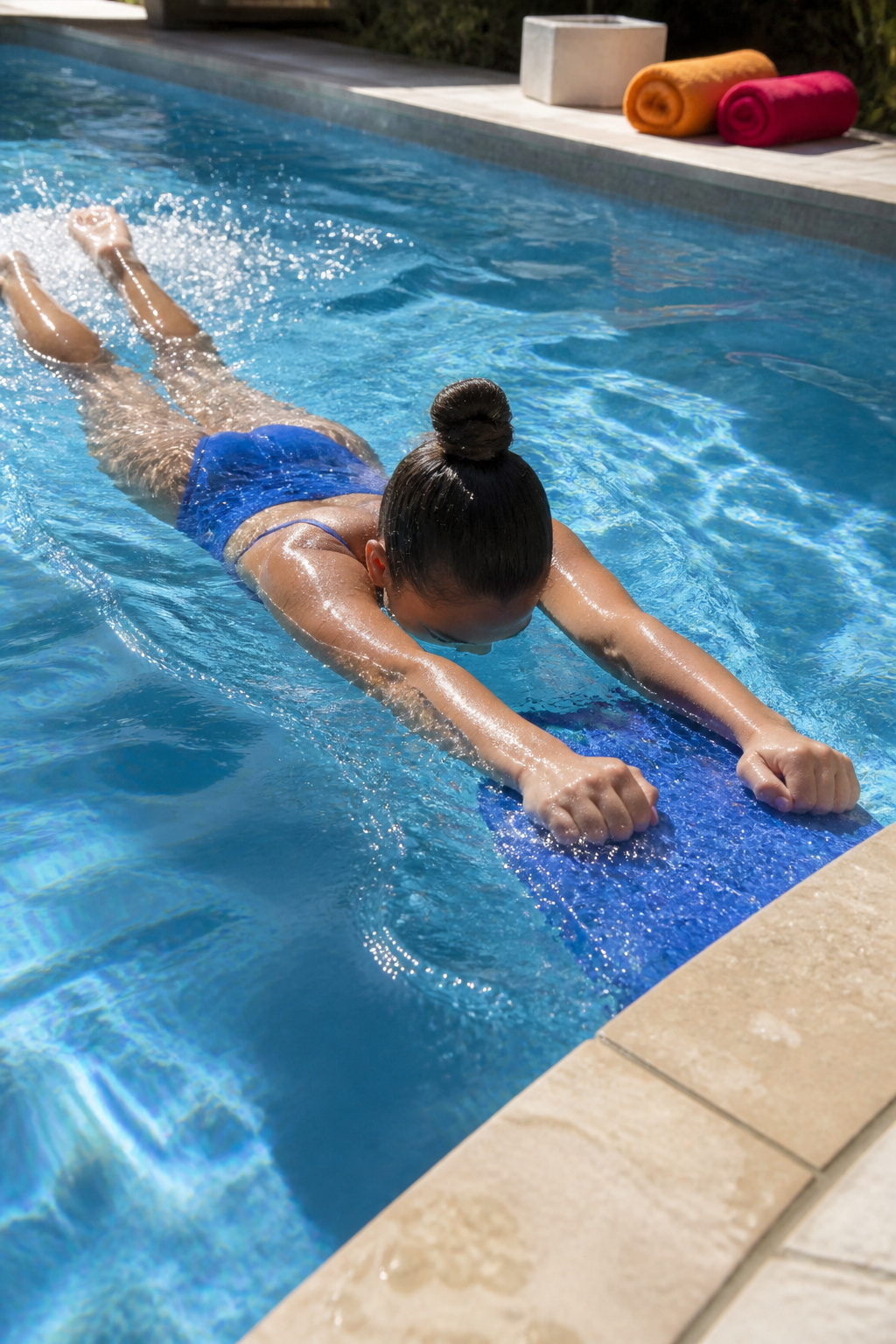
Flutter kicks look simple until you try holding proper form for the full interval. The sources recommend 1 to 3 minutes per set, braced against the pool wall or gripping a kickboard at arm’s length with your face just at the surface. I like the kickboard version because it forces a horizontal line from head to tailbone; let that line sag and your lower back takes the hit instead of your glutes doing the work.
The motion itself comes from the hips, heels breaking the surface with a soft knee and snap through the toes. Water buoyancy carries your body, which is why this builds leg endurance without the joint stress of land work. Keep the tempo controlled at first. White water behind you means you’re generating force; boiling water with sinking hips means your core has checked out.
For older adults or anyone with back concerns, the wall-facing version keeps support literal: arms locked on the ledge, belly up, legs extended straight back, feet together in small up-down kicks. The sources note 15 to 30 seconds as a starting point there, building up as strength allows. Either way, the core stays engaged to protect the spine while the legs do the metabolic work.

Extra Dense & Durable: Made with high-quality dense closed-cell structure foam that resists bending, tearing & water absorption — lasts longer.

Extra Dense & Durable: Made with high-quality dense closed-cell structure foam that resists bending, tearing & water absorption — lasts longer.
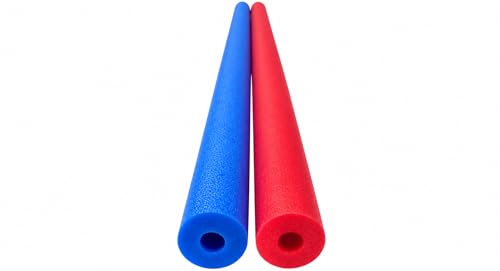
Extra Dense & Durable: Made with high-quality dense closed-cell structure foam that resists bending, tearing & water absorption — lasts longer.
Leg Lifts
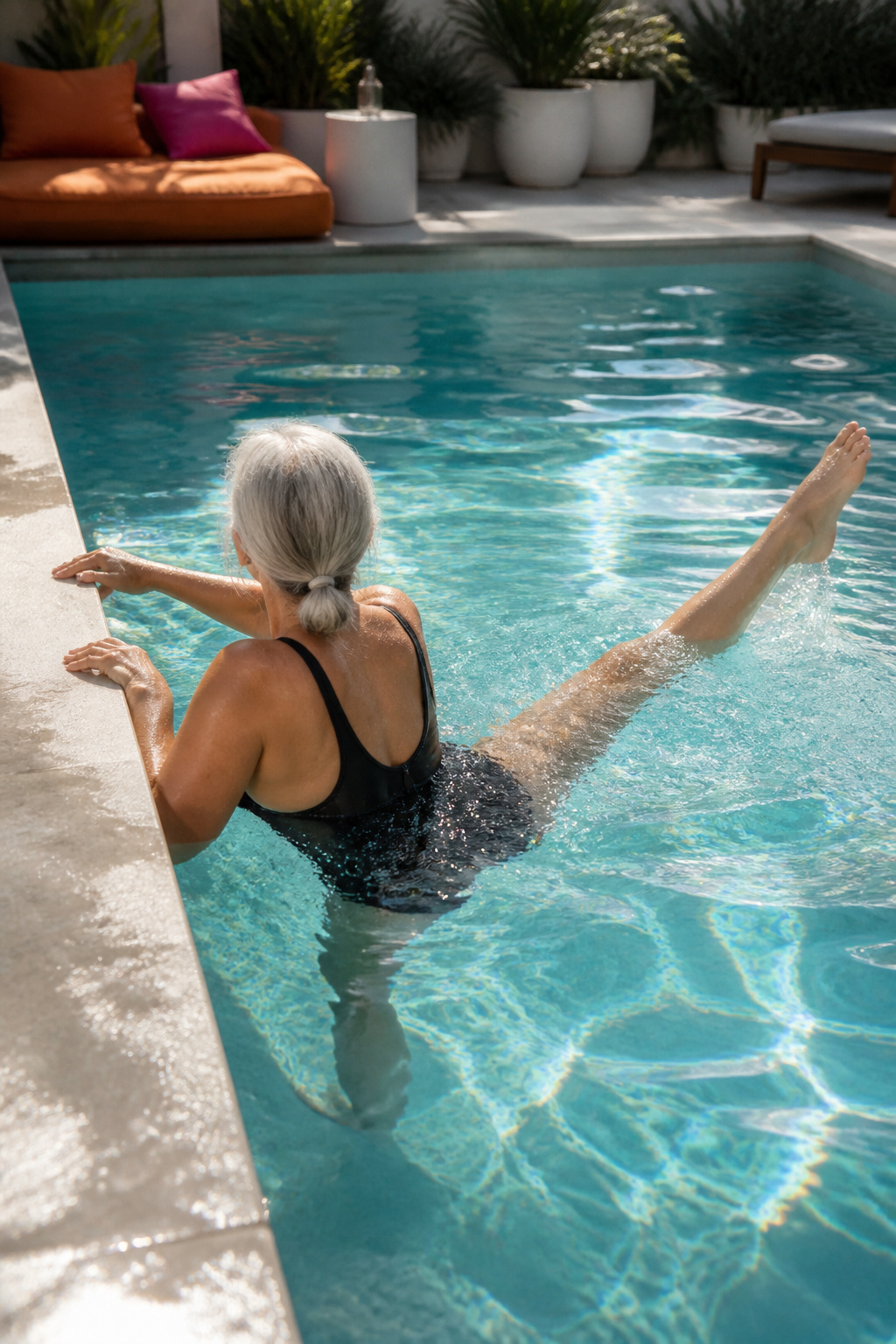
Standing in the shallow end and gripping the pool edge gives you a stable base for leg lifts that actually challenge the hip flexors and lower abdominal muscles. The water pushes back against your leg on the way up and on the way down, so neither half of the movement is a free ride. That two-way resistance is what makes pool exercises worth the time for anyone who wants strength without the joint stress of land work.
You have two workable stances here. Face the wall with feet shoulder-width apart and toes forward, back straight, eyes level. Swing one leg forward and back with the knee locked straight, extending from the hip. Ten reps on that side, then turn around and switch hands to work the other leg. Point the toes as the leg swings forward, flex the foot on the return, and the range of motion widens noticeably. The second option puts your back to the wall, hands or elbows on the deck for support, legs together and pointed down. Raise one leg sideways along the wall as high as it goes, lower with control, then alternate like a pendulum.
For seniors in particular, holding the pool edge removes the balance variable so the focus stays on controlled strength. The water’s support means a missed rep doesn’t mean a fall, and the hip joints move through their range without load bearing down on them. Either version builds the same muscles that keep you steady on land.

[ERGONOMIC DESIGN] Compared with others on the market, Our Swim Aquatic Cuffs are ergonomically designed with a recessed structure, enabling it to fit around the ankle, wrist or arm. Stronger wrapping keeps the cuff stay in place when using in the water.

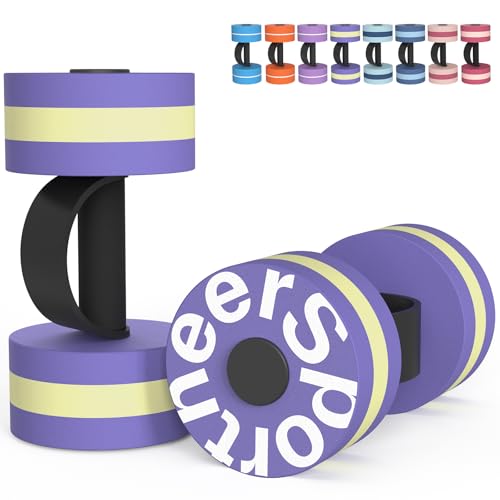
We hold the Design Patent for this product, and we are the First one on Amazon to offer the handles of water dumbbells !!
High-Knee Lifts
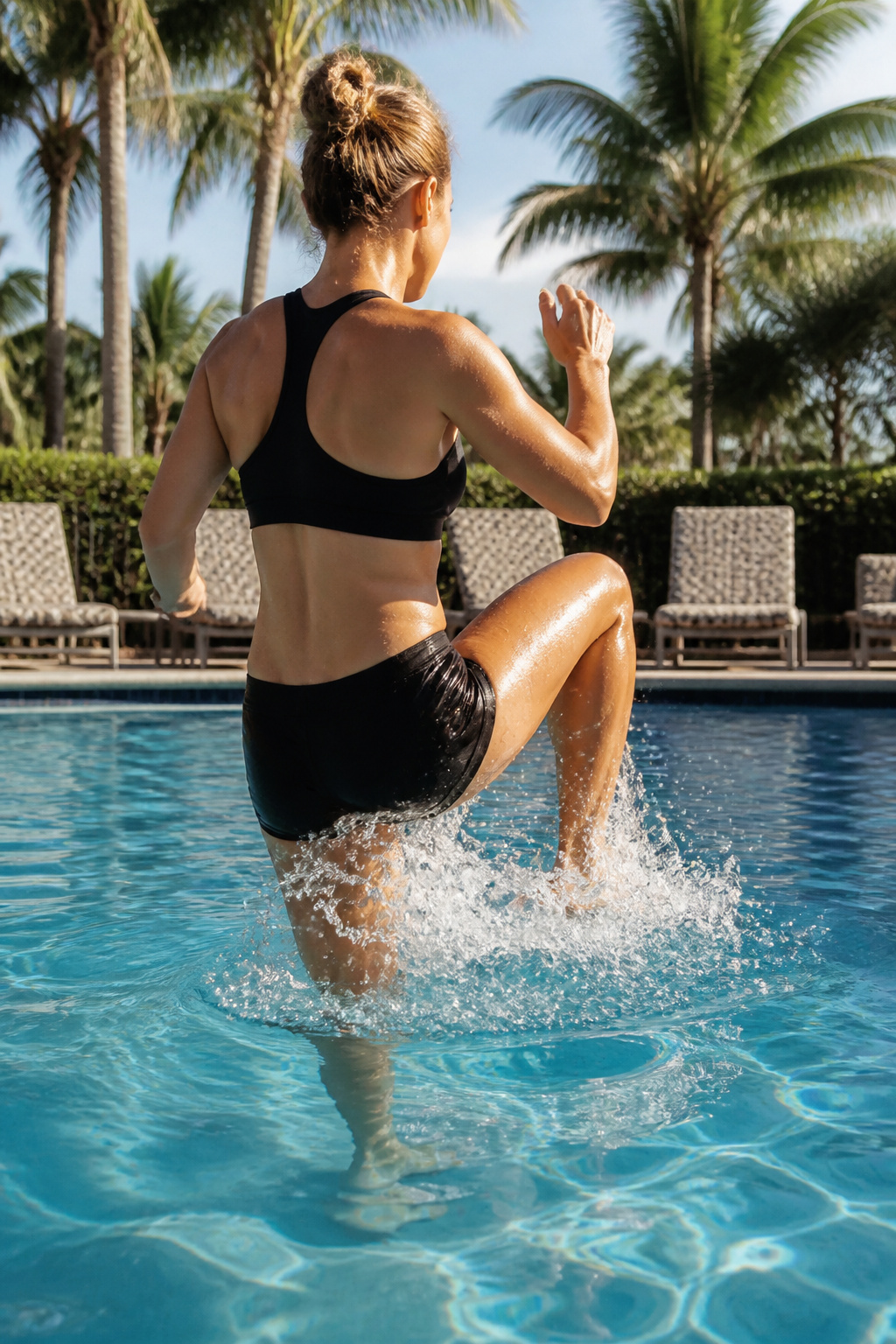
Water resistance turns a simple high-knee lift into something that actually builds cardio fitness. On land, gravity snaps your foot back down the instant you raise it; in waist-high water, the drag fights both the lift and the return, so your hip flexors and core stay under tension for the full cycle. The deeper you stand, the harder that drag becomes, though buoyancy also lightens your body weight. Waist depth keeps enough load on the legs to feel like real work without letting momentum do half the job.
Form matters more than speed here. Stand with feet hip-width apart, keep your back straight, and engage your core before lifting one knee toward chest height. A pause at the top, leg level with the water, turns the move from momentum into control; extend the leg straight out, hold again, then lower slowly. Ten to fifteen repetitions per side is a solid starting point, or run the movement continuously for five to ten minutes if you want sustained cardio. The shallow end gives you heavier body weight and more impact; chest-deep water increases resistance and reduces joint load further. Waist height hits the middle ground where most people feel the thighs burn without losing balance.

Each Ankle Weight Can Adjust: 1 2 3 4 5LBS; One Pair Ankle Weights Can Adjust: 2 4 6 8 10LBS

[ERGONOMIC DESIGN] Compared with others on the market, Our Swim Aquatic Cuffs are ergonomically designed with a recessed structure, enabling it to fit around the ankle, wrist or arm. Stronger wrapping keeps the cuff stay in place when using in the water.(SIZE HAS BEEN UPDATED AND ENLARGED)

Beginner to Advanced Adjustable Weights: Easily customize your workout intensity with Sportneer adjustable ankle weights. Each weight includes 5 removable sandbags (0.6 lb each), allowing you to adjust from 1 to 3.5 lbs per ankle, or 2 to 7 lbs per pair—suitable for beginners to advanced training.
Back Wall Glide
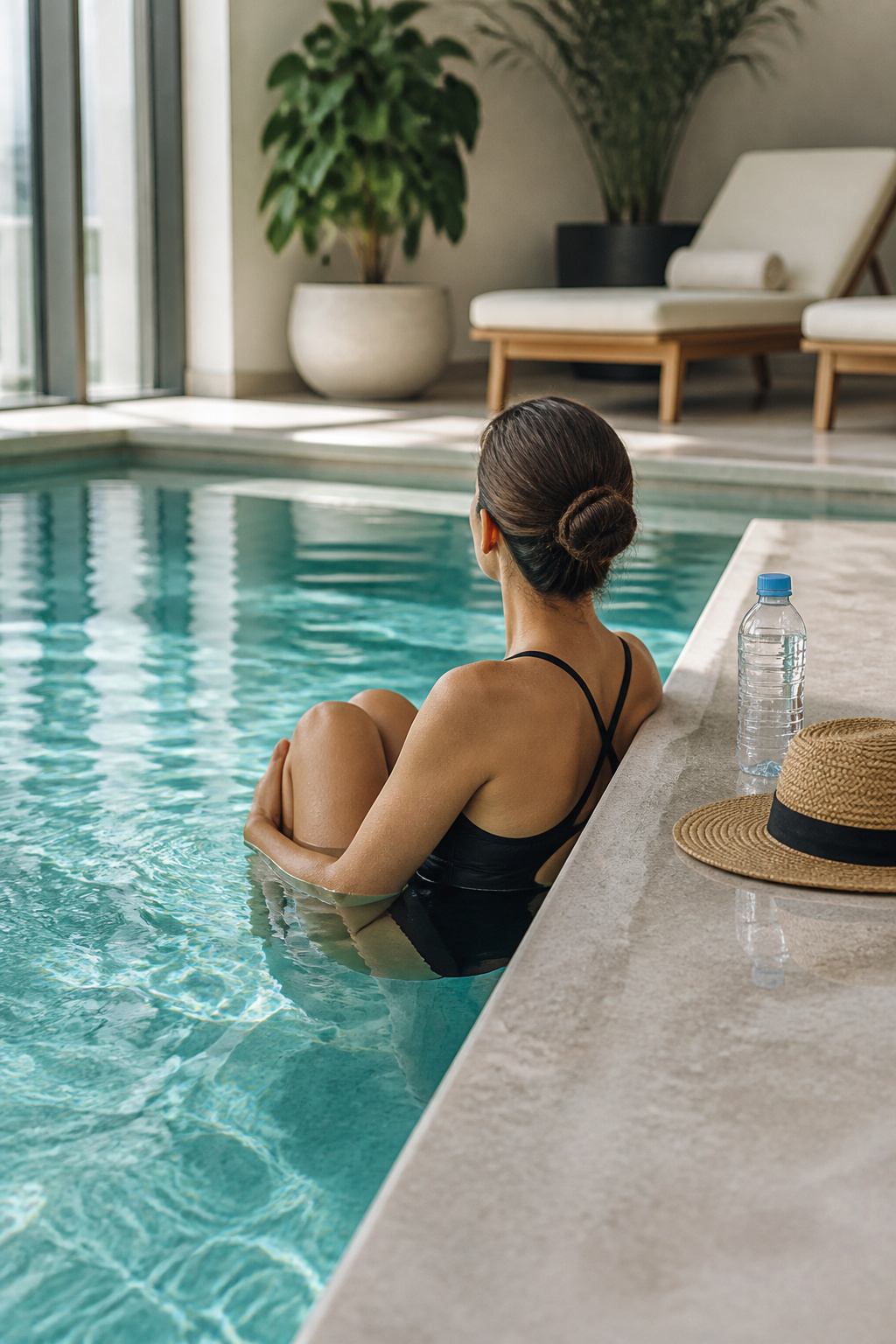
The back wall glide is where you face the pool edge, grip the ledge, and draw your knees in until your feet press flat against the wall. One push sends you floating backward, and the work is in holding that line: the core keeps your back level and your body from sinking or veering, while the legs stay extended and still. It looks simple, but staying straight without touching bottom takes more engagement than people expect.
This is the move I hand to anyone who wants pool exercises but still feels unsteady in the water. The wall is right there if you need it, the pace is yours, and the glide itself lasts only seconds before you stand, find your footing, and walk back to try again. Five to ten minutes of this builds the feel for body position in water without the jarring shifts of land work.
A 2024 study in people with knee osteoarthritis found water-based exercise outperformed land-based for mobility and pain relief, and the back wall glide fits that same low-pressure model. The core activation is real, though, not a placeholder: holding a stable back float demands the same midsection control as harder drills, just without the joint stress.
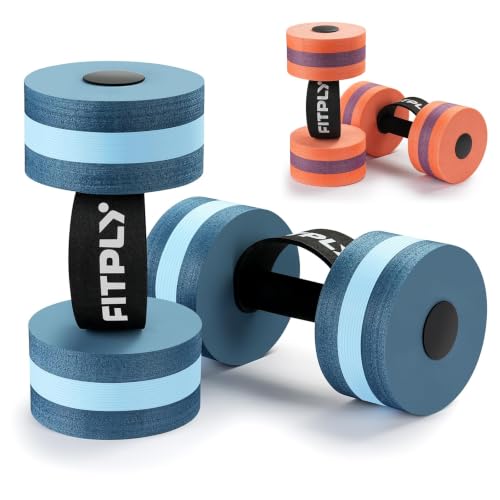
【UPGRADED HANDLE STRIPS DESIGN】: Featuring two larger and stronger PVC handle strips, ensuring a full hand grip to prevent slipping and optimize the user experience. Water dumbbells are effective for water resistance exercises, aiding in a variety of water workouts.

🌀 [3-in-1 Versatile Aquatic Tech] From Dumbbells to Barbells. Featuring an innovative twist-lock connector, seamlessly switch between single dumbbells for lateral raises and a long barbell for chest presses or core stability drills. The pool weights for water exercise cover your entire aquatic cardio and strength routine, saving space and cost

Great tool for aquatic physical therapy, hydrotherapy, and pool fitness and to increase range of motion in the upper and lower extremities
Water Push-Ups
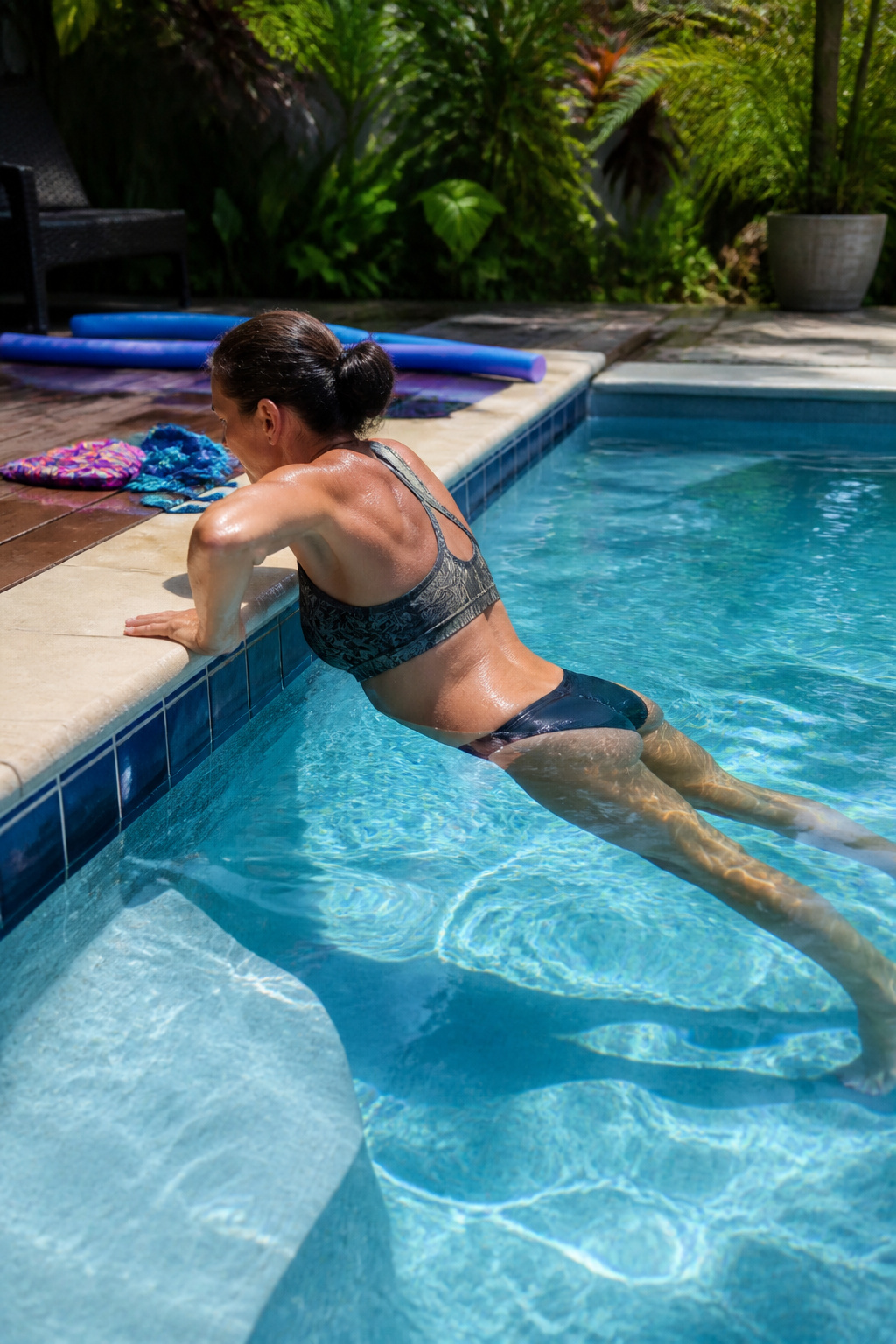
Water push-ups against the pool wall let you control resistance with nothing but your own body angle. Stand at arm’s length, hands a little wider than shoulder-width on the edge, feet planted on the pool floor. Lean in until your chest nears the wall, then press back. The closer your feet are to the wall, the more vertical you stay and the lighter the load. Step back, and your body angles deeper into the water, shifting more weight onto your arms and making the chest, shoulder, and triceps work harder without ever loading the wrists the way land push-ups do.
Two ways to progress once the basic lean feels manageable. The first is volume: build to three sets of 10, resting 30 seconds between. The second is range. Press up hard enough that you rise halfway out of the water, elbows staying slightly bent, hold for three seconds, then lower with control. That partial exit takes the exercise from a gentle press to something that genuinely challenges the same muscles you’d hit on a gym floor, minus the joint stress that makes standard push-ups a non-starter for some of us.


Extra Dense & Durable: Made with high-quality dense closed-cell structure foam that resists bending, tearing & water absorption — lasts longer.

JUMBO 5.5" DIAMETER: Oversized foam noodle provides 40% more surface area and buoyancy than standard 3.5" noodles - perfect for adults, teens, and kids who want maximum flotation and comfort in the pool or lake.
Squat Jumps
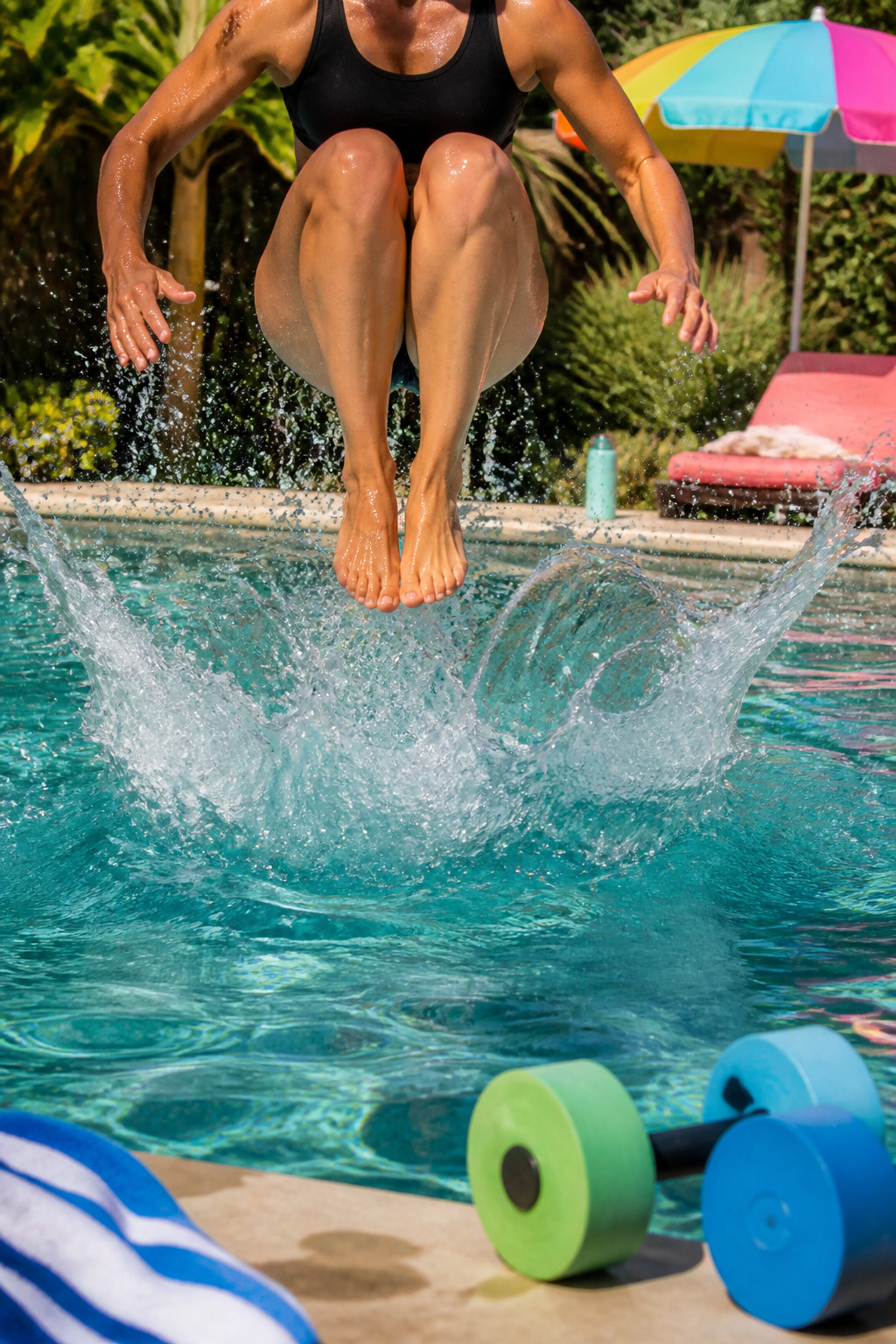
Squat jumps in water land softer than anything on pavement, but the push upward fights you every inch. Water resistance means the leap itself is the work; the landing is almost a gift. Start in the shallow end, feet shoulder-width apart, toes turned slightly out. Sit back into your hips and heels, then drive through the balls of your feet to jump as high as the water allows. Land on the balls of your feet, sink straight into the next squat, and repeat.
The water should stay shallow enough that squatting never drops your head below the surface. That line between thigh-burn and gasping for air is not where you want to work. Depth changes everything: waist-high water makes the jump easier to control, while chest-deep water adds resistance and demands more power to break the surface. Some sources describe the legs arranged like a frog or plié; others keep it a standard squat stance. The frog position widens the base and shifts load to the inner thighs, though the standard squat drives more directly through the calves and glutes.
Speed is the dial you turn for difficulty. Faster reps create more resistance and stack more work into the same window. Slower reps let you feel the drag and control the landing, which is useful when joints are cranky or the pool floor is slick. Water shoes help with traction and protect toes from the rough pool surface, a safety note worth taking literally if your gym pool has the textured finish most do.

Exercise Equipment Mat - Measuring 36 inches by 84 inches, this protective floor mat stays safely in place under a large treadmill or elliptical machine

ALL-IN-ONE COMBO SET: This pool exercise equipment set contains the basic tools required for water sports. It includes 2 high-density EVA foam water weights, 2 swimming gloves and 1 swimming belt, suitable for low-intensity exercise.

💦GREAT WATER RESISTANCE: Webbed gloves for water resistance training, great resistance gloves for an upper body workout in the pool, help tone and strengthen muscles.
Bicycle Kicks
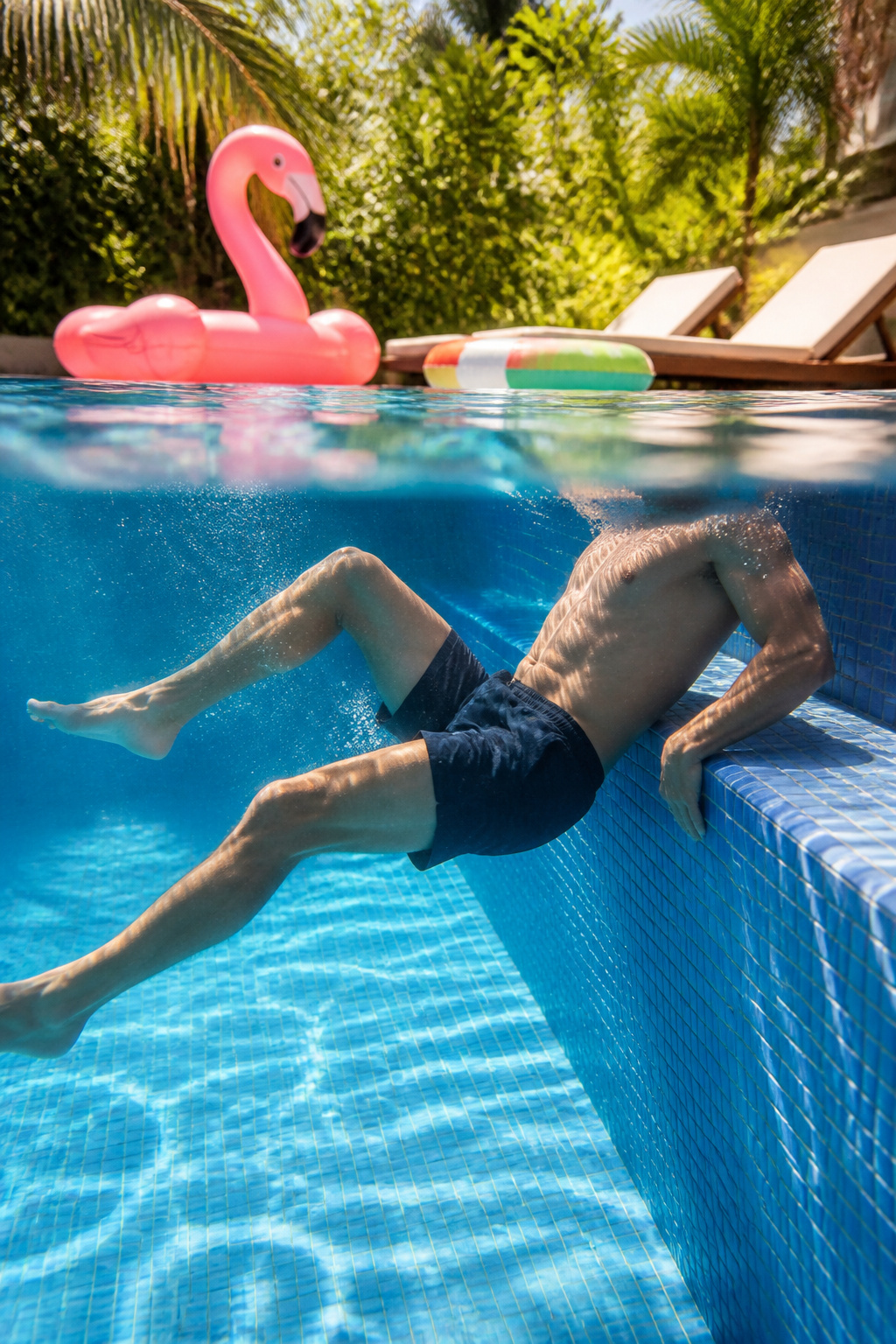
Bicycle kicks in the pool give you the ab burn of a land bicycle crunch without the neck strain or lower-back compression that sends people to the chiropractor. The water carries your weight, so your spine stays neutral while your core does the actual work.
Two setups get the job done. A pool noodle tucked under your shoulders keeps you suspended in deep water; you pedal a cycling motion with straight hips and drawn-in abs, driving each knee toward your chest and extending fully on the return. Against the wall in shallow water, you lean back on your forearms at the edge and do the same leg motion, which adds a stability challenge since the wall gives you something to push from.
The hip flexors fire harder than most people expect, especially on the extension phase where water resistance fights against your straightening leg. Your abs stay engaged throughout to keep your hips from sinking or rocking, which is where the core payoff lives. Keep the motion slow enough that you feel resistance in both directions; rushing turns it into a flail.
Land bicycle crunches let gravity slam your vertebrae together every rep. In water, that load disappears, and the drag becomes your resistance instead. The result is the same cycling pattern with none of the spinal compression.

Product Includes: our wrist and ankle weights set includes three pairs of wrist weights, ideal for serious fitness enthusiasts; You can alternate wearing them on your ankles or wrists to work different muscle groups; The black, blue, and pink colors help you distinguish between different training sets, helping you push your limits on your fitness journey

Soft and durable neoprene casing with (2) Velcro buckle straps for a secure comfortable fit

【Stylish Design & 1 lb Ankle Weights for Women Set of 2】: Say goodbye to the bulk with the unique gradient colors and triangle design that adds a touch of elegance to your exercise routine. Elevate your workouts with our Gradient Ankle and Wrist Weights Set!
Knee Lifts
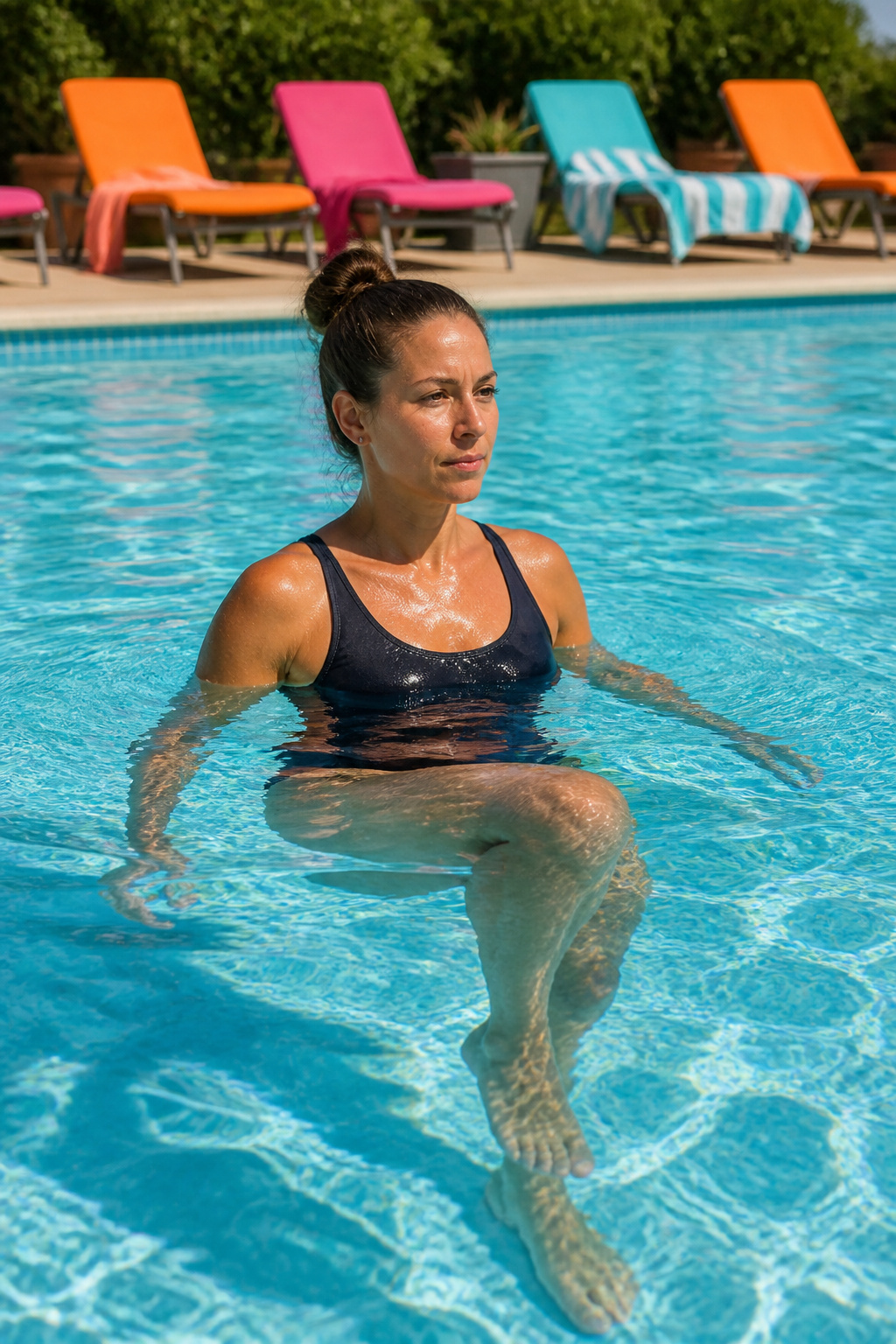
Standing knee lifts in the pool look simple until you try to do them slowly. The water hits about chest height, feet set hip-width apart, and you raise one knee toward your chest with a straight back while the drag fights every inch. I count to three on the way up, hold for one, and count to three down. At that pace, 10–15 repetitions per side is enough to feel the lower abdominal muscles and hip flexors working against the cushion of the water.
The controlled pace is what shifts this from cardio to core work. High-knee lifts in the pool pick up speed and turn into a heart-rate exercise; standing knee lifts stay deliberate and let you focus on abdominal engagement with each lift.
For knee rehabilitation, the slower version wins. The water supports body weight and reduces stress on healing tissues, so modified knee lifts fit where land exercises would jar something still recovering. The faster high-knee variation belongs in a general fitness routine, not in a rehab session where control matters more than burn.
Side Lunges
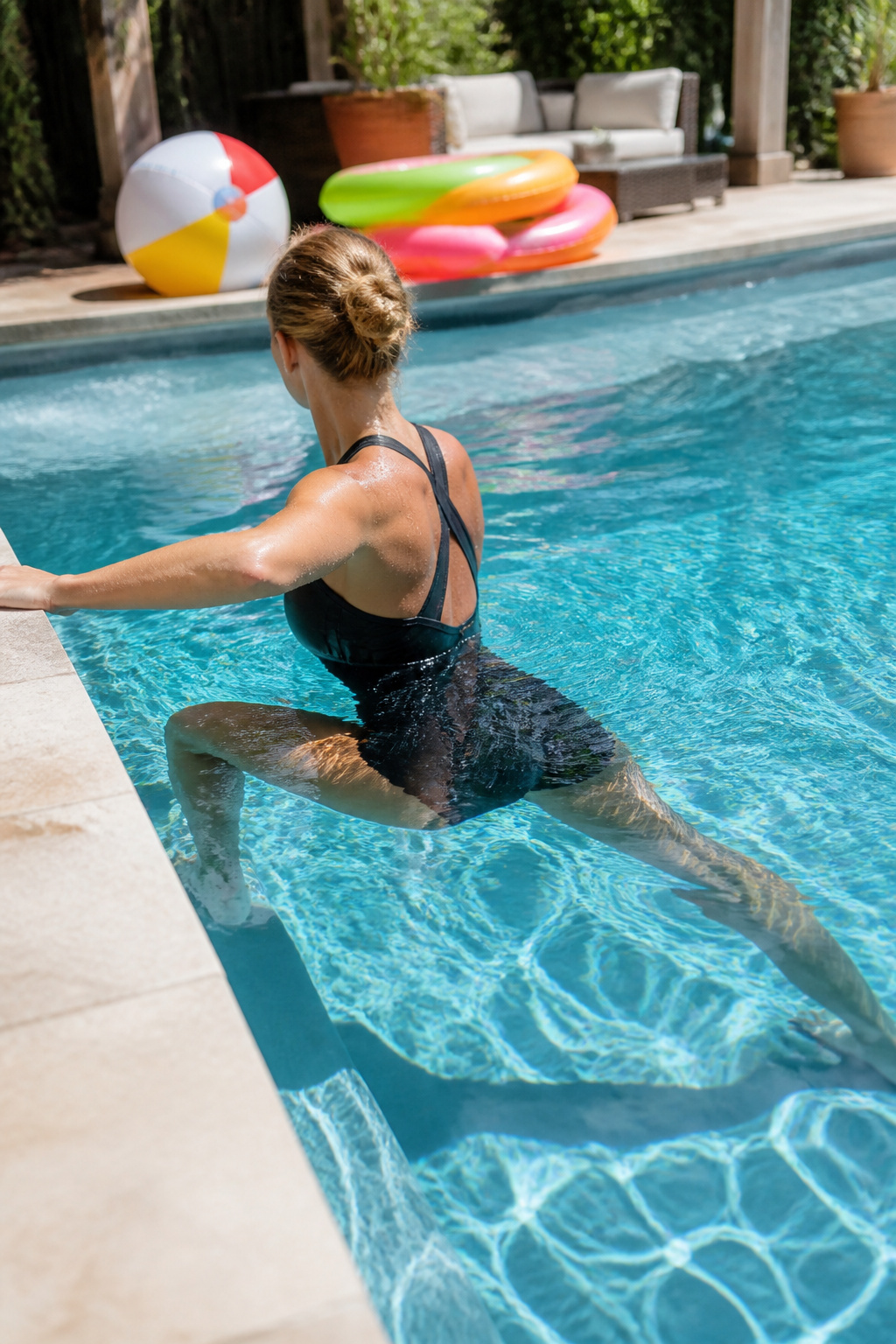
Side lunges in water push resistance in both directions, something land lunges never manage. On the pool floor, stepping out to one side meets drag from the water you’re displacing; pushing back to center fights that same drag from the opposite angle. The inner and outer thighs alternate as prime movers instead of having one side stay mostly passive.
The buoyancy is what saves the knees. On land, a traditional side lunge loads the bent knee with most of your body weight plus gravity’s pull. In chest-deep water, that load lightens considerably. The joint still bends and tracks, still gets the range-of-motion benefit, but without the compressive force that makes land side lunges risky for anyone with prior knee issues.
I keep the movement slow enough to feel the water resist each inch. Rushing turns it into a momentum exercise, and the whole point is lost. Three sets of twelve per leg, stepping wide enough that the bent knee stays above the ankle, not drifting inward. The pool floor gives enough grip to control the push back to standing, which is harder than it looks when the water wants to keep you floating sideways.
Arm Raises
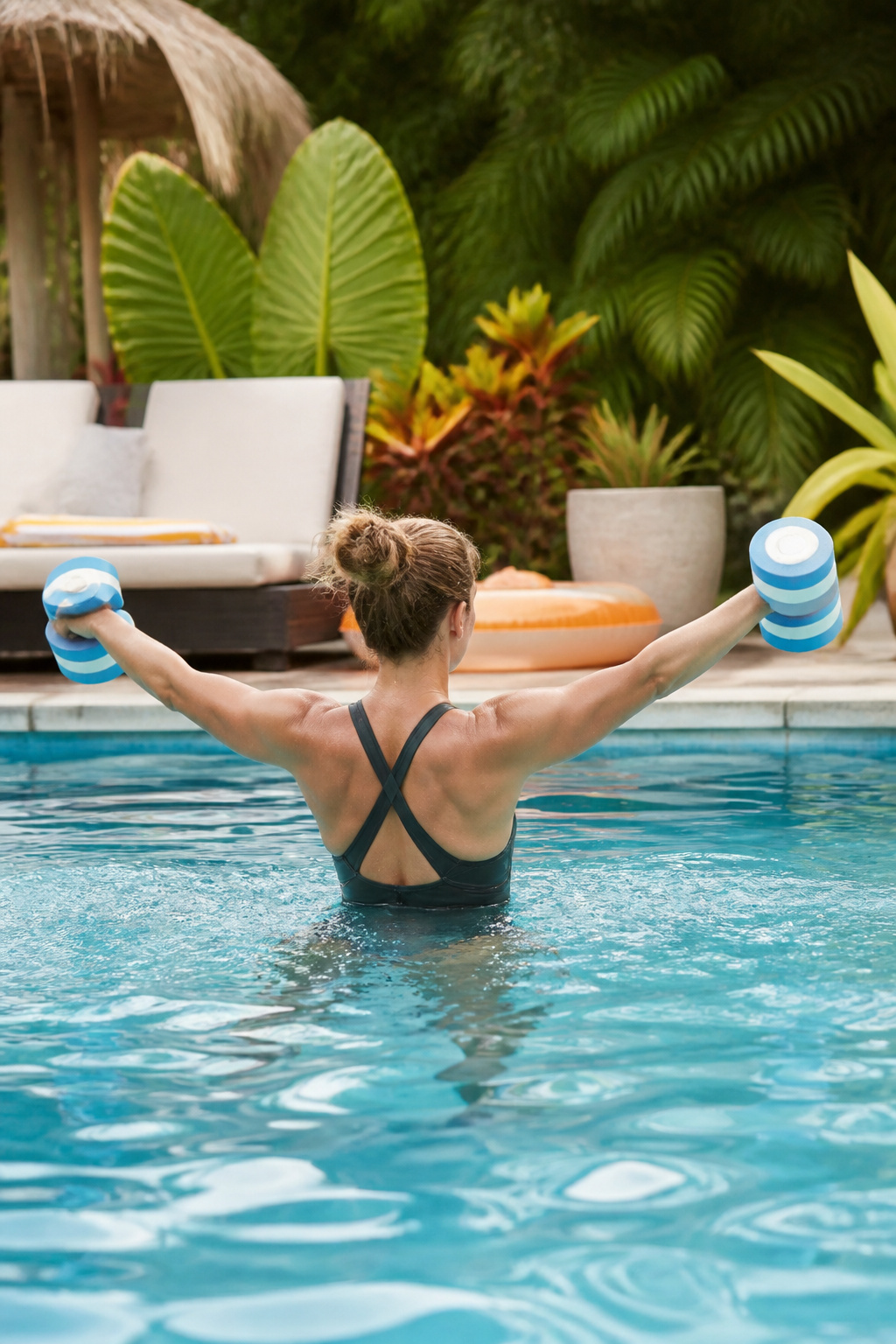
Arm raises in a pool feel backward at first because the water fights you on the way down, not up. On land, gravity resists when you lift a weight overhead; in chest-deep water, buoyancy helps the ascent and the downward press becomes the working phase. That makes the pool useful for anyone whose shoulders need load without the joint compression of dumbbells on dry land.
Front, side, and overhead variations all follow the same logic. For a front raise, start with arms straight at your sides, palms turned back, and lift straight ahead to shoulder height just under the surface, then press down slowly through 10 to 12 reps. Turn the palms up for a lateral version, lifting out to the sides until level with your shoulders, lowering through 8 to 14 reps. Overhead work reaches the same target with the arms traveling a vertical path. Foam dumbbells add surface area and drag; they are not required, but they turn the same motion into something the shoulders feel by set three.
Chest Fly
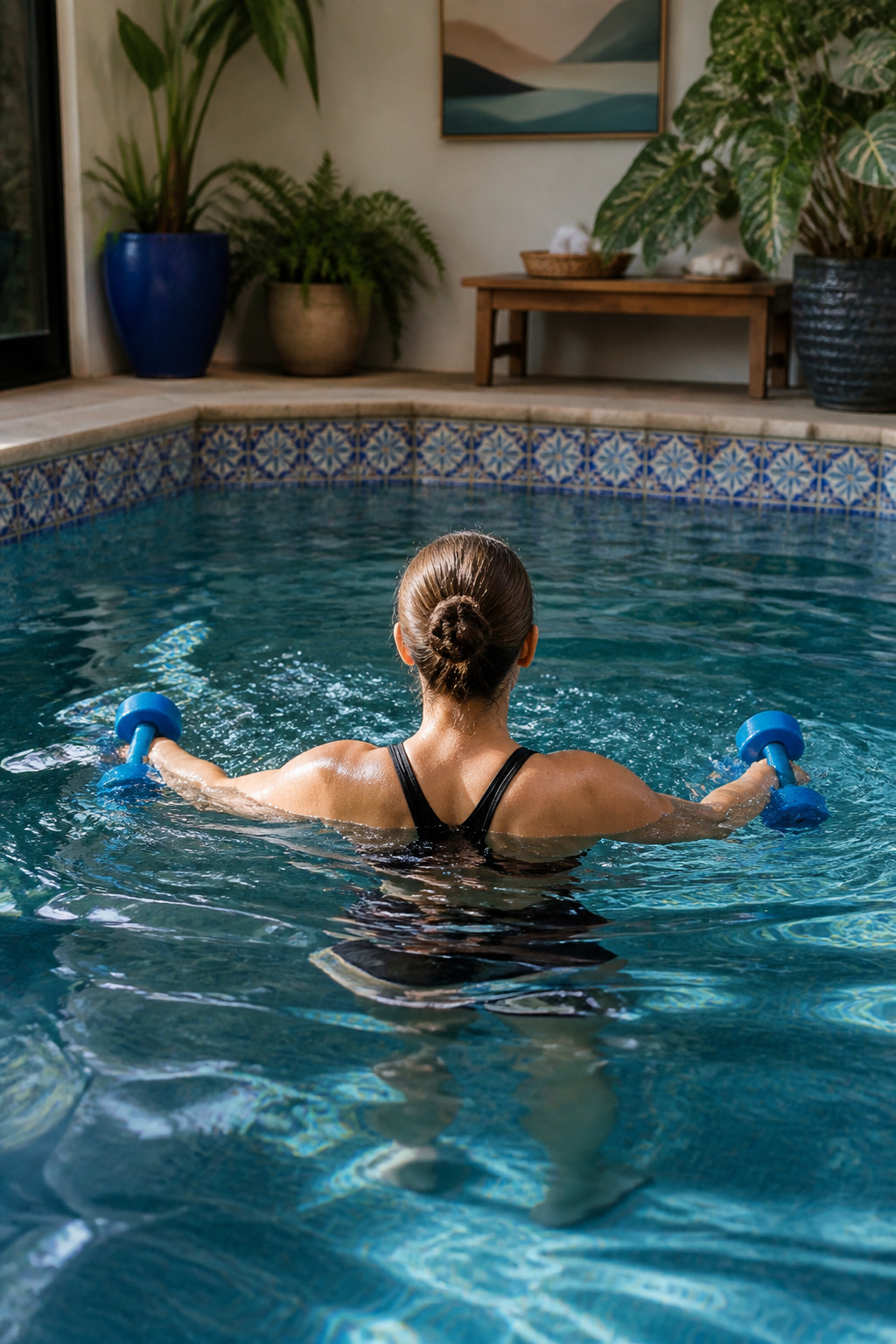
The chest fly in chest-deep water asks you to stand with feet planted and arms open wide, then sweep them together against the water’s resistance. What sold me on this move was the day I tried land dumbbell flies after months in the pool and felt my shoulders protest within two sets. Water lets you work the pecs through that same adduction without the moment at full extension where gravity tries to pull the shoulder past its happy range. The resistance builds as you accelerate, not as you stretch, which keeps the joint safer while the chest still gets the load. Keep the motion controlled; snapping the arms shut just cheats the muscle and risks tweaking the rotator cuff on the return. Elbows stay soft, not locked, and the sweep stays at or just below the water’s surface where resistance is cleanest. Three sets of fifteen is a solid starting point, though the count matters less than whether the last three reps actually slow you down.
Tuck Jumps
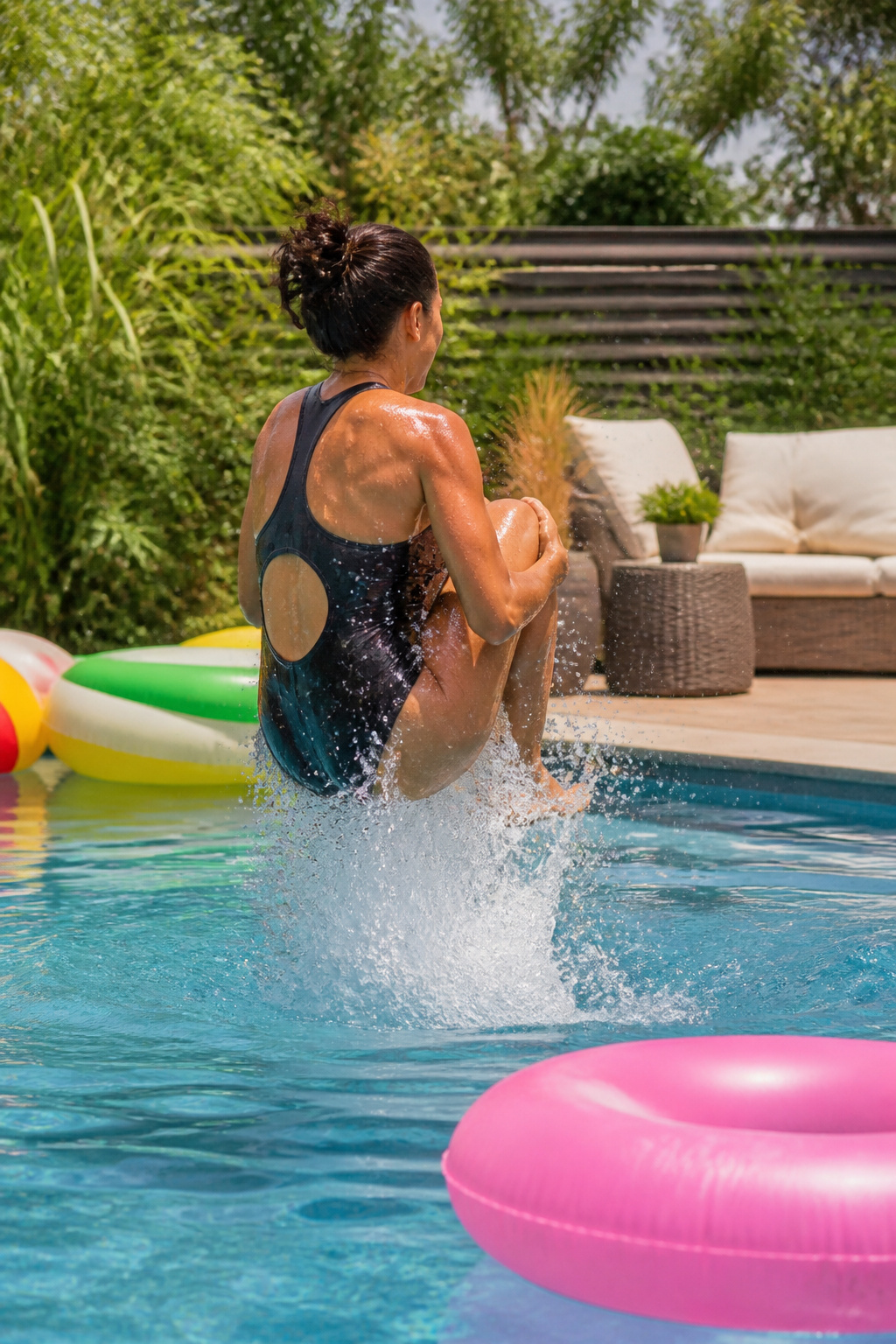
Tuck jumps in the pool hit differently than on land, and that difference is what makes them worth the trouble. The water absorbs every landing so your knees and ankles get the break they never get on concrete, but the same water pushes back against your jump so your legs and core work harder on the way up. I stand in water deep enough that my head stays well above the surface when I tuck, then jump straight up driving my knees toward my chest. The pool edge stays close enough to grab if I need balance, especially as fatigue sets in.
Chest-deep to shoulder-deep water is the workable range here. Shallower and you risk hitting bottom; deeper and you lose the push-off that makes the jump possible. The IFA flags compromised respiratory function, severe low blood pressure, or any unhealed wound as reasons to skip aqua workouts entirely, and tuck jumps add enough intensity that those warnings matter more, not less. A flotation device within reach is sensible if swimming isn’t a strength, though the jump itself keeps you upright. Two to five minutes of easy swimming first, or light jogging and squat jumps in place if you don’t swim, gets blood moving without draining the tank.
Noodle Exercises
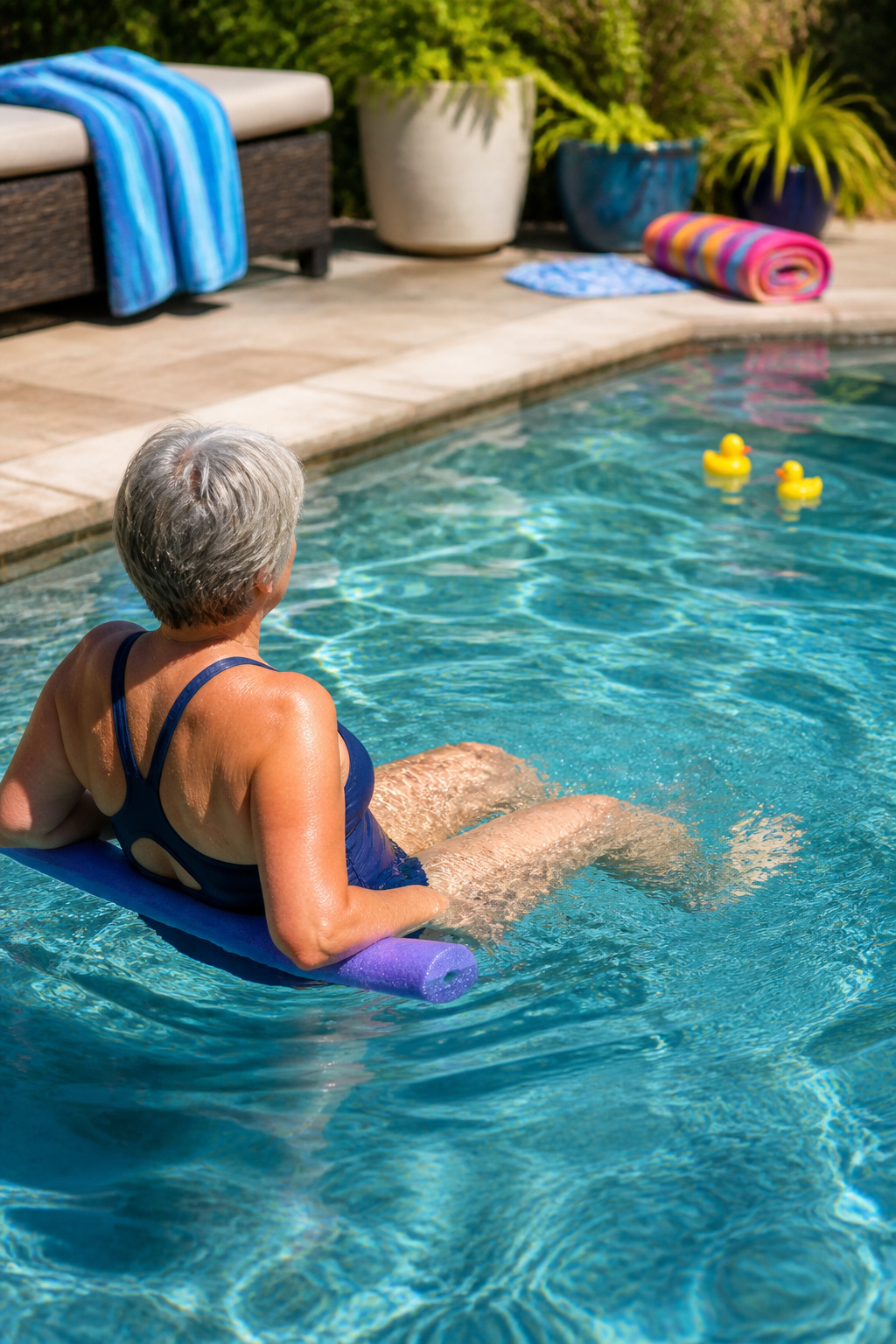
A pool noodle turns deep water into something you can actually use without being a swimmer. The foam tube holds you up so your feet never touch bottom, which means your core fires constantly to keep you from tilting sideways or spinning around. That drag against the water forces your deep core to stabilize every move you make.
Seated bicycling works like this: loop the noodle across your back and under your arms so it forms a U behind you, then pedal your legs in circles. The noodle keeps your shoulders above water while your abs do the steering. Rowing gives you resistance in both directions; hold the noodle vertically in front of you, push it down through the water, then pull it back up with control. For push-pull movements, anchor one end of the noodle against your chest and press the other end forward, fighting the buoyancy that wants to shoot it upward.
The real payoff for non-swimmers is that the noodle replaces the skill you do not have with a piece of equipment that costs a few dollars. You get the heart rate and the full-body resistance of deep water without ever needing to tread or float on your own. Knot the noodle and slip it over your foot for hamstring curls, letting the foam float your heel up so you actively press it back down. Ten reps each side is enough to feel it.
Deep Water Jogging
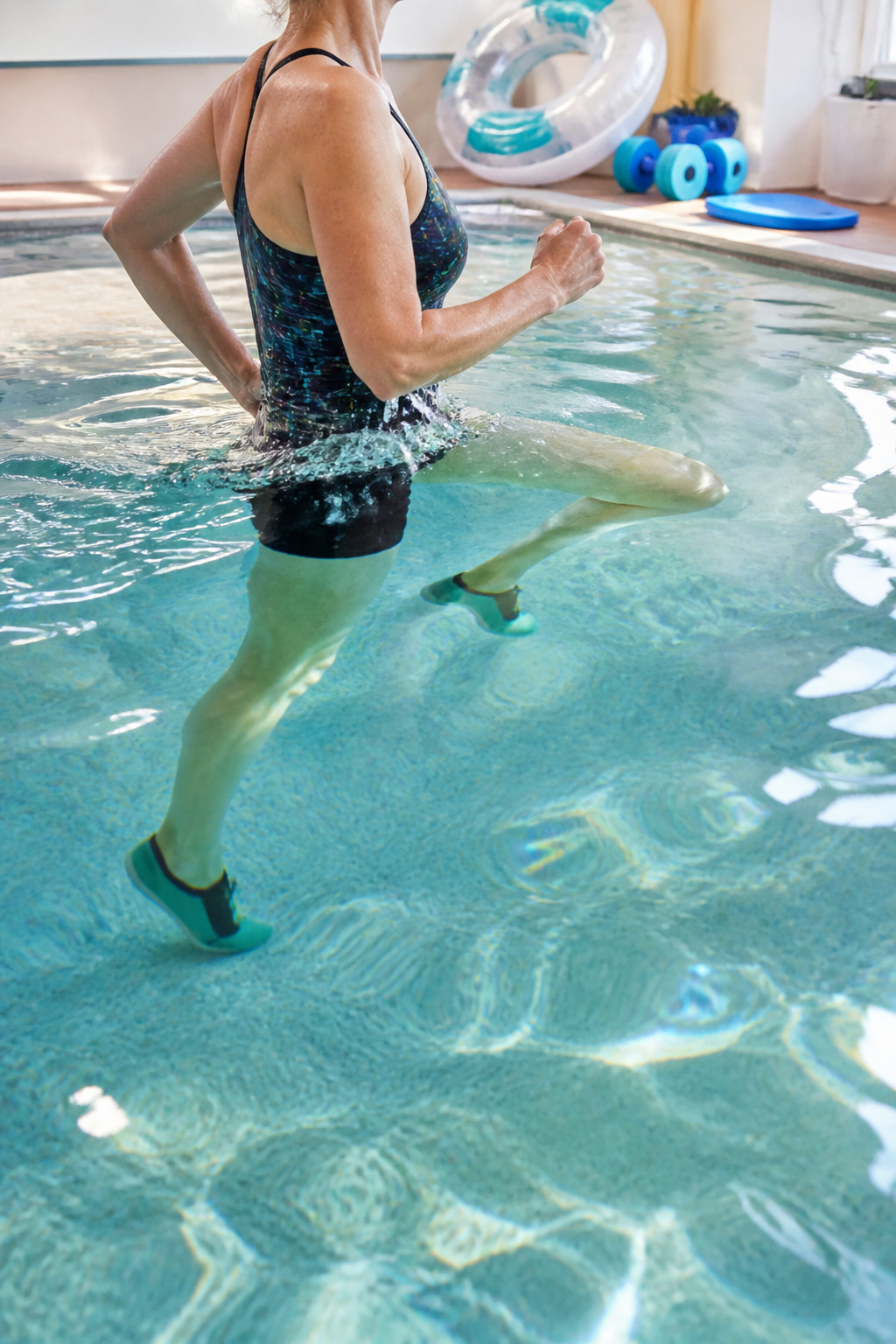
Deep water jogging keeps your feet off the pool bottom entirely, which changes everything about the load on your body. A flotation belt or a pair of noodles held under your arms holds you upright while your legs cycle through a running motion that mirrors land form without the joint impact. The water supports you completely, so there is no pounding against pavement or treadmill deck.
This is the version physical therapists reach for first when someone needs to rebuild fitness after injury or surgery. The 2024 study comparing water-based exercise to land-based for knee osteoarthritis found water workouts produced greater improvements in mobility and pain, which helps explain why rehab protocols favor it. Your heart rate climbs, your arms drive forward and back, but your knees and hips absorb none of the shock.
The mistake most people make is doing too much on day one. The buoyancy feels so supportive that an easy thirty minutes seems conservative, then stiffness arrives the next morning. Start with less than you think you need, confirm you are not sore, then build. One to five minutes can be enough for a first session if the effort is honest.
Water Planks
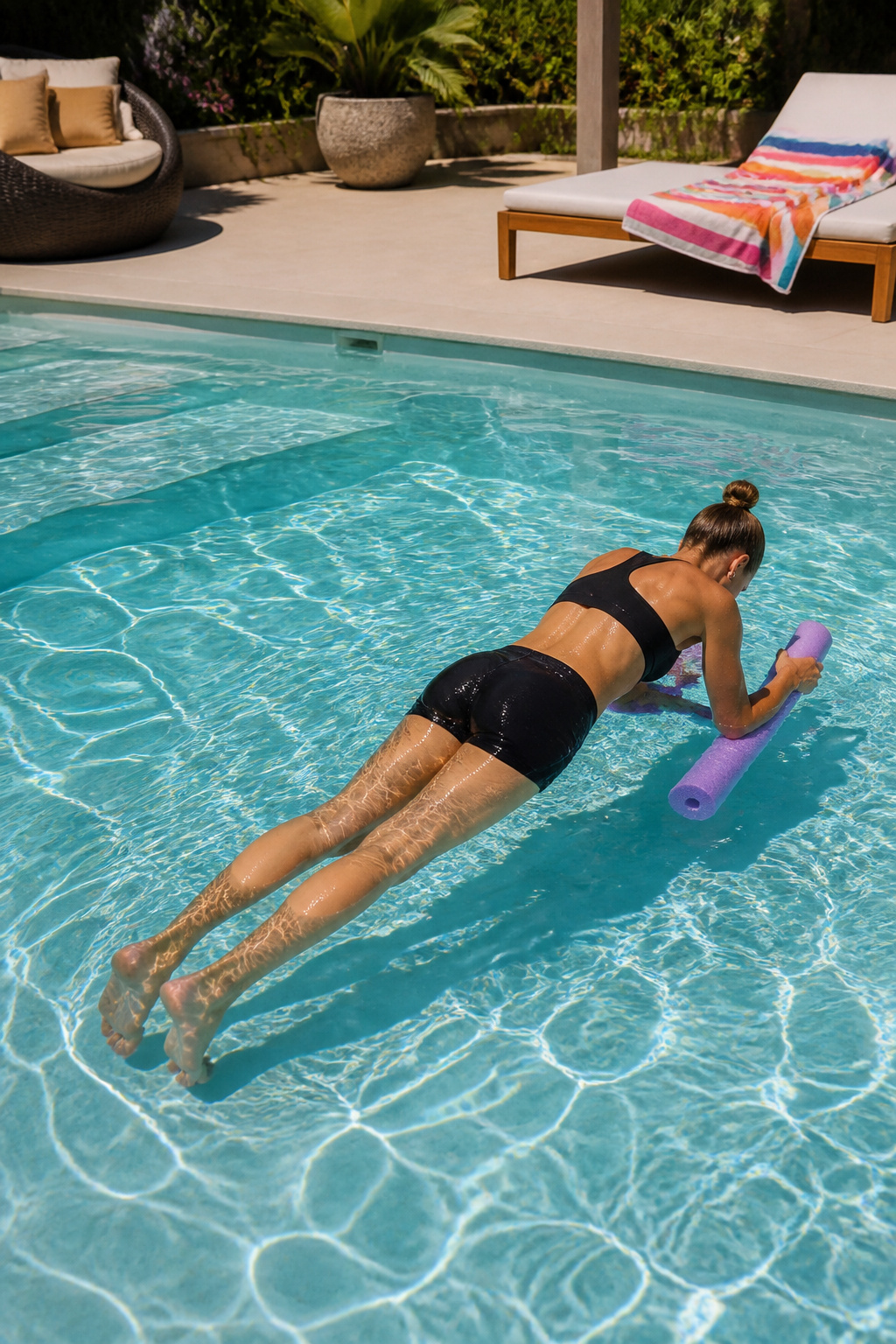
Water planks strip away every excuse your core has for staying comfortable. On land, the floor holds you still. In the pool, a noodle becomes your only contact point, and the water itself keeps shifting. Hold the noodle between your hands, extend your legs behind you, and the plank position becomes something else entirely: a fight against rotation, sag, and drift all at once.
The instability is the point. Core engagement ramps up because the surface beneath you is never done moving. A suspended variation, legs floating with no push-off from the pool floor, removes the last bit of stability and forces the deeper abdominal muscles to fire continuously just to keep your hips from breaking the surface or sinking toward the bottom.
This is not a beginner’s modification. Land planks build strength; water planks test control. Start with feet on the shallow-end floor and the noodle as your floating base. Only when that feels solid should you try lifting both legs into full suspension. The progression from supported to suspended mirrors how balance demands scale, but the water never lets you forget that balance is the entire job.
Why Water Works
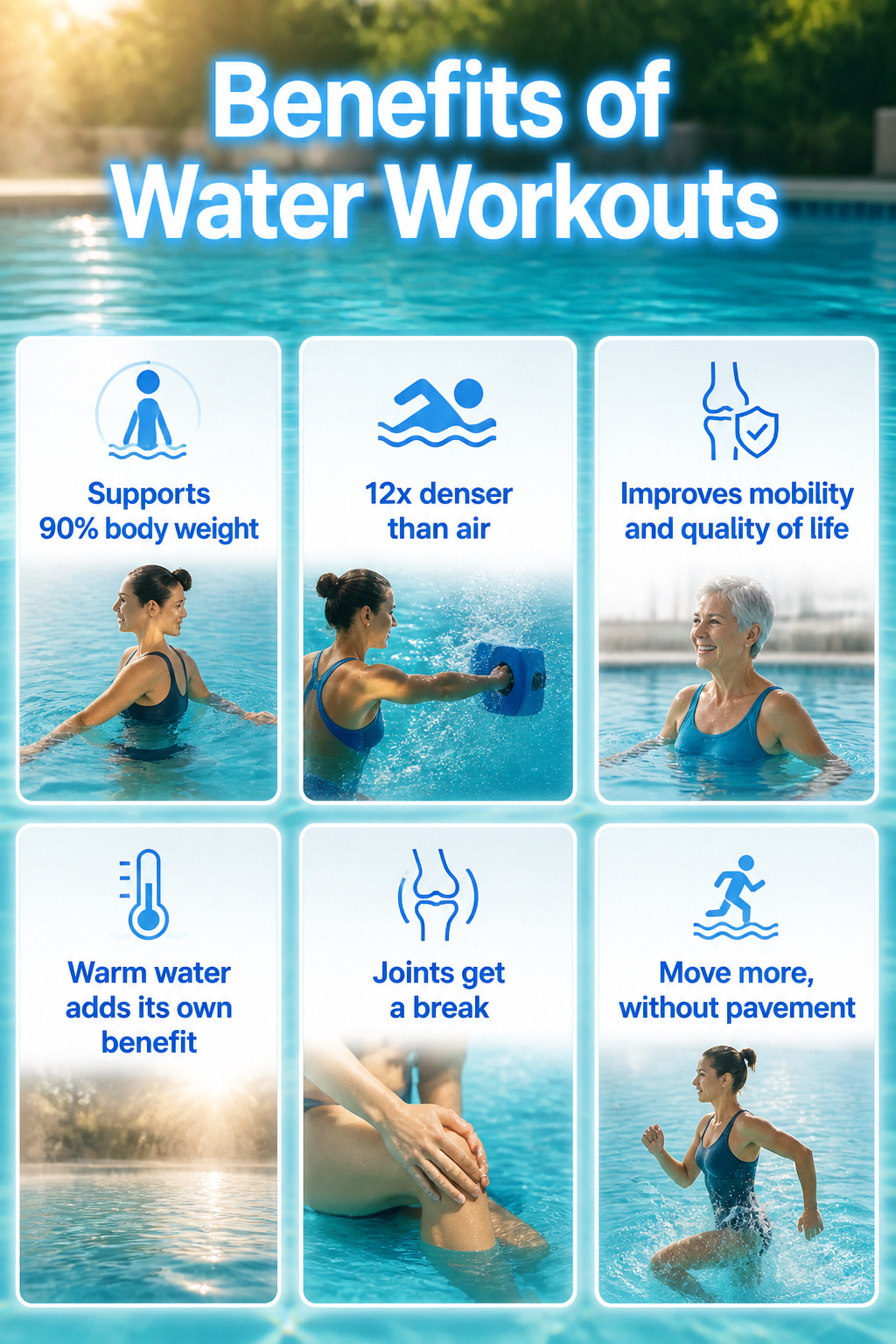
Water supports roughly ninety percent of your body weight once you’re chest-deep, which is why a pool can feel like the only place your knees finally get a break. That buoyancy is not just comfort; it changes what movement costs. Joints that protest on pavement often tolerate walking, lunging, and even light jumping in water that would be unthinkable on land.
The resistance works the other direction. Water is roughly twelve times denser than air, so every push through it builds strength without a single weight in hand. For anyone recovering from surgery or managing arthritis, that combination matters: load off the healing tissue, demand still placed on muscle. A 2021 study on knee osteoarthritis found patients who stuck with aquatic exercise improved both mobility and quality of life scores compared to land-based programs alone. Warm water adds its own benefit, relaxing muscle tension before you even start the work.
Pool Temperature and Safety
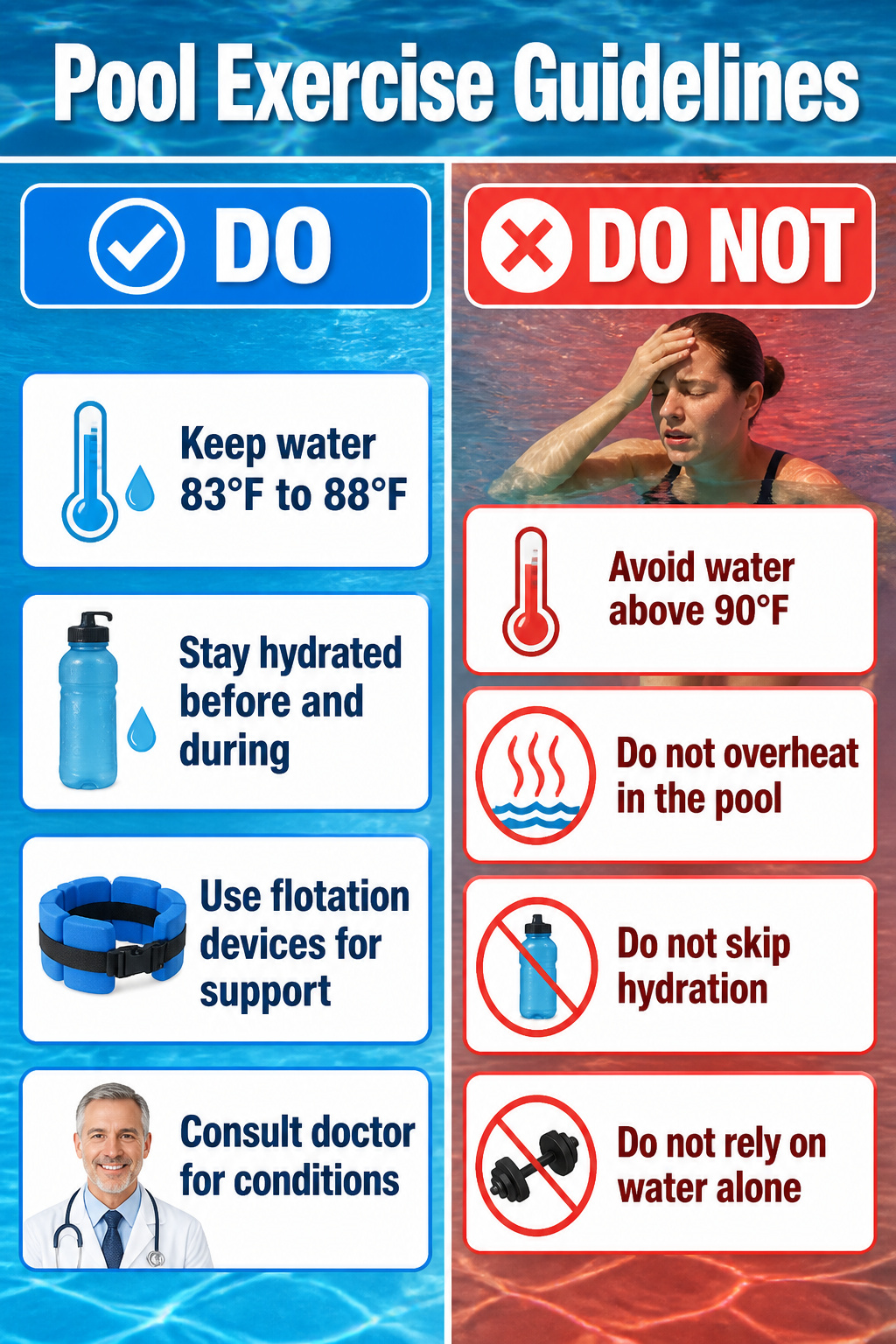
Water between 83°F and 88°F (28°C to 31°C) hits the sweet spot for most pool exercises. Cooler than that and your muscles tense up; warmer and the workout starts to feel like a hot bath with no real resistance. Anything above 90°F (32°C) should be avoided entirely for exercise. The heat traps your body temperature instead of letting it dissipate, which can lead to lightheadedness or worse.
I learned the hydration lesson the hard way after a 45-minute water jogging session left me with a headache that lasted the evening. You sweat in water even when you do not feel it happening. Keep a bottle on the pool deck and drink before, during, and after.
Flotation belts, vests, or even a simple Styrofoam noodle keep you upright in deeper water without burning energy just to stay afloat. A buoyancy belt is my preference for jogging in place, since it frees both arms for a natural running motion.
If you are managing a specific condition, check with your doctor or physical therapist before starting. Water depth and temperature both shift based on what your body actually needs: cooler water for longer sessions without fatigue, warmer water if pain reduction is the priority.
Frequently Asked Questions
What are some good pool exercises for seniors?
Water walking, arm circles, leg lifts, and the back wall glide are all strong choices. The water’s buoyancy takes about ninety percent of body weight off the joints, and holding the pool edge on moves like leg lifts removes the balance variable so the focus stays on controlled strength. Physicians routinely prescribe water arm circles for older patients recovering from shoulder surgery or managing osteoarthritis.
How often should I do pool exercises?
Three to four times a week is the standard recommendation. Start with less than you think you need, confirm you are not sore, then build from there. Even one to five minutes can be enough for a first session if the effort is honest.
Are pool exercises safe for everyone?
Pool exercises are generally safe for most people, including older adults and those with joint issues, but certain conditions require caution. The International Fitness Association recommends that people with compromised respiratory function, severe low blood pressure, open or unhealed wounds, or fear of drowning avoid aqua workouts. If you cannot swim or are not a strong swimmer, keep a flotation device nearby.