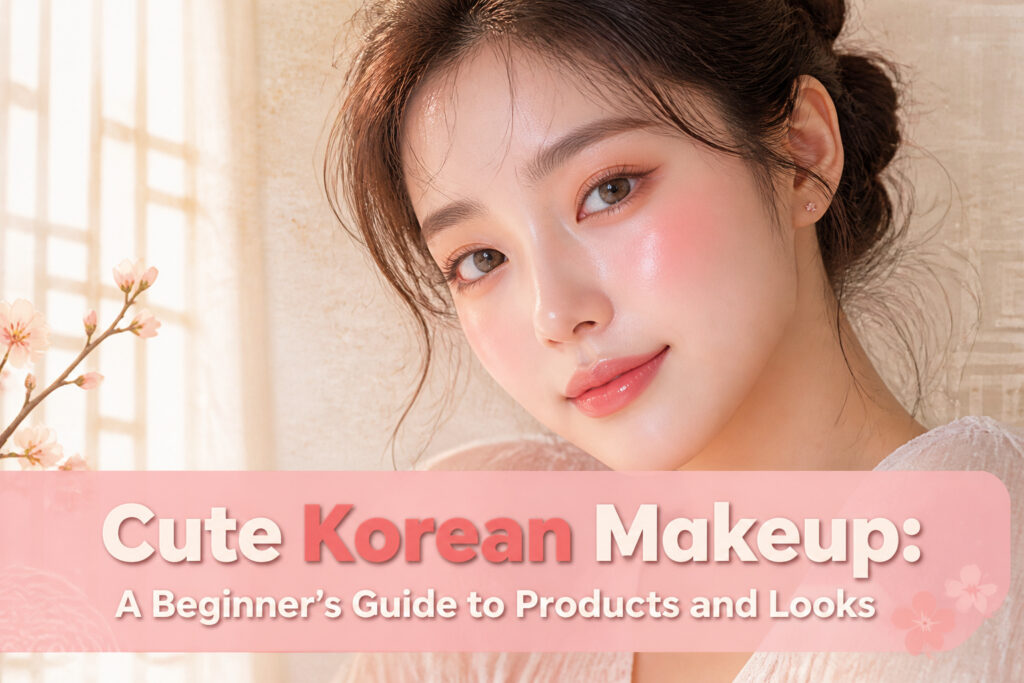
Cute Korean makeup is a skin-first approach that trades full coverage for sheer, buildable formulas and a dewy finish.
The catch is that most Western techniques work against it: blush belongs high on the cheekbone, not the apple, and the "puppy" eyeliner curves downward instead of winging up.
A $25 Tirtir cushion foundation with SPF 40 and red propolis extract typically replaces both moisturizer and base in a single pat, which is why reapplication midday is built into the formula rather than treated as a fix.
Cushion Foundation
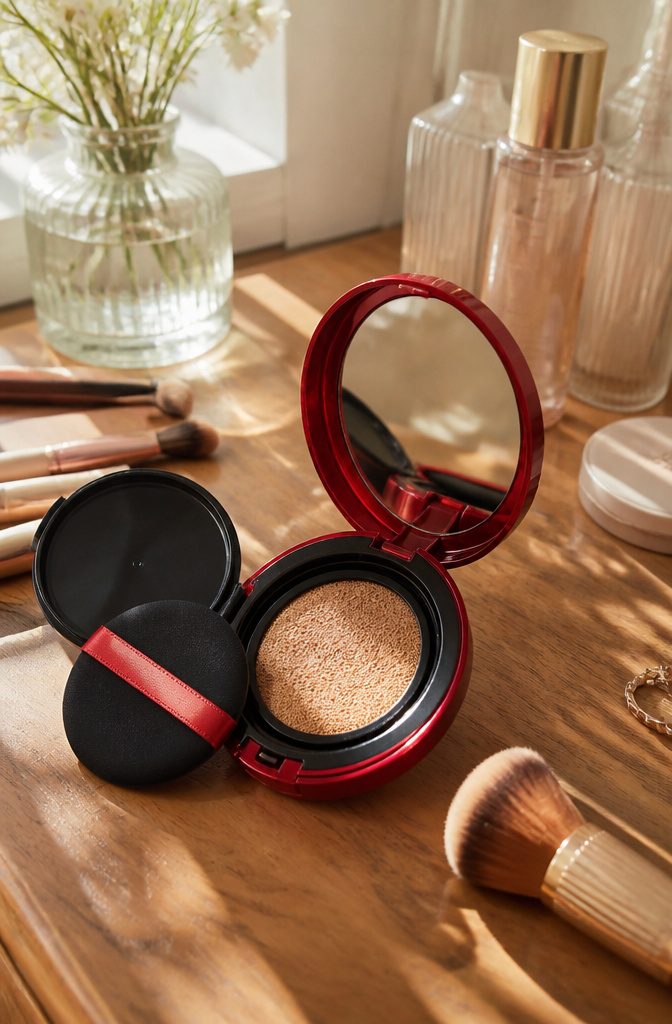
The Tirtir Mask Fit Red Cushion at $25 is where I finally understood why Korean base makeup feels so different from the Western foundations I grew up with.
It is hydrating enough to skip a morning moisturizer yet still delivers SPF 40 and a satin finish that reads as actual skin, not a mask.
That combination matters for the cute Korean makeup look because dryness catches light wrong and turns a youthful glow into texture you did not ask for.
Western full-coverage foundations often aim to erase what is underneath. This cushion does the opposite: one press of the puff veils dark spots and redness while the red propolis extract and glycerin keep the surface supple.
The 0.63 oz compact is designed for reapplication, which is why the formula stays light through multiple layers instead of cakeing.
"Many people in Korea use cushion foundations which come in a variety of finishes and often have skin-care ingredients. After a meal, it’s quite common to see people pull out their cushion compact to reapply, so foundation formulas tend to be light and not cakey or heavy"
— Vogue
That portability is not a bonus feature; it is the logic of the whole category.
Hydration plus buildable coverage plus sun protection in a single step means fewer products fighting on your face, and fewer opportunities for the finish to turn heavy by noon.
![[CHALLANS de PARIS] Cushion de Lunar Excellence Foundation – 21 Bright Ivory | Long-Wear, Buildable Coverage, Lightweight Airy Fit, Hydrating Glow](https://m.media-amazon.com/images/I/41m9hCt07cL._SL500_.jpg)
Natural-to-Full Coverage, Flaw-Smoothing Finish Buildable pigment evens tone and softens the look of pores and redness for a polished, photo-ready complexion.

[1st KOREAN CUSHION FOUNDATION with 40 SHADE RANGE] TIRTIR Mask Fit Red Cushion is the first Korean cushion foundation with a wide range of shades. From light to deep tones, this TIRTIR cushion foundation provides strong, comfortable coverage packed with nutrients for a flawless, all-day wear. Achieve the perfect "glass skin" look with this innovative Korean makeup solution.

Natural-Looking Buildable Coverage: Tap on a thin layer for everyday coverage or build where you want more even-looking skin tone. The lightweight cushion formula helps create a smooth, fresh-looking base without a heavy feel.
Lip Tints
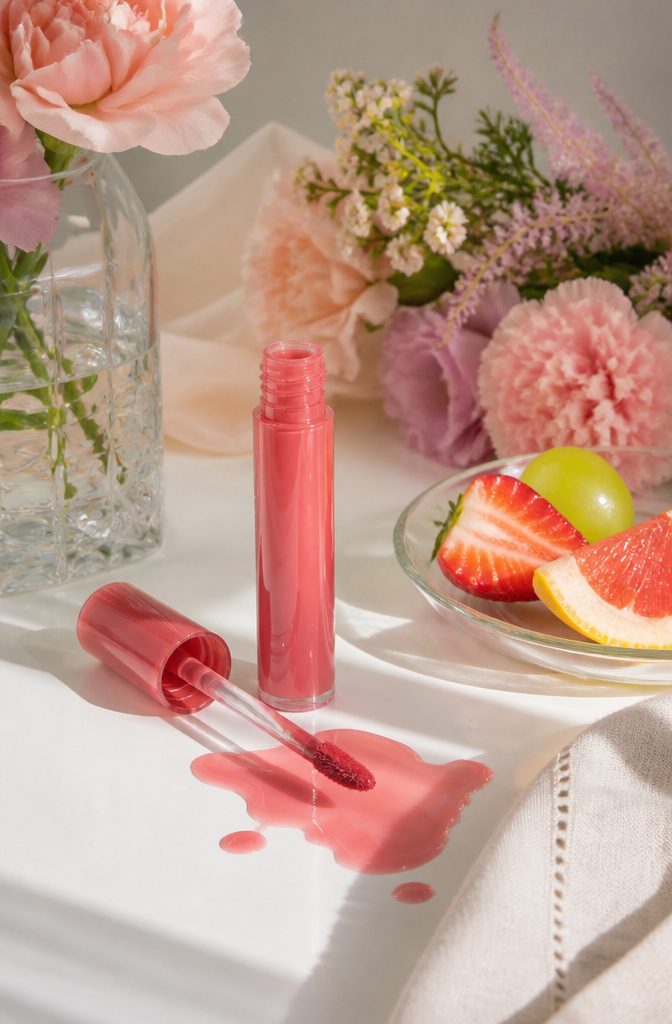
Sheer, buildable formulas are where Korean lip tints pull away from the opaque bullets most of us grew up with.
Western lipsticks aim to blanket the lip in one saturated swipe, but the cute Korean makeup look lives in the stain that remains after the gloss fades.
That staining quality is what buys you the longevity, since reapplication becomes optional rather than hourly maintenance.
Rom&nd The Juicy Lasting Tint sits at $14 and shows how the category works in practice. The water-light layer dries fast enough that you have maybe thirty seconds to blur the edges into that popsicle-stain gradient before it sets.
One pass gives a wash of color; two layers hit the sweet spot of payoff without the gloop that heavier formulas collect in lip lines.
The fruit-derived oils and sodium hyaluronate in the mix do the skincare-adjacent work of softening the surface while the pigment sinks in.
What stays behind after the shine wears off is the point. A true tint leaves a flush that looks like you just bit into something ripe, not like you’re down to your last bit of product.
The tradeoff is speed in application, since the watery texture sets before a traditional lipstick would even finish its first crease.
For anyone used to layering and blotting through lunch, the learning curve is real, but the payoff is a mouth that looks lived-in rather than painted-on.

Natural-Looking Buildable Coverage: Tap on a thin layer for everyday coverage or build where you want more even-looking skin tone. The lightweight cushion formula helps create a smooth, fresh-looking base without a heavy feel.

Full Sun Protection: Provides broad-spectrum SPF 50+ sun protection to shield skin from UVA and UVB rays

[Smooth, Radiant Glow Without Caking] : Achieve a flawless, natural glow that stays smooth and even throughout the day. The lightweight texture blends seamlessly onto the skin, delivering a radiant finish without clumping or dryness
Blush
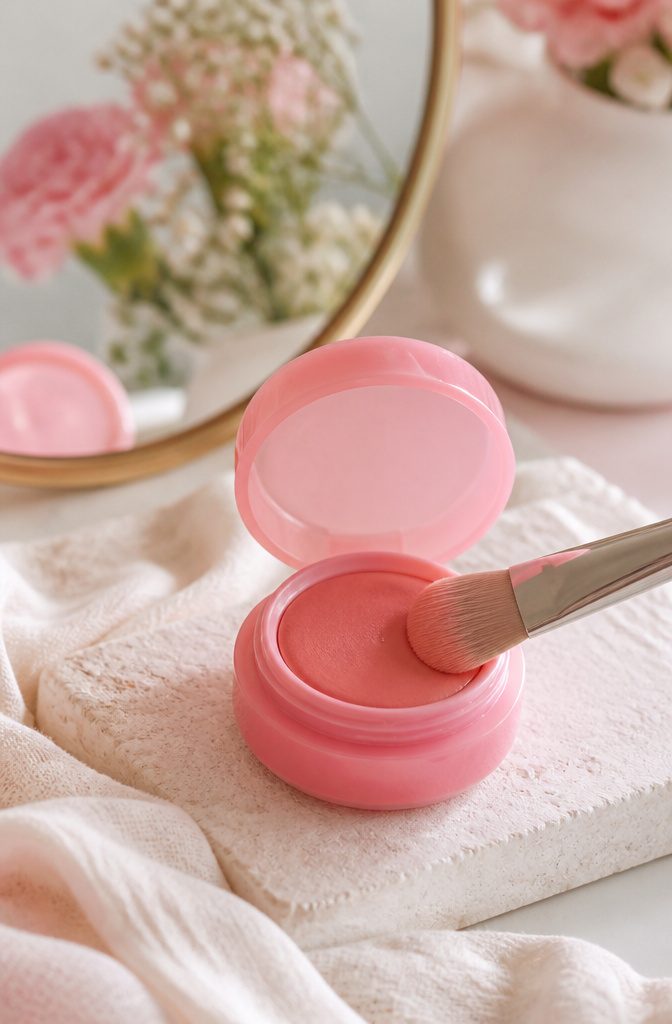
Cream blush changed how I think about placement. Korean technique sits the color higher on the cheeks, almost at the outer corner of the eye, sweeping upward toward the temple.
This placement draws the eye diagonally and creates a subtle lift that powder formulas sitting lower on the apple simply don’t achieve.
The Fwee Blurry Pudding Pot at $20 became my reference point for this.
The texture is exactly what the name promises: a whipped, bouncy mousse that melts into skin with a blurred, velvety matte finish. It doubles as a lip color, though I reach for it almost exclusively on cheeks.
The 0.17 oz pot is small, so I tap a tiny amount with a finger, pat it onto the high point of the cheek, and blend outward before it sets.
The pigment builds easily, which matters because the first layer is sheerer than it looks in the jar.
Cream formulas support the dewy finish that defines this aesthetic in a way powder cannot. The Fwee pot contains dimethicone and cocoa seed butter, which gives it that slip and skin-meld quality.
Powder sits on top; this becomes part of the surface. For anyone starting out, the placement higher on the cheekbone matters more than the product itself, but the cream texture makes the placement forgiving enough to learn on.

[WATERY GLASS-LIKE SHINE] A lightweight lip tint that delivers a crystal-clear, glass-like shine in just one swipe. Leaves your lips looking fresh, smooth, and naturally dewy without any heavy feel.

[WATERY GLASS-LIKE SHINE] A lightweight lip tint that delivers a crystal-clear, glass-like shine in just one swipe. Leaves your lips looking fresh, smooth, and naturally dewy without any heavy feel.

LONG-LASTING & TRANSFER-PROOF TATTOO-LIKE LIP STAIN : Experience ultra long-lasting color with a tattoo-like lip stain that stays vibrant for all day. The high-pigment watery gel formula instantly adheres to lips for transfer-proof wear that won’t easily fade through meals, drinks, or daily activities.
Eyebrow Products
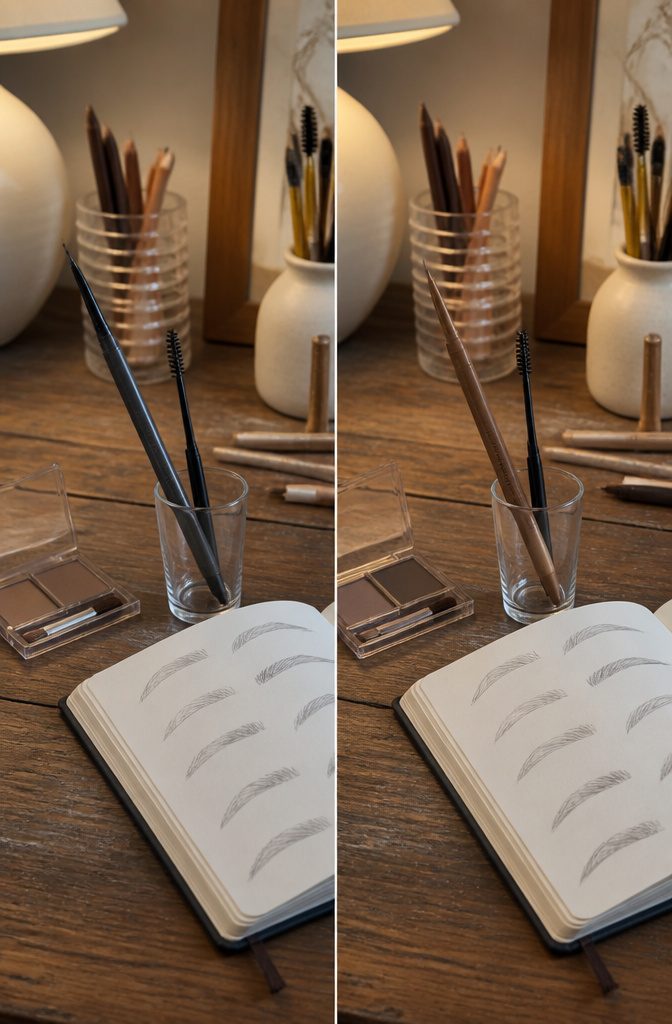
Straight brows, not arched ones, are what shift a face toward that younger, softer Korean look.
The Peripera Speedy Skinny Brow pencil, about $12, is built for this: a 1.5 mm precision tip and eight shades, including the cool-toned Gray Brown that reads natural on most people rather than warm or harsh.
Microcrystalline wax and synthetic beeswax give it enough grip to deposit color where you want it without sliding into blocky territory.
I fill only sparse spots with mini strokes, then use the built-in spoolie to brush the line into the rest of the brow.
The skinny tip helps because a standard pencil wants to draw an arch; this one practically forces you to extend the brow straight across, which softens the whole expression.
Gels serve the same shape when you need hold, though the pencil does most of the defining work. The tip can snap if you press hard, so the light hand you need for straight strokes anyway pays off twice.

❄️ Cooling Massage Applicator Innovative metal ball applicator delivers an instant cooling sensation while gently massaging the lips for a refreshing application experience.

❄️ Cooling Massage Applicator Innovative metal ball applicator delivers an instant cooling sensation while gently massaging the lips for a refreshing application experience.

12pc Value Pack - This pack of 12 mini lip balms features creative and eye-catching ice cream shape container to add more fun and color to your kids daily life.
Eyeliner
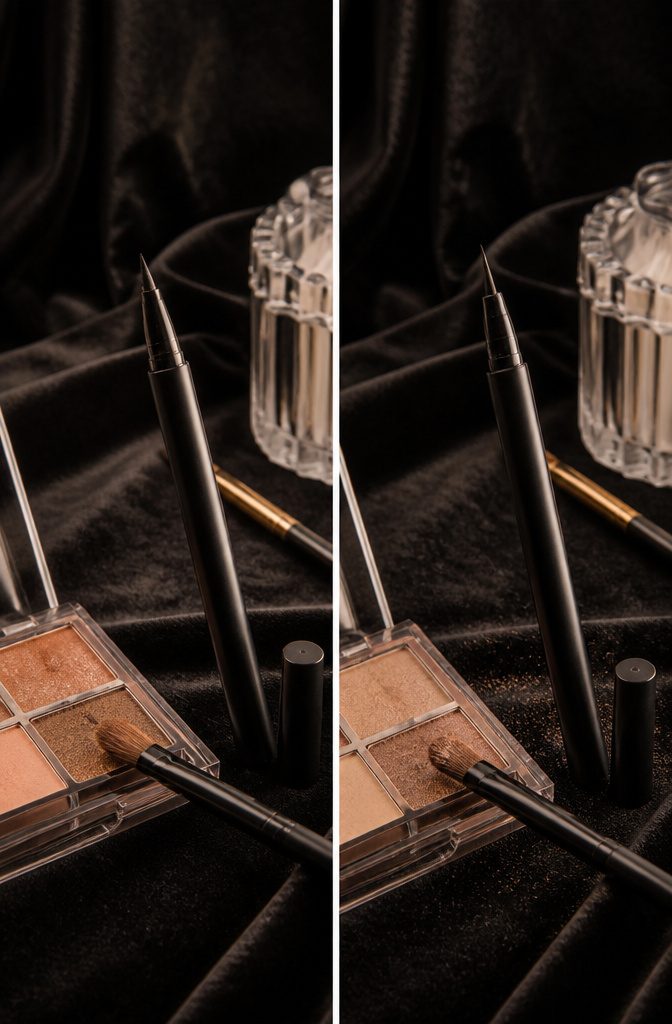
Puppy eyeliner was the first Korean technique that actually worked on my round eye shape, mostly because it breaks every Western rule I had memorized.
Instead of the sharp upward flick that elongates, the line droops slightly downward at the outer corner, tracing a soft curve that makes eyes look rounder and more innocent.
You start from the middle of the lid and draw outward, keeping the thickness even rather than tapering to a point.
The Clio Waterproof Pen Liner at $15 is what I reach for here. The brush tip gives enough control to lay down a thin, consistent line without the dramatic build-up a winged look demands.
I still make the classic mistake sometimes, catching the outer corner too high and accidentally creating a cat-eye, so I keep a cotton swab loaded with remover at hand for the first minute after application.
A light brown shadow swept over the liner with an angled brush softens the edge and blends it into the rest of the look, and running that same shade along the lower lash line adds the subtle puffy-eye-bag effect that reads as youthful in Korean makeup.

LONG-LASTING COLOR WITHOUT OXIDIZATION : Enjoy vibrant, true-to-tone foundation that resists oxidation. Keep your skin looking fresh all day with long-lasting color that won’t darken or change throughout the day.

LONG-LASTING COLOR WITHOUT OXIDIZATION : Enjoy vibrant, true-to-tone foundation that resists oxidation. Keep your skin looking fresh all day with long-lasting color that won’t darken or change throughout the day.

Red Cushion Foundation 10C Shell (0.63 Fl Oz) + Red Fixer (2.70 Fl Oz)
Setting Spray
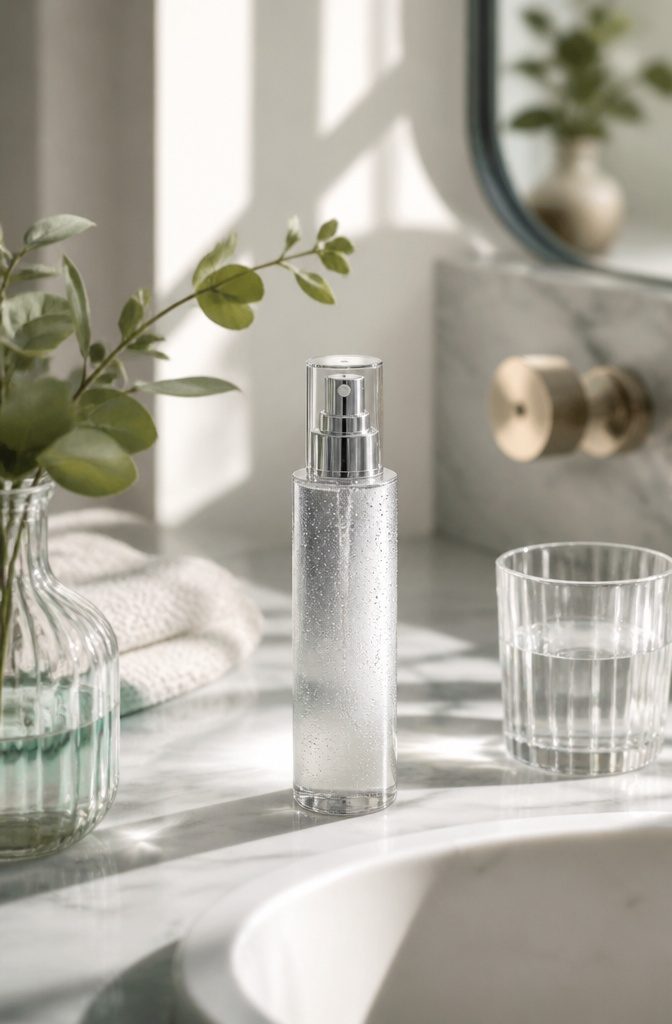
Korean setting sprays earn their spot in the routine by doing something most Western formulas skip: they add moisture instead of stripping it away.
The finish stays dewy, not flat, which keeps the whole look in line with that lit-from-within glow the rest of your makeup is building toward.
The one worth the $15 is TirTir Mask Fit Make Up Fixer. Green apple polyphenols in the formula help manage oil without turning matte, so the glow stays even if your skin runs a little slick.
On days when I skip base makeup entirely, it still works as a face mist that same sources describe as a "quick pick-me-up."
Water- and sweat-resistant holds up through humidity, though if you need fully waterproof, TirTir makes a separate Mask Fit Waterproof version with a semi-matte finish instead.
That moisture-first approach is the pattern: Korean makeup tends to blur the line between skin care and color, and the setting step is no exception. You’re sealing the look while feeding the skin underneath, not just locking pigment in place.

[1st KOREAN CUSHION FOUNDATION with 40 SHADE RANGE] TIRTIR Mask Fit Red Cushion is the first Korean cushion foundation with a wide range of shades. From light to deep tones, this TIRTIR cushion foundation provides strong, comfortable coverage packed with nutrients for a flawless, all-day wear. Achieve the perfect "glass skin" look with this innovative Korean makeup solution.

LONG-LASTING COLOR WITHOUT OXIDIZATION : Enjoy vibrant, true-to-tone foundation that resists oxidation. Keep your skin looking fresh all day with long-lasting color that won’t darken or change throughout the day.
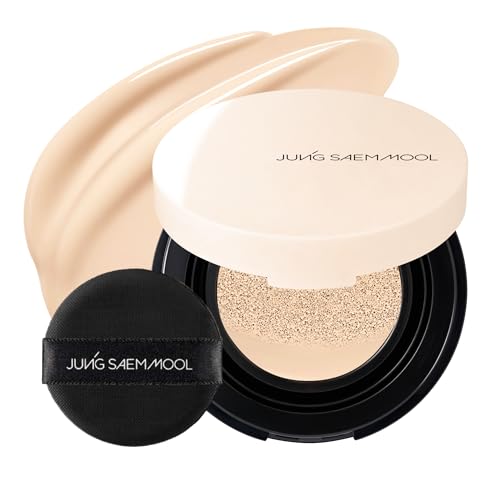
[NATURAL RADIANT FINISH WITH SKIN-LIKE COVERAGE] Create a natural, healthy-looking complexion with JUNG SAEM MOOL Essential Skin Nuder Cushion Foundation. The lightweight formula blends seamlessly into the skin for a dewy, glass-skin glow and natural coverage that looks like your skin, but better.
Mascara
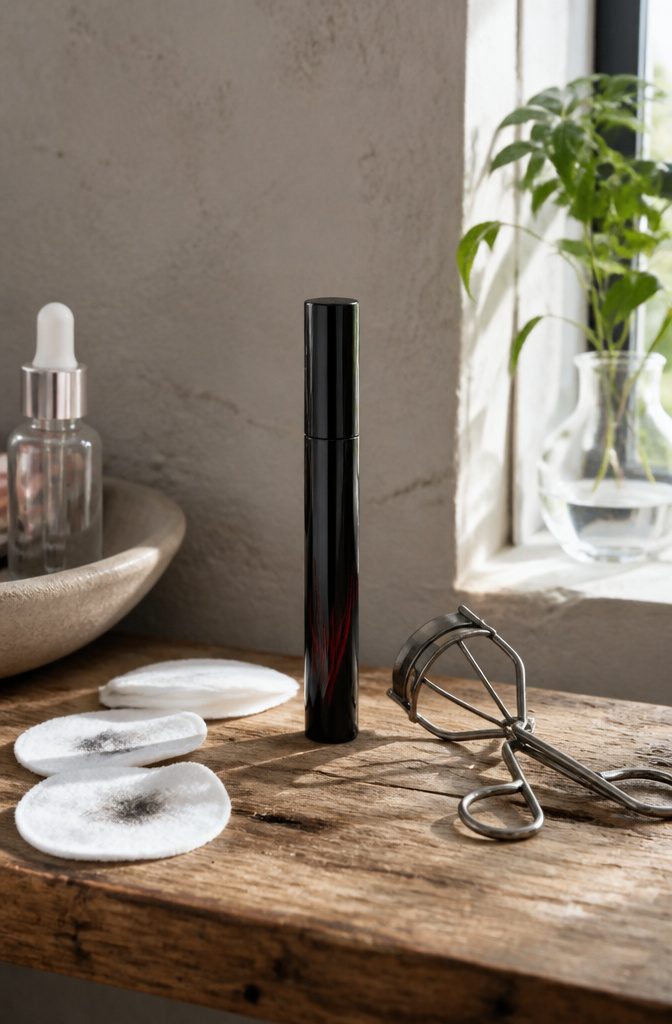
Straight lashes that point downward need a formula built for hold, not just pigment. Korean mascaras answer that with lightweight waxes and curved brushes designed to lift from the root.
The Clio Kill Lash Superproof Mascara at $15 uses bean extract, panthenol and carnauba wax in a buildable tubing formula that adds volume without the clumps that weigh a curl flat.
Asian lash types, typically shorter and straighter, fail most Western mascaras because those formulas rely on thickness for impact.
Tubing and fiber technologies work differently: they wrap each lash in a polymer sleeve or extend it with microfibers, so length builds in thin layers rather than one heavy coat.
The result stays upright through humidity and, in one editor’s test, through actual tears.
Seven shade variations of the Clio exist, but the core appeal is the waterproof curl lock.
Removal takes its own dedicated remover, which is the tradeoff for zero flaking. A Korean lash curler used first, with a couple of extra squeezes, buys even straighter lashes another hour of lift.
![[A by Unleashia] Hey Dew Blue Cushion | 26 Shades, Compact Size, Triple Functional (Toning, Anti-Wrinkle, UV Protection), Buildable Coverage & Radiant, Dewy Finish (28N Solace)](https://m.media-amazon.com/images/I/41YZCGgbbOL._SL500_.jpg)
26 Shades for Every Skin Tone – From fair to deep, find your perfect match with our extensive shade range designed for diverse undertones.

Natural-Looking Buildable Coverage: Tap on a thin layer for everyday coverage or build where you want more even-looking skin tone. The lightweight cushion formula helps create a smooth, fresh-looking base without a heavy feel.

Dewy Glow Cushion Blush: Add a fresh, juicy-looking flush with a 40% water-based cushion blush formula. The lightweight cream-gel texture melts into your base makeup for a translucent cheek color with a soft luminous glow.
Highlighter
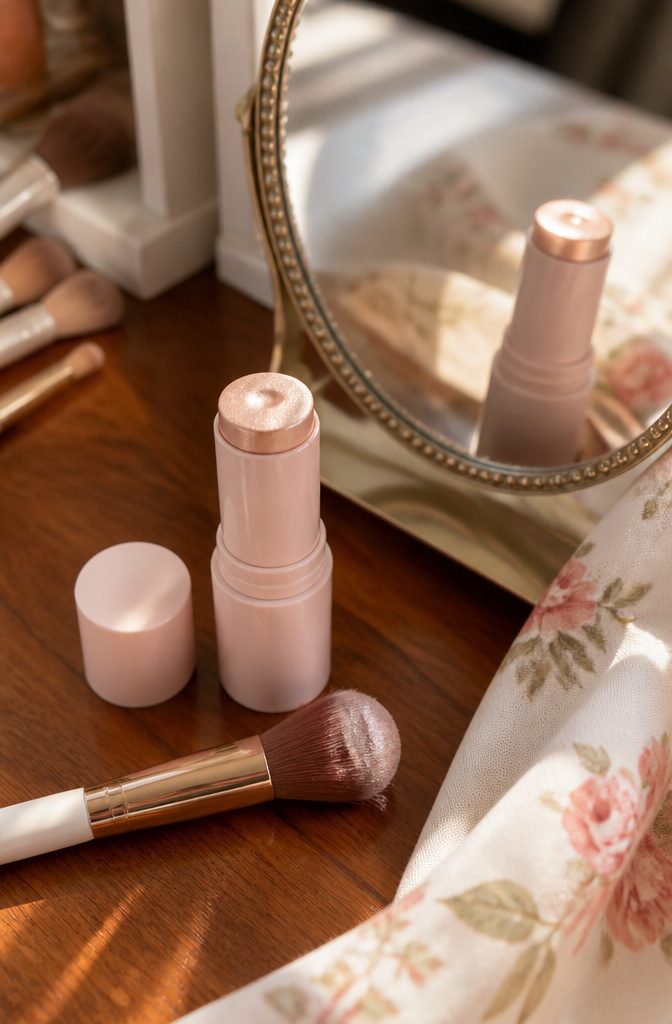
Highlighter sits at the point where Korean and Western approaches split most clearly. Where strobing stacks layer on layer of reflective pigment to sculpt bone structure, the Korean method asks what the skin already does and adds a whisper.
The Glint Stick Highlighter runs $25 and feels closer to a bouncy gel than the usual cream stick. No chunky shimmer, just a pearlescent finish that builds from barely-there to reflective.
I pat it on with fingers, which the formula seems to prefer, hitting the inner corners, the Cupid’s bow, and the center of the cheeks. The goal is the glass-skin glow, not a beacon.
Restraint matters because overapplication breaks the illusion. One too many swipes and the effect shifts from "did she sleep ten hours?" to "I see product."
Western strobing often chases that shift deliberately. Korean placement keeps the highlight within the natural topography of the face, never floating on top of it.

SMUDGE-PROOF LIPSTAIN: Experience the kiss-proof and smudge-proof qualities of our lipstain. This water-based tint is quickly absorbed and stays on without feeling sticky, ensuring long-lasting color that won't budge

LIP GLOW OIL: perfect blend of a silky lip oil with a lightly tinted gloss effect that moisturizes and softens your lips instantly. This nutritious formula provides a natural hint of color with a supple finish. Available in 13 stunning shades.

[WATERY GLASS-LIKE SHINE] A lightweight lip tint that delivers a crystal-clear, glass-like shine in just one swipe. Leaves your lips looking fresh, smooth, and naturally dewy without any heavy feel.
Eyeshadow
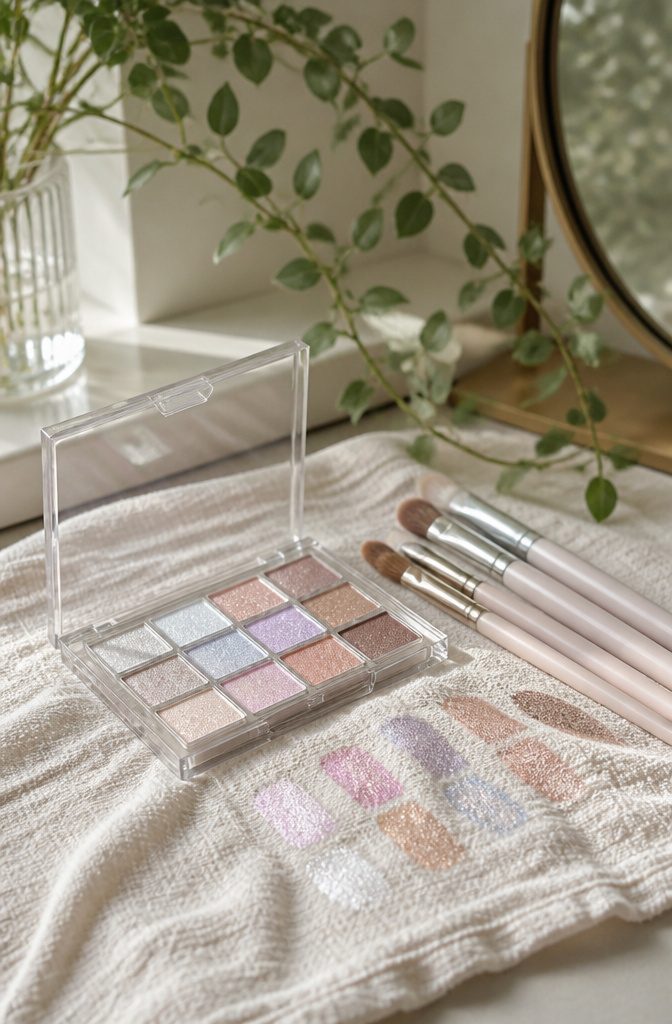
Pastel shadows that blend without effort are where Korean eye makeup starts. The Unleashia Glitterpedia Eye Palette runs about $24 and carries nine shades, shimmery and matte both, in a slim case that travels well.
The pigment is there, but the texture is what matters: it melts together without fallout, so a natural look doesn’t require twenty minutes of buffing.
Shimmer placement is the move that changes the shape without changing the shape. I press the lightest pearlescent shade onto the center of the lid only, stopping before the crease.
That single spot of reflection catches light and creates depth the same way contouring would, except it reads as round and awake instead of sculpted and shadowed. No darkness, no hollow, just dimension.
The Unleashia formula is vegan and biodegradable glitter, which matters more to me now than it used to.
The finish is pearlescent, not chunky, so it works for daytime without looking like you tried. If you want evening drama, layer it; for the cute Korean makeup look, one swipe on the center of the lid is exactly enough.

❄️ Cooling Massage Applicator Innovative metal ball applicator delivers an instant cooling sensation while gently massaging the lips for a refreshing application experience.
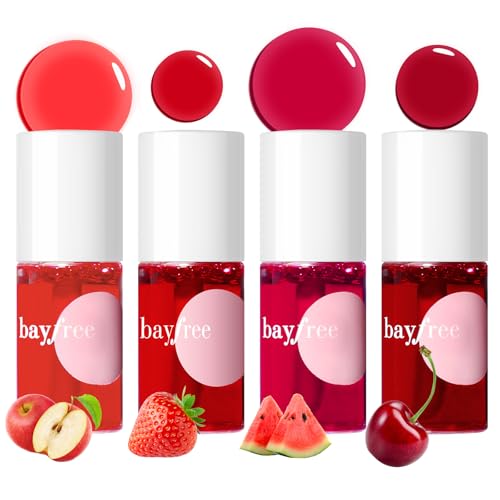
【SMUDGE-PROOF LIP STAIN】These lip tints are enriched with moisturizing and nourishing ingredients that are non-drying, transfer-proof and can easily create a dewy glossy kiss-proof lip makeup.

Custom pH Color Changing Lip Balm: This transforming pH lip balm reacts to your natural pH to create a custom pink lip tint unique to you. Swipe on clear and watch your personalized color bloom.
Gradient Lips
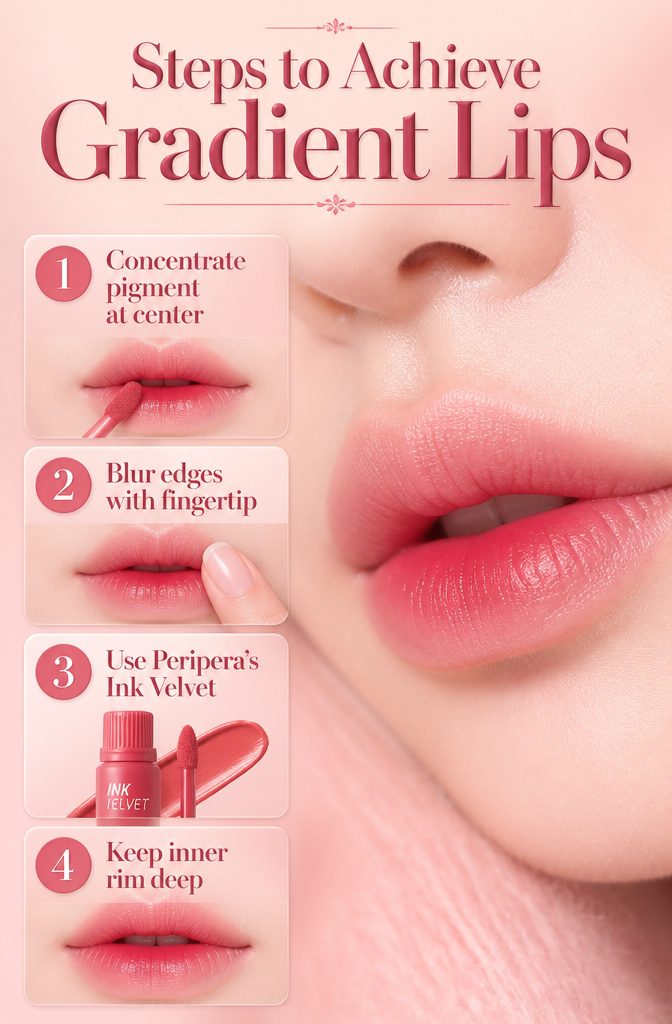
The gradient lip is the one Korean technique I actually practiced in front of a mirror until it looked accidental rather than painted.
You concentrate pigment at the center of the mouth, then blur the edges with a fingertip so the color fades toward the lip line like it just happened.
The just-bitten effect comes from keeping that inner rim deep while the outer third stays barely tinted, almost like you pressed a berry between your lips and it stained unevenly.
Peripera’s Ink Velvet works especially well for this. The whipped, mousse-like texture does the blurring itself, and the triangular applicator tip lets you place color precisely at the inner center without flooding the whole lip.
At $10, it’s the product most young women in Seoul actually carry, not just the one marketed abroad. The 31 shades range from peachy nudes to berry fuchsias, so the gradient can read subtle or dramatic depending on the day.
A related tool that rounds out the youthful look: the Aegyo Sal Maker at $14, a dual-ended pencil with a lighter shade and a contour shade for emphasizing that small puff of "cute fat" beneath the eyes.
The candelilla and carnauba wax formula goes on smooth, though the pencil tip can break if you press too hard. Used together, the soft lip and defined under-eye area create the same doll-like brightness the gradient lip was designed for.
Aegyo Sal
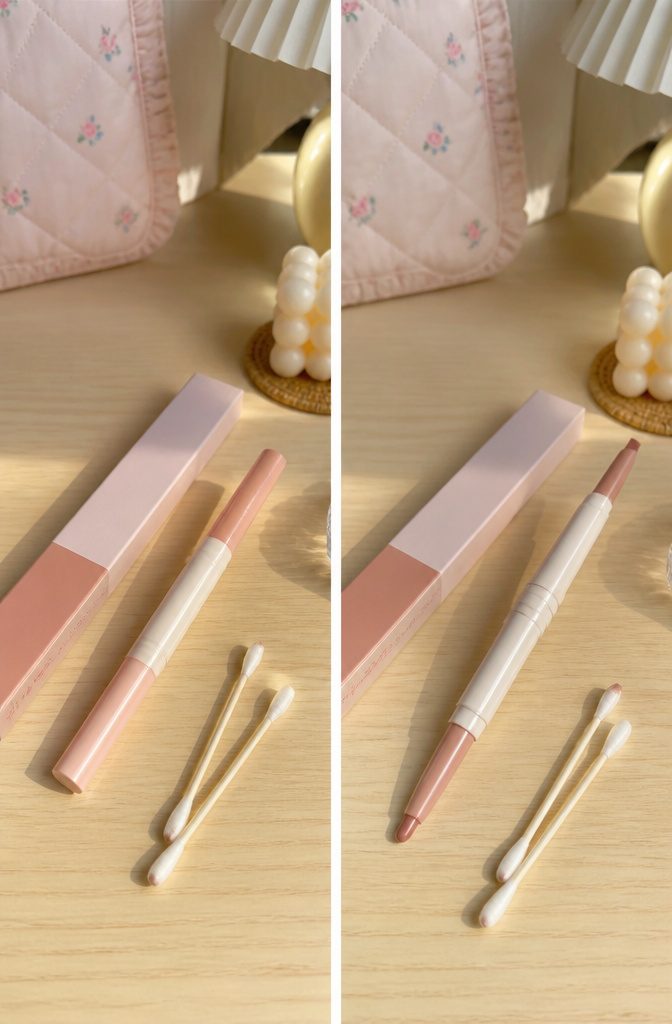
Aegyo sal is the Korean technique of emphasizing that small puffy strip of "cute fat" just beneath the lower lash line, the bit that pops out when you smile.
The logic runs backward from most Western makeup: instead of concealing under-eye fullness, you highlight it with a touch of shimmer or a lighter pencil shade to fake the effect of beaming at someone.
The product that convinced me this was a real technique and not just a TikTok fever dream is a dual-ended pencil from Colorgram, about $14, with a lighter shade on one end and a contour tone on the other.
You draw the lighter color right along the puff itself and the slightly darker shade just below it, creating a gentle shadow that makes the area read as raised and round.
Some people use liquid glitter instead; Glow’s Shattered Glass formula in champagne (#1979) at $22 is designed for exactly this placement above the aegyo sal, with the glitter suspended in a gel base so it stays put rather than drifting onto your cheeks.
What surprised me, reading through how this is done, is how much the look depends on placement precision.
Too high and you look tired; too low and you miss the effect entirely. The thin brush or pencil tip matters more than the shimmer size.
Oral Hygiene in Beauty Routines
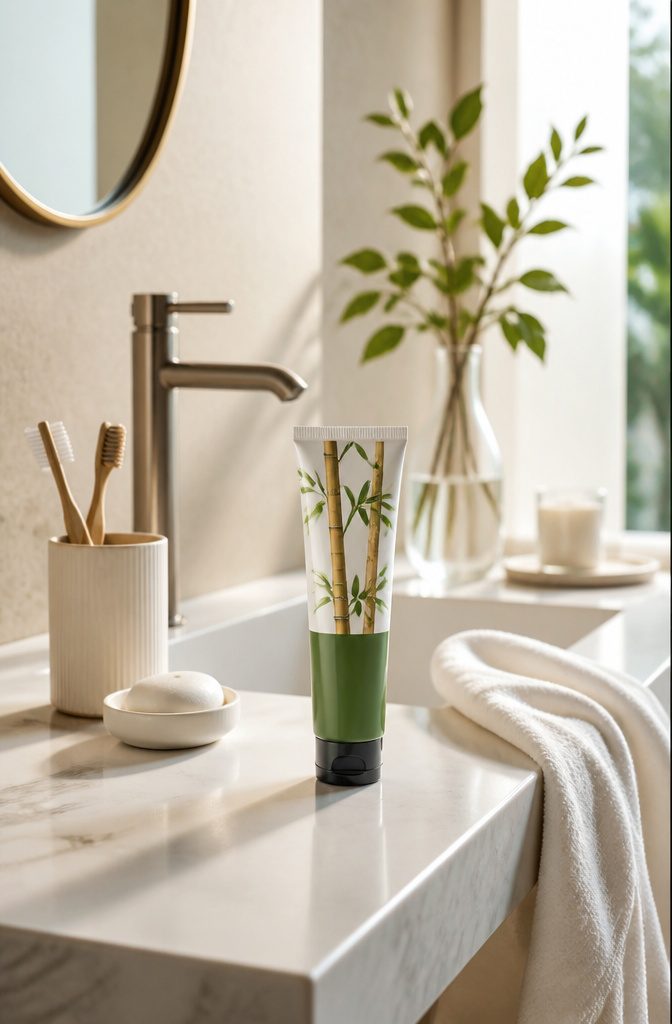
Bamboo salt toothpaste sits in desks and makeup bags across Korea for a reason that has nothing to do with minty freshness.
The country takes oral hygiene as a visible part of presentation, and brushing after lunch in office restrooms or subway stations is ordinary behavior.
That thousand-year-old cure-all, bamboo salt, prevents gum and tooth decay more effectively than standard American pastes, though the herbal taste surprises first-time users.
Fresh breath and healthy teeth complete the same careful grooming that produces the dewy, approachable look the rest of Korean makeup aims for.
A gradient lip or cushion foundation reads differently when the overall impression is polished from teeth to skincare. The routine is cumulative, not compartmentalized.
Korean vs. Western Makeup Philosophy
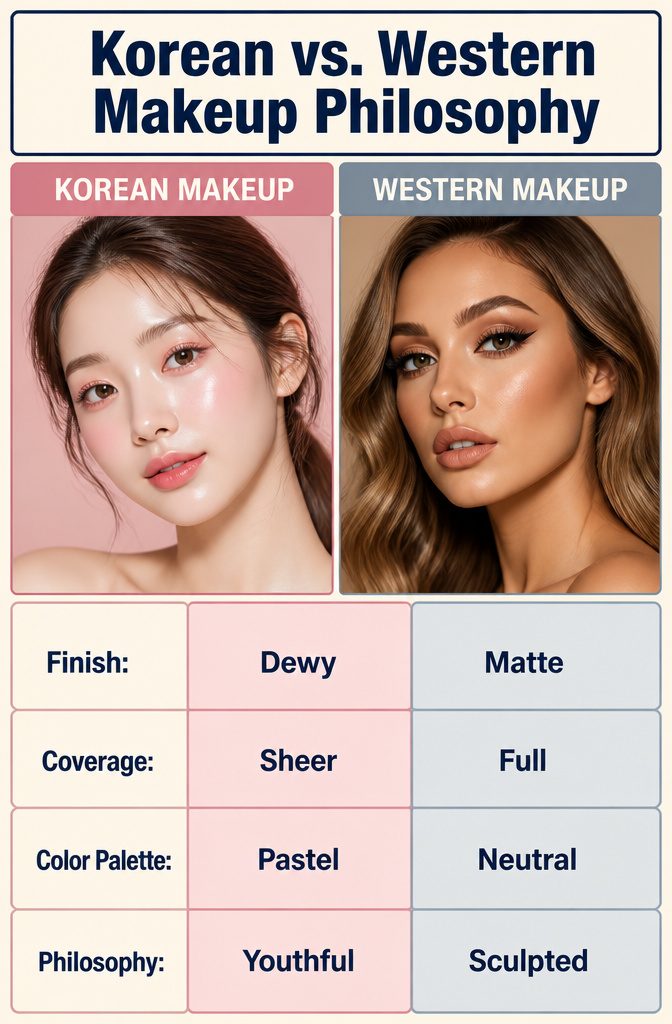
Korean makeup philosophy starts from the assumption that skin should look like skin.
The formulas are sheer, buildable, and so lightweight they feel like second skin, with celebrity makeup artist Ham Gyungsik noting that Korean products prioritize hydration and natural-looking finishes above all else.
Dewy, not matte, is the goal: a finish that catches light the way healthy skin does on its own.
Western formulas, by contrast, typically lean on richer pigmentation and fuller coverage. The look is more transformative: sculpted brows, defined winged liner, contoured cheeks, a sun-kissed matte finish that reads polished from across a room.
Bridal makeup artist Judy Lim points out the color story difference too: Korean cosmetics run pastel, pinky-peach, soft purple, where Western palettes stay more neutral.
The aesthetic divide is youthful versus sculpted. Korean makeup wants to blur the line between makeup and skin care, nourishing while it covers.
Western makeup wants to shape and define, changing the architecture of the face rather than enhancing what is already there. Neither is wrong; they are different answers to the question of what finished should look like.
Skin Tone and Undertone Matching
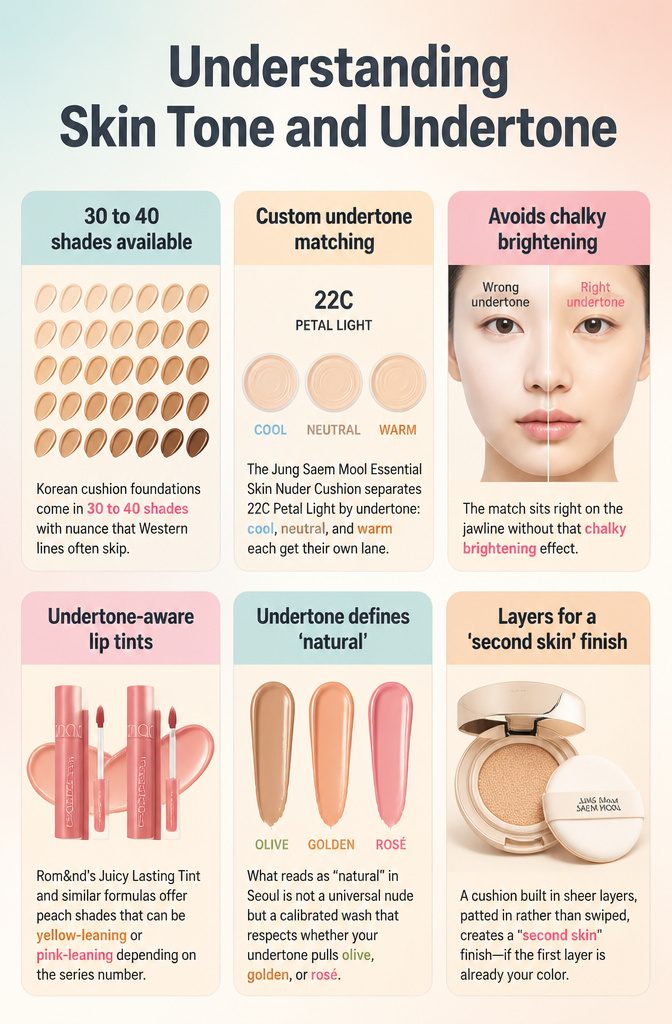
Korean cushion foundations come in 30 to 40 shades with nuance that Western lines often skip.
The Jung Saem Mool Essential Skin Nuder Cushion, for instance, separates 22C Petal Light from nearby numbers by undertone: cool, neutral, and warm each get their own lane.
I noticed this only after watching a brand rep shade-match someone in person; the "C" in 22C stood for cool, and the match sat right on her jawline without that chalky brightening effect I had assumed all K-beauty pursued.
Lip tints follow the same logic. Rom&nd’s Juicy Lasting Tint and similar formulas spread across ranges where "peach" might mean yellow-leaning or pink-leaning depending on the series number.
What reads as "natural" in Seoul is not a universal nude but a calibrated wash that respects whether your undertone pulls olive, golden, or rosé.
The payoff matters because Korean makeup aims for skin that looks like skin. A cushion built in sheer layers, patted in rather than swiped, can only do that if the first layer is already your color.
Get the undertone wrong and the "second skin" finish becomes a visible mask; get it right and the SPF 40, the glycerin, the red propolis extract all work on a surface nobody clocks as made-up.
Application Techniques That Change Everything
The first time I tried Korean blush placement, I looked sunburned.
I had swept it across the apples of my cheeks the way I always had, and the effect was clownish against the rest of the soft, diffused look I was aiming for.
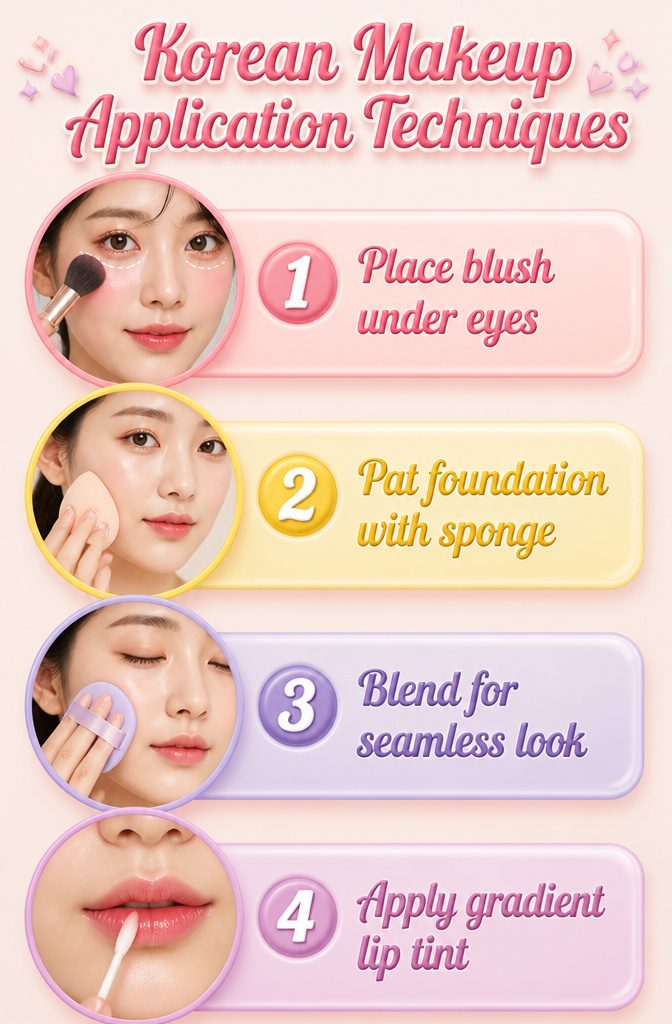
Blush sits higher in Korean makeup: just under the eyes and slightly above the cheekbone’s peak, which lifts the face rather than widening it.
The same AOU Soft Cream Blush in 02 Pinky Cheeks that looked garish on my old spots read as a lit-from-within glow once I tapped it into the right zone with a dense brush.
Foundation taught me the same lesson. Dragging it across skin, even with a sponge, leaves streaks and lifts the hydration underneath.
Korean technique means patting: pressing the product in with a damp sponge or fingertips so the base becomes indistinguishable from skin. I blot away excess skincare first, then use that same sponge to blend so nothing gets soaked up wastefully.
The lips finish the story.
A solid block of tint looks heavy; the gradient approach, blurred outward from the center with a fingertip or cotton swab, creates the plumped, just-bitten effect that reads as youthful rather than made-up. Same product, three different faces.
Frequently Asked Questions
What is the difference between Korean makeup and Western makeup?
Korean makeup focuses on enhancing natural features with sheer, buildable formulas that create a soft, dewy, youthful finish, while Western makeup leans toward matte finishes, richer pigmentation, and more defined looks like full-coverage foundation, sculpted brows, and contoured cheeks.
Korean products often blur the line between makeup and skincare with nourishing ingredients, whereas Western formulas aim for bold transformation with fewer layers.
The color stories differ too: Korean cosmetics run pastel, pinky-peach, and soft purple, while Western palettes stay more neutral.
What are the latest trends in Korean makeup?
Glass skin 2.0 is a leading trend, updating the original luminous finish to emphasize deeply hydrated, healthy skin with natural radiance and a smooth, poreless-looking complexion.
This pairs with soft straight brows, subtle puppy eyeliner that gently elongates the eyes, and blurred gradient lips. Aegyo sal, the technique of defining the small puffy area beneath the eyes to create a cute, playful appearance, also remains popular.
What is the best Korean makeup for sensitive skin?
Look for lightweight, hydrating formulas free of fragrance and harsh preservatives, such as cushion foundations enriched with skin-soothing ingredients.
The Unleashia Don’t Touch Glass Pink Cushion Foundation is one example, offering SPF 50+ protection, hydration, and a barely-there finish while being gentle enough for reactive skin types.