Fitness tips are practical strategies for building exercise habits that actually last, but only if you treat them as a system rather than a collection of good intentions. The first goal that ever worked for the author was walking 30 minutes on exactly three specific days, written into a phone calendar with a reminder ping. That granularity is what separates the people who quit in February from the ones who are still moving in November. The real cost isn’t sweat; it is the repeated failure of abstract targets like "get in shape" that collapse the moment a morning feels hard.
Set Realistic Goals
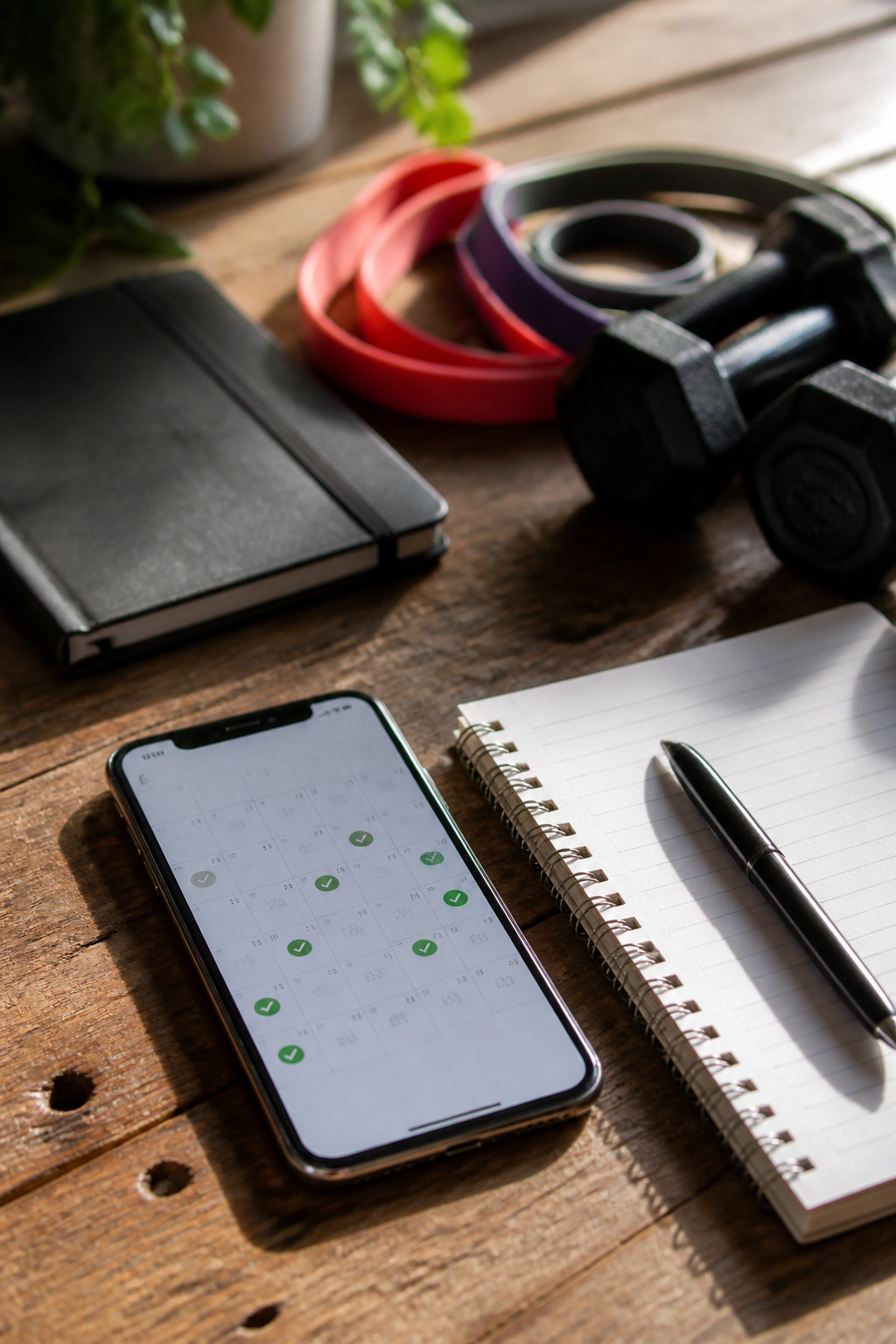
The first goal I ever set was walking 30 minutes a day on three days that week. Not "get in shape." Not "be more active." Thirty minutes, three days, written into my phone calendar with a reminder ping. That specificity is what kept me from quitting the second morning felt hard.
Short-term goals work because they give you something to check off before motivation fades. A goal you can track, like 15 minutes of movement twice this week or a single Saturday bodyweight circuit, builds the habit loop that long-term plans need to survive. Without those small wins, a target like "run a 5K by fall" stays abstract and easy to abandon.
Long-term goals still matter, but they work better as direction than pressure. The mistake is treating a six-month aim as a daily standard. Progress over perfection means hitting two of three planned days, then getting back after the third the next week. Start where you are, not where you think you should be.
Tracking turns vague effort into visible proof. A calendar checkmark, a logged walk, a note that this week you added five minutes: these are the receipts that keep consistency alive when results feel slow. The goal isn’t to never miss. It’s to miss, notice, and start again without rewriting the whole plan.
Movement in Daily Life

The stairs at my old office building had fourteen floors, and I started taking them one morning when the elevator line wrapped around the corner. By the end of that week, I was walking up at lunch too, not because I had committed to anything but because those ten-minute bursts broke up the day in a way that felt useful rather than virtuous. Aim for at least 30 minutes of physical activity every day, though you can split that into chunks as small as ten minutes and spread them across your waking hours. The 10,000 steps target works as a rough benchmark if you track that sort of thing; I never have, but parking farther from the grocery store entrance and walking to a coworker’s desk instead of sending an email adds up without requiring a costume change. Stand up from your computer, stretch, take a lap around the block during the one meeting that could have been an email. If you want weight loss or specific fitness results, ramp up toward 300 minutes a week, about 45 minutes daily. Play with your kids or your dog in the yard if you have either; chase something for ten minutes and you have already done more than you would have on the couch.
Make Exercise Enjoyable

The workout that sticks is the one you would do anyway if calories did not exist. I learned this the hard way after six months of forcing myself through a spin class I hated, attendance dropping from three times a week to zero. The moment I switched to trail running, something I actually looked forward to, my consistency tripled without any discipline required.
Not every session will feel magical. Some days the enjoyment is social, the friend who meets you at the park, or the small win of finishing when you did not want to start. The point is to anchor the habit to something you genuinely prefer rather than what you think exercise should look like. A gym membership you dread becomes a monthly reminder of failure; a walking route you love becomes the default.
If the gym is not right for you, that is okay. Walking, paddle boarding, skiing, or even pacing the aisles at a pet-friendly hardware store while the dog gets steps in, all count. The form matters less than the repeatability. When movement is woven into seasons and relationships rather than extracted as punishment, it survives the weeks when motivation disappears. That is how a routine becomes a habit, and a habit outlasts every January resolution.
Start Small and Build Gradually
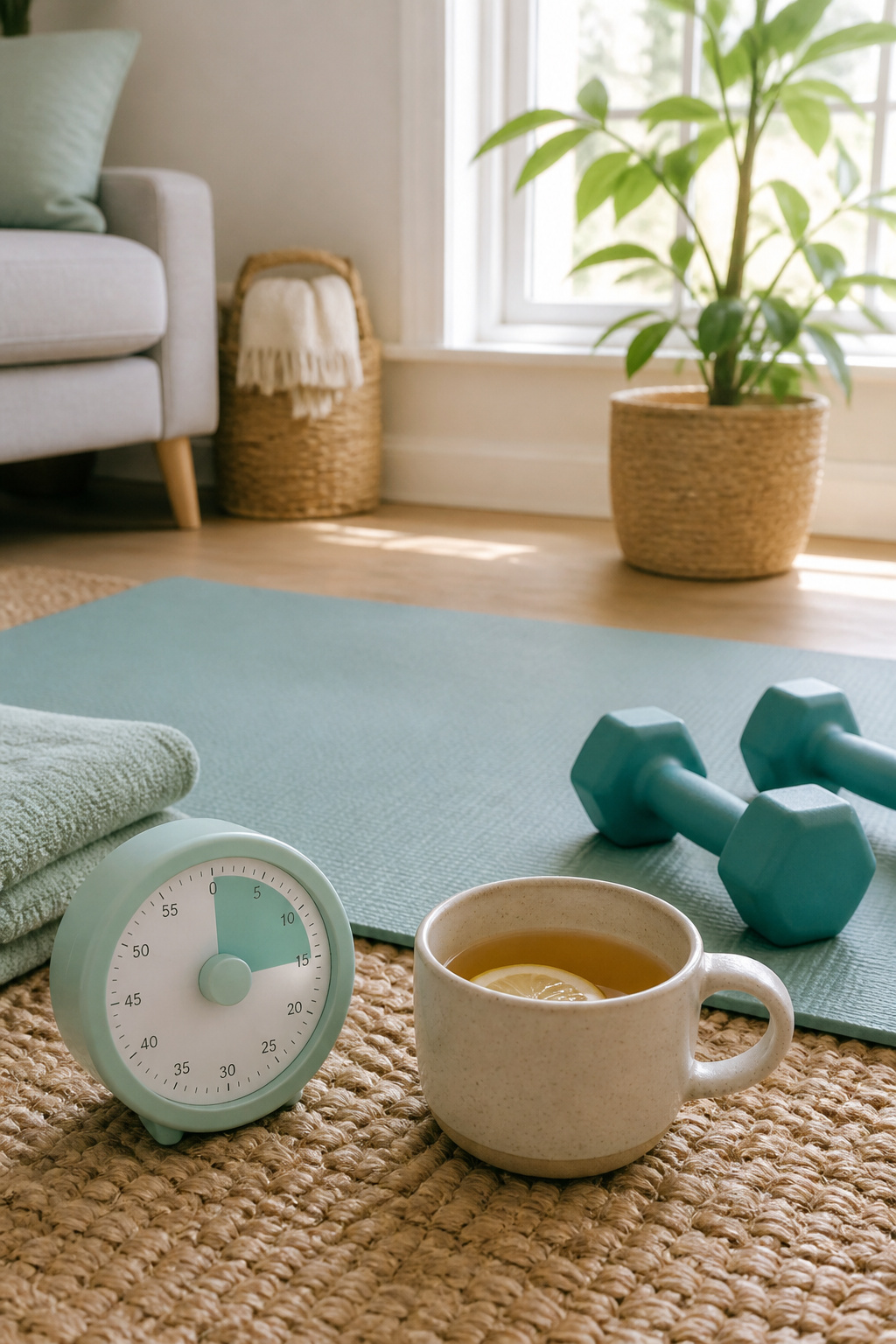
Ten minutes of movement was where I started, not the 150 minutes per week that sounds like a second job. The NIH guidance matches what actually stuck for me: those first few weeks, adding another five or ten minutes every so often until most days hit half an hour. Starting with 5 to 10 minutes and building from there keeps the body from rebelling. Tendons adapt slower than enthusiasm, and a forced rest day from doing too much too soon kills a routine faster than a lazy morning ever could. The American Heart Association notes that exercise at the same time of day turns into habit faster, though missing one window does not mean the day is lost, just that movement needs to slip in another way. I have walked at lunch, done bodyweight squats while water boiled, and counted each as the day’s activity because the goal is the pattern, not perfection.
Stay Consistent
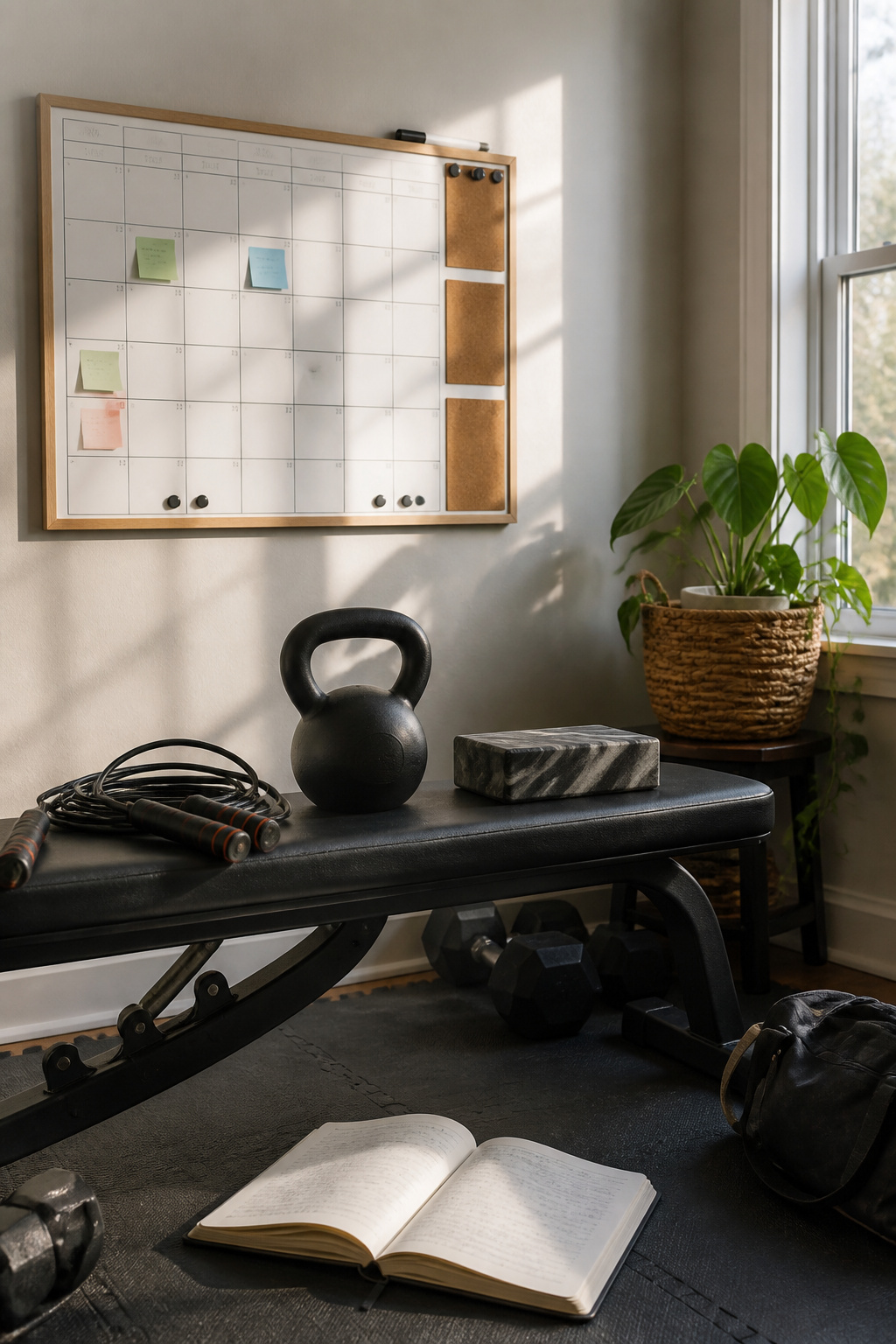
The best results come from showing up on the days you do not feel like it, and that only happens when the routine is smaller than your worst day. I learned this after watching too many January gym memberships go quiet by February: the people who stayed were not the ones with the most ambitious plans, but the ones who had a floor they would not drop below.
Five minutes still counts. If a full workout feels impossible, a short walk or a set of bodyweight exercises keeps the chain unbroken. The consistency extends to meals too; a regular eating pattern supports the work you put in during those sessions, and skipping it is where most people quietly undo their progress.
Time constraints usually mean television or streaming has swallowed the margin. The average American watches five hours daily, and reclaiming even a fraction of that for movement changes the math without requiring a schedule overhaul. Energy dips are harder; tracking when you feel strongest and anchoring your exercise to that window, even if it shifts later, builds a rhythm that outlasts motivation swings.
Boredom is the last barrier, and it is solved by rotation. Three to five different activities across the week keeps investment alive, and a group or partner adds accountability that carries you through the flat weeks.
Find a Workout Buddy

The morning I finally stopped skipping workouts came after a text from my neighbor: "6 AM, corner park, don’t make me do this alone." Having someone waiting cuts the excuse list to almost zero, and the NIH notes that meeting a friend for workouts or training together for a charity event keeps both people moving. That social pull works two ways. You’re less likely to bail when someone else is counting on you, and the time passes faster than solo miles ever do. UnitedHealthcare’s guidance points out that a buddy system helps both people stick to goals, which matches what happened once I joined a running group where people actually noticed absences. The intimidation factor drops too. Stoughton Health suggests bringing a friend along if the gym feels uncomfortable; my first group class was only bearable because a coworker walked in with me. Classes or leagues where people expect you to show up add another layer, and involving family means exercise stops competing with time together and starts becoming the time together. The mental health side matters here as well. Physical activity supports social well-being, and exercising with others keeps you connected while you move. My neighbor and I still meet three mornings a week. Neither of us would manage half that alone.
Track Your Progress

A paper calendar still works for logging workouts, and the physical act of writing down distance, time, and how you felt afterward keeps the habit anchored to something real. I used one for years before switching, and the only reason I switched was forgetting to transfer the book on a trip.
Phone apps and wearables fill that gap now. Most smartphones come with decent free options, and a dedicated device or smartwatch tracks daily activity without you remembering to start a timer. One study found wearables produce modest short-term improvements in fitness; use that as your starting point, not your ceiling. The real value is the log itself: six months in, you can scroll back to week two and see exactly how far the routine has come.
Reward yourself at milestones with non-food items — a small gift, a new piece of gear. Nothing sustains motivation like visible proof that the work is adding up.
Nutrition and Hydration

Balanced eating does the quiet work that exercise alone cannot. The body needs fuel to build muscle, manage energy through a session, and repair afterward. A plate that leans too hard in one direction, whether toward restriction or overload, eventually shows up in stalled progress or flat workouts.
Water carries that same hidden load. Eight 8-ounce cups daily is the standard figure that holds up as a starting point, though activity level pushes actual needs higher for most people who train regularly. I notice the difference within a single workout when I have fallen short: the same weight feels heavier, the same pace costs more. The variation matters more than the exact count.
Readers who already flip products to read ingredient lists can apply that same habit to post-workout nutrition. A protein powder or recovery bar deserves the same scrutiny as skincare. What is in it, in what order, and whether the claims on the front match the label on the back. The same discipline of checking before buying serves fitness goals as cleanly as it serves skin concerns.
Rest and Recovery

The hardest week I ever had in training was the one where I skipped rest entirely, thinking daily effort would accelerate my progress. By day ten, my joints ached through every warm-up and my sleep had fragmented into something useless. Rest days are not a pause from fitness; they are part of the work.
Active recovery keeps blood moving without adding strain. A thirty-minute walk or gentle stretching session on a day off protects the consistency you’ve built, because an injury sets you back weeks while a rest day costs you nothing.
Sleep deprivation undermines diet, stress management, and workout quality alike. A short nap, even just lying down without sleeping, can restore alertness enough to salvage a training session. Late-night or early-morning gym sessions when you’re already running on empty are a false economy; the extra hour in bed returns more strength than the extra hour lifting.
Types of Exercise
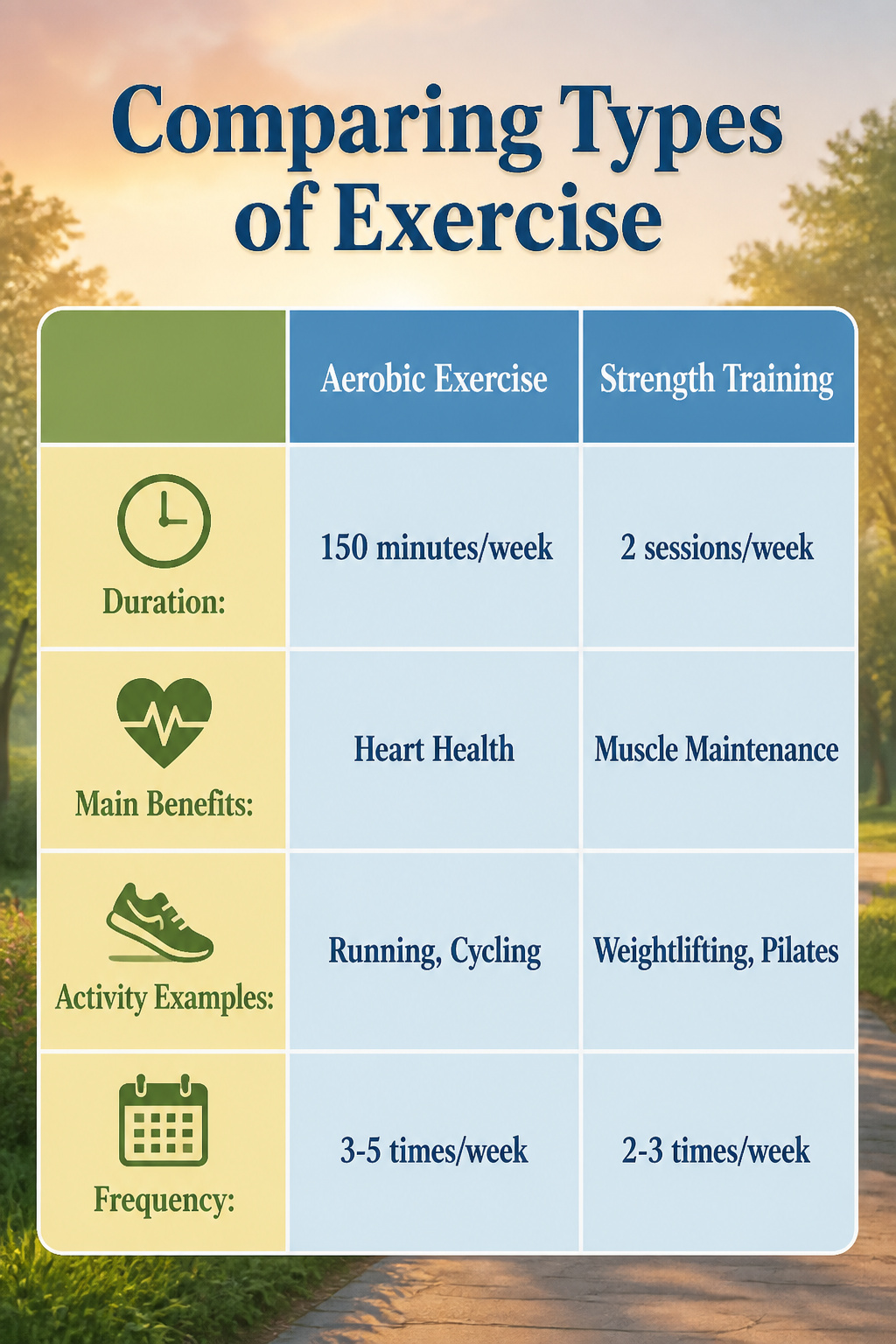
Most weeks, my own routine lands somewhere between brisk walking and running, and that combination still counts. 150 minutes of moderate aerobic activity or 75 minutes of vigorous work weekly is the baseline to aim for, spread across days rather than crammed into one. Moderate effort means your heart rate rises but you can still talk; vigorous effort means talking becomes difficult.
Strength training follows a different schedule. Two sessions weekly, hitting all major muscle groups: legs, back, abdomen, chest, shoulders, and arms. One set of 12 to 15 repetitions per exercise, using enough weight or resistance to tire the muscles by the end, already delivers benefit. Two to three sets may help more. Free weights, machines, resistance tubing, bodyweight movements, even rock climbing or water resistance paddles all qualify.
Flexibility rounds this out. Pilates, yoga, and tai chi improve balance and range of motion while also building some strength.
The variety matters because each category protects something different. Aerobic work supports heart and lung health. Resistance training maintains bone density and muscle mass. Flexibility work keeps joints moving and reduces injury risk. Skipping one category leaves a gap that shows up eventually, usually as a limitation you notice in daily movement rather than in a metric on a screen.
Benefits of Regular Exercise
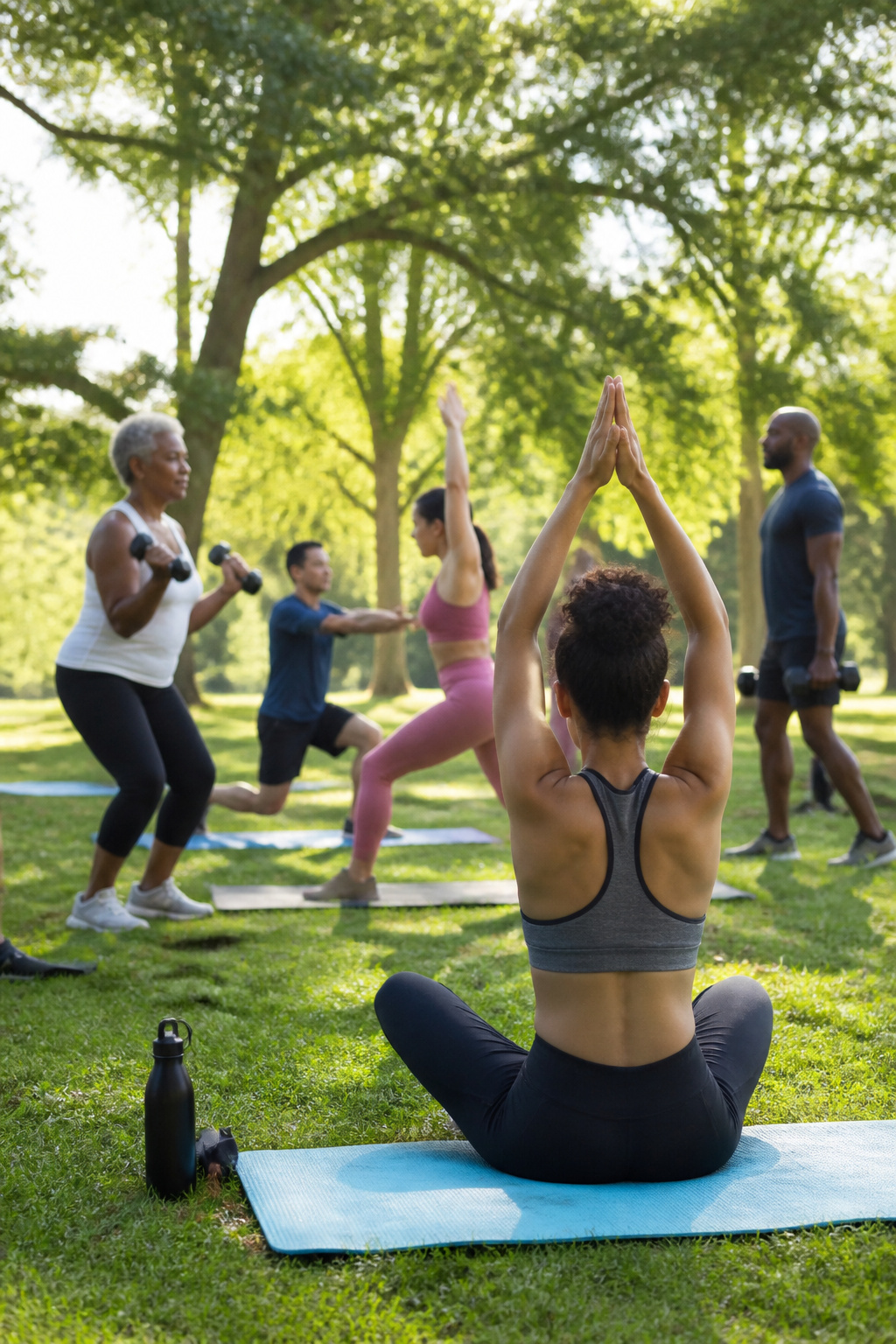
Regular exercise pays out in ways that matter for daily life. The CDC tracks reduced risk of cardiovascular disease, Type 2 diabetes, and certain cancers alongside stronger bones and muscles. Blood pressure and cholesterol come under better control too, and the energy lift is real rather than borrowed from caffeine.
The mental side is where consistency starts to feel sustainable. Movement increases blood flow to the brain, which means more oxygen and nutrients reaching the tissue that runs your focus and memory. Mood follows: working muscles releases chemicals that act as natural counterweights to stress and anxiety. Standing up and walking for even short stretches can sharpen alertness when afternoon fog sets in.
What surprised me, reading through the research, is how the benefits compound across relationships and creativity. Lower healthcare costs are part of the picture, but so is the simple fact that exercise releases endorphins that register as genuine joy. The habit becomes self-reinforcing not because of willpower but because the return is visible: better sleep, steadier mood, more capacity to handle what the day brings.
Mental Health and Fitness

The first thing that drops when stress climbs is usually the workout, which is exactly when movement matters most. Physical activity delivers more oxygen and nutrients to the brain through improved blood flow, the kind of shift that shows up in mental clarity within a single session. I notice it most on days when I sit too long: thirty minutes of walking resets my focus faster than another coffee.
The mood piece runs deeper than a temporary lift. Moving muscles pumps fresh blood and oxygen to the brain, which releases the chemicals that actually change how you feel. It is not a cure, but it is a tool that works at any age, even for people who have never made fitness a priority before.
For the reader already reading ingredient labels and judging products on visible results, this is the same standard: the mental effect of exercise is measurable in the same session, not promised for some distant future. Start with walking. The standing and moving alone increase alertness and productivity without requiring a gym membership or any particular outfit.
Social Support in Fitness

Group classes carry a momentum that solo workouts rarely match. Signing up for water aerobics or tai chi puts you on the hook in a way a personal promise to yourself does not; the instructor notices, and regulars ask where you were. That social pressure, light as it is, keeps the habit alive through months when motivation fades.
Online communities fill the gaps geography leaves. Apps like Strava turn a morning run into something witnessed: kudos from someone three states away, a comment on your route choice, the quiet competition of a monthly challenge. Fitness podcasts and real-life meet-ups extend this further, offering bursts of inspiration when your own reserves run low.
Family involvement works differently but just as well. Planning physical activities with your partner or kids replaces the guilt of time away from them with shared progress; dancing to music in the living room counts as movement for everyone. For those who need external structure, joining a class or sports league where people count on you to show up builds accountability into the schedule itself rather than relying on willpower alone.
The common thread is visibility. When someone else notices your effort, the effort becomes harder to abandon.
Overcoming Barriers
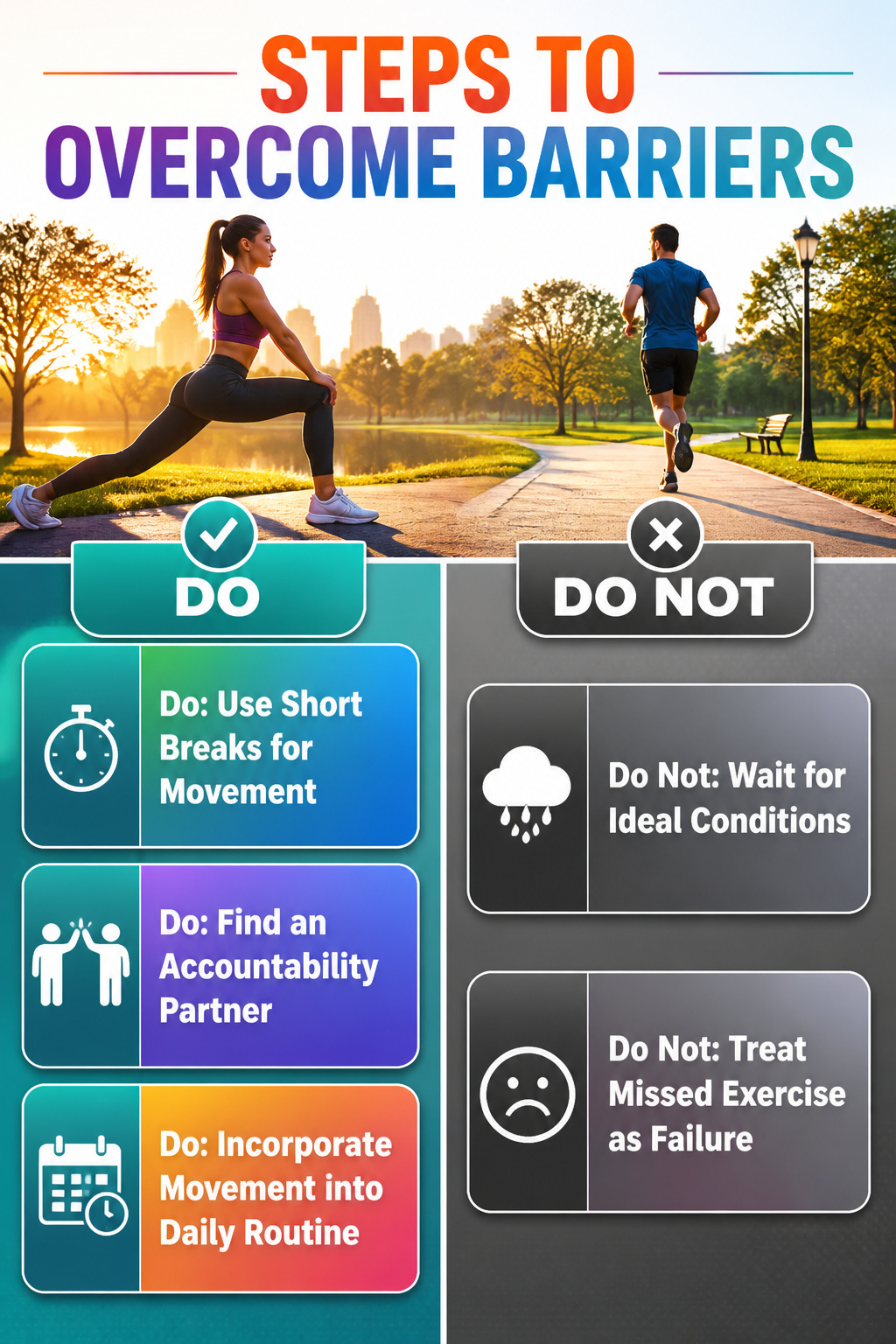
The obstacle that stopped me longest wasn’t time or money. It was the belief that a real workout needed a block of time I never seemed to have. The shift came when I stopped waiting for the gym and started using what was already in my day. Ten minutes in the blue zone or above still counts, and mornings protect that time before the rest of the schedule crowds in.
For packed days, shorter intense formats like intervals or Tabata training fit where a longer session won’t. Weather and childcare close off more options than most people admit. The fix is usually gear or location, not motivation: a rain jacket for outdoor plans, a downloaded app for indoor ones, or trading exercise with another parent so both of you get a turn. Squats while brushing teeth or parking farther out sound minor until they add up across a week.
The real trap is treating a missed session as a broken streak. Better to slot movement in somewhere else that same day, same as you would a rescheduled meeting.
What Fitness Means

For years, fitness meant one thing to me: a smaller number on the scale. Every program I tried chased that single outcome, and every program eventually failed because the moment the scale stalled, my reason for showing up disappeared.
Fitness is sustainable movement, strength, and energy for daily life. The CDC lists benefits like reduced cardiovascular risk, stronger bones and muscles, and improved mental health. Weight management sits on that list, but it sits alongside longevity, mood, and the simple capacity to keep up with your day without running out of steam.
Energy levels were what finally stuck for me. Noticing I could carry grocery bags up two flights without pausing, or that 3:00 p.m. stopped feeling like a wall, gave me feedback the scale never could. Small breaks, like a five-minute walk between meetings, built that base without requiring an hour at the gym I did not have.
The shift from aesthetics to function changes what you measure and what keeps you coming back.
Frequently Asked Questions
What are some tips for starting a fitness routine?
Begin with 5 to 10 minutes of movement and add time gradually. Set short-term, specific goals you can check off, like walking 30 minutes on three days this week, and track your efforts on a calendar or app so you have visible proof of consistency.
How can I stay motivated to exercise?
Find a workout buddy who expects you to show up, choose activities you genuinely enjoy rather than ones you think you should do, and reward yourself at milestones with non-food items like new gear. The social pull of a partner or group class carries you through weeks when your own motivation fades.
What types of exercises should I include in my routine?
Aim for 150 minutes of moderate aerobic activity or 75 minutes of vigorous work weekly, plus two strength sessions hitting all major muscle groups, and add flexibility work like yoga or stretching. Each category protects something different: aerobic work supports heart and lung health, resistance training maintains bone density and muscle mass, and flexibility keeps joints moving and reduces injury risk.
How much water should I drink daily?
Eight 8-ounce cups is the standard baseline, though your actual needs climb higher if you train regularly. I notice the same weight feels heavier and the same pace costs more when I’ve fallen short, so adjust upward based on activity level and how you feel during workouts.
How can I fit exercise into a busy schedule?
Split your 30 daily minutes into chunks as small as ten minutes spread across your day, or reclaim time from streaming, the average American watches five hours daily. Ten minutes in the blue zone or above still counts, and anchoring movement to existing routines, like squats while brushing teeth or stairs instead of elevators, builds habit without requiring schedule blocks.