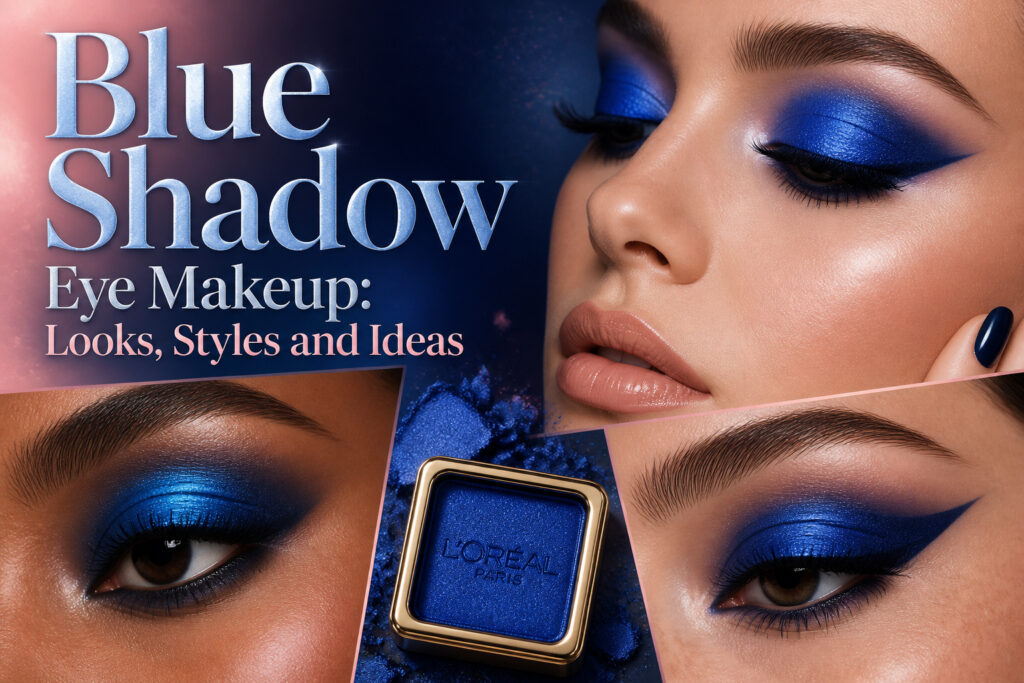
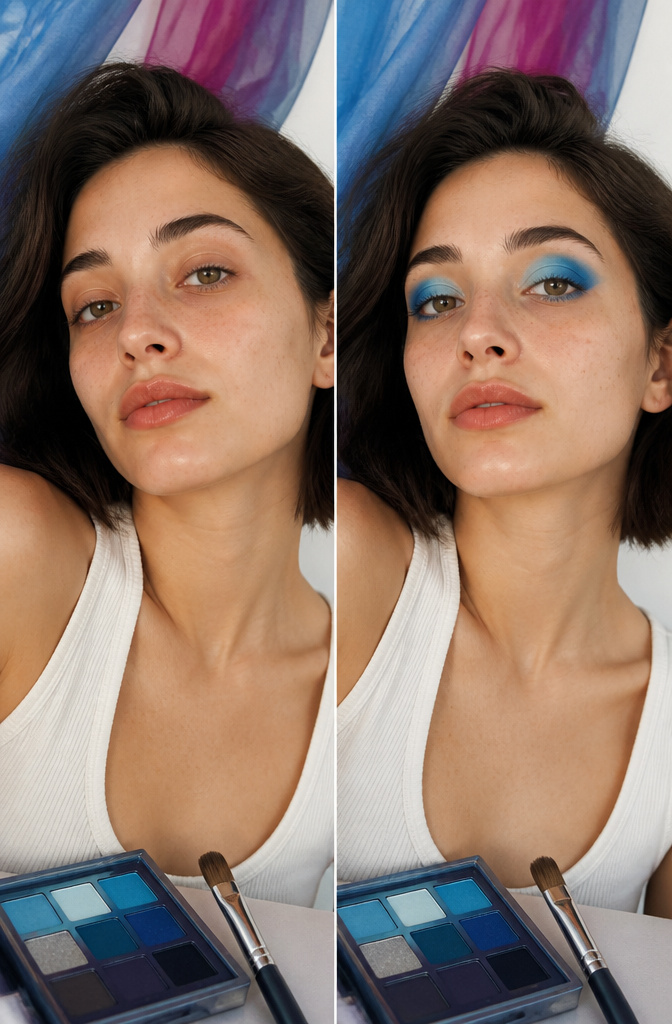
The blue shadow eye makeup that works past 7 p.m. is the one where everything else stays quiet. Bright cobalt on the lid, a deeper blue winged at the outer corner, and a bare brow with a nude lip. The first time I tried it with my usual berry mouth, the whole thing read costume party, not deliberate. The L’Oréal Paris Colour Riche Monos Eyeshadow in Grand Bleu taught me the harder lesson: pack the pigment with a flat synthetic brush, then switch to a clean fluffy one for the edges, or you end up with a harsh stripe that no amount of blending will save.
1. Gold Eyeshadow for Blue Eyes
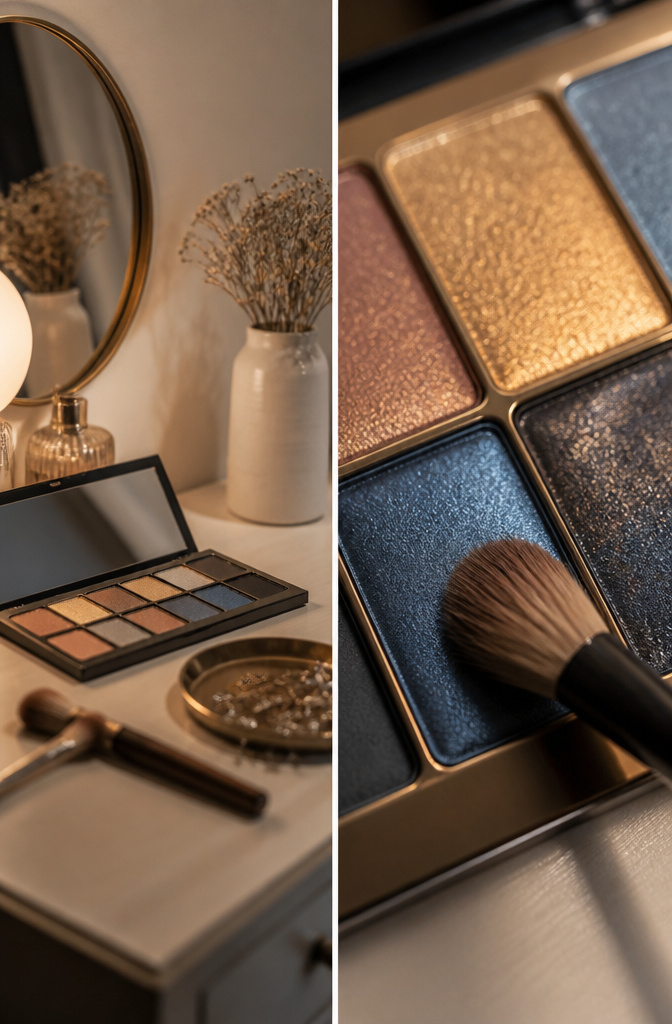
Gold brings out the cool in blue shadow eye makeup without turning the whole look cold. The warmth sits right against the iris and makes the blue read brighter by contrast, not muddier.
Placement is where the pairing lives or dies. A sheer gold wash pressed across the inner half of the lid, with a bolder blue packed from the outer corner into the crease, keeps both colors visible instead of letting them muddy where they meet. The other route is subtler: a whisper of gold swept beneath a stronger blue lid, so the warmth catches light only when the face moves. Either way, leave a gap or a clean blend between the two colors; touching wet gold to wet blue is how you get green.
For the gold side, the Masterpiece Nude Eyeshadow Palette in Golden Nudes carries enough shimmer range to match whatever blue depth you have on. I would not build the gold dry if the blue is already bold; a damp brush picks up more pigment and keeps the texture even against a stronger neighbor.
2. Smokey Eyeshadow for Blue Eyes
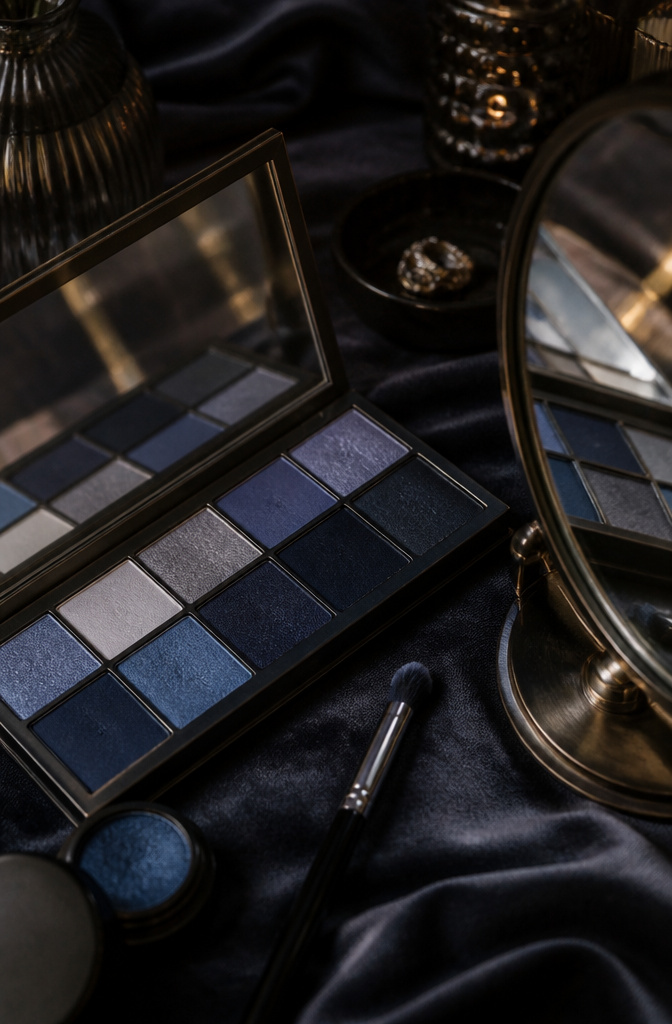
The Smokey Eye Drama Kit in Lavish Onyx is built for exactly this kind of work. Deep navy or charcoal smudged into blue keeps the drama without tipping into clownishness; the kit’s chocolate brown, taupe, and onyx shades layer and graduate so the blue reads as depth rather than costume.
Smoking out the lower lash line with blue takes a light hand and a clean blending brush. Buff the shadow from the outer corner only to the center of the eye, and keep a second clean fluffy brush ready to diffuse any edge that looks drawn rather than lived-in. The same rule holds for a sapphire twist on the classic: sweep the dark blue through the crease and lower lash line, then set the lid with a shimmery metallic sapphire, but the lower lash line still needs that clean brush pass to seal the blend.
For anyone wary of classic blue, navy alone can carry a smoky eye. Layer it dark through the crease, add shimmer on the lid for a night-sky finish, and the result reads sophisticated rather than retro.
3. Tightliner for Blue Eyes
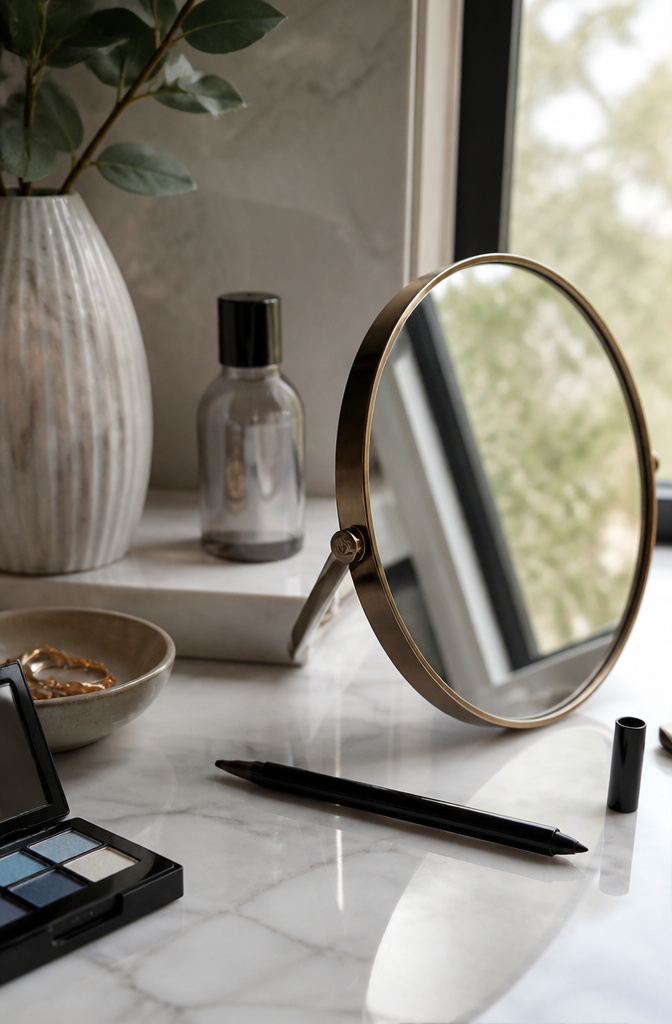
The tightlining technique fills the gaps between lashes from underneath, which keeps the definition invisible until someone is close enough to catch it. For blue shadow eye makeup that reads polished rather than costume, a black kohl pencil at the waterline gives that fullness without competing with the color above. The Masterpiece Kohl Kajal Pencil in Black is the everyday choice here: it deepens the lash line and lets whatever blue sits on the lid stay the focus.
Pressing a ring finger lightly on the brow bone tilts the lid up enough to expose the upper waterline without pulling the skin. The pencil tip traces between the roots, upper line first, and the lower if you want more frame.
The Infallible Grip Mechanical Gel Eyeliner in Turquoise does something different entirely. Worn at the waterline, it doubles down on the blue rather than grounding it. That repetition reads editorial, not subtle: the bright turquoise against turquoise shadow, or even against a neutral lid, becomes the whole statement. It works when the look is meant to be graphic, but for most mornings the black kohl wins for the same reason nude shadow underneath does. It steps back and lets the blue do what it came to do.
4. Brown Eyeshadow for Blue Eyes
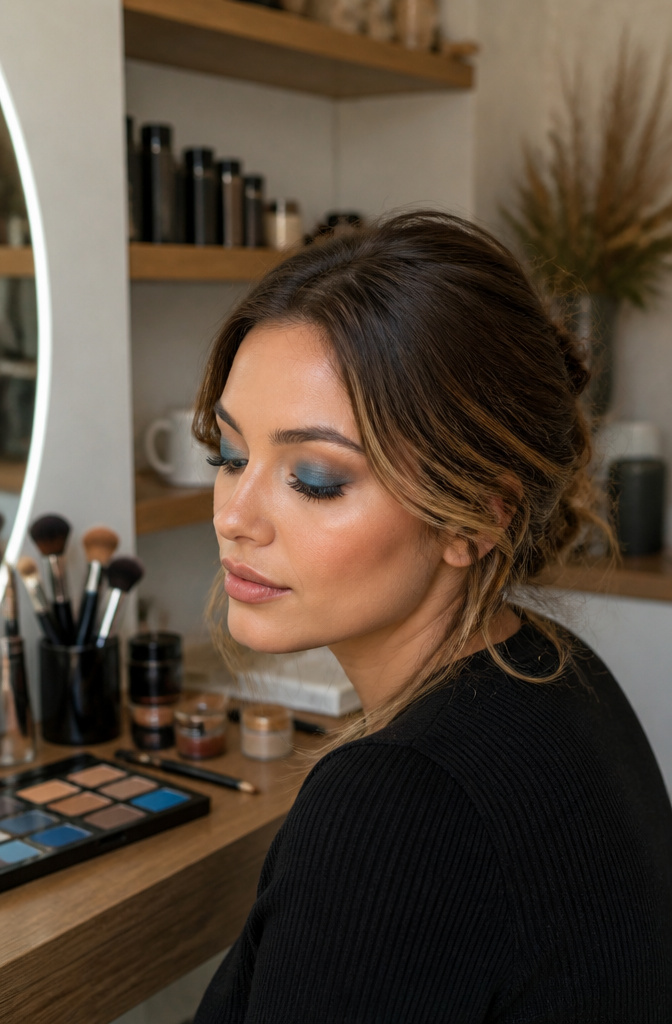
A wash of mink-brown on the crease does something bare skin cannot: it anchors bright blue shadow so the color reads intentional, not accidental. The matte brown acts as a neutral buffer, catching the edge of the blue where it would otherwise sit stark against unprimed lid. I learned this the hard way after three mornings of wondering why my cobalt looked like a bruise.
The Wild Shadow Pot in Burnt Bark handles this job with enough pigment that one pressed layer does the work of two. Its chocolate hue carries a rosy, mauve-y undertone that keeps the combination modern rather than dated, and it draws out gold flecks in lighter irises in a way flat brown generally misses. For the anchor to hold, press it on with a flat, firm brush first, then sweep a small fluffy brush through the crease to soften the seam where brown meets blue. The lower lash line takes the same matte wash; the waterline gets a beige kajal pencil if you want the whites of the eyes to pop, though the brown-to-blue gradient is already doing most of the work.
5. Baby Blue Eyeshadow
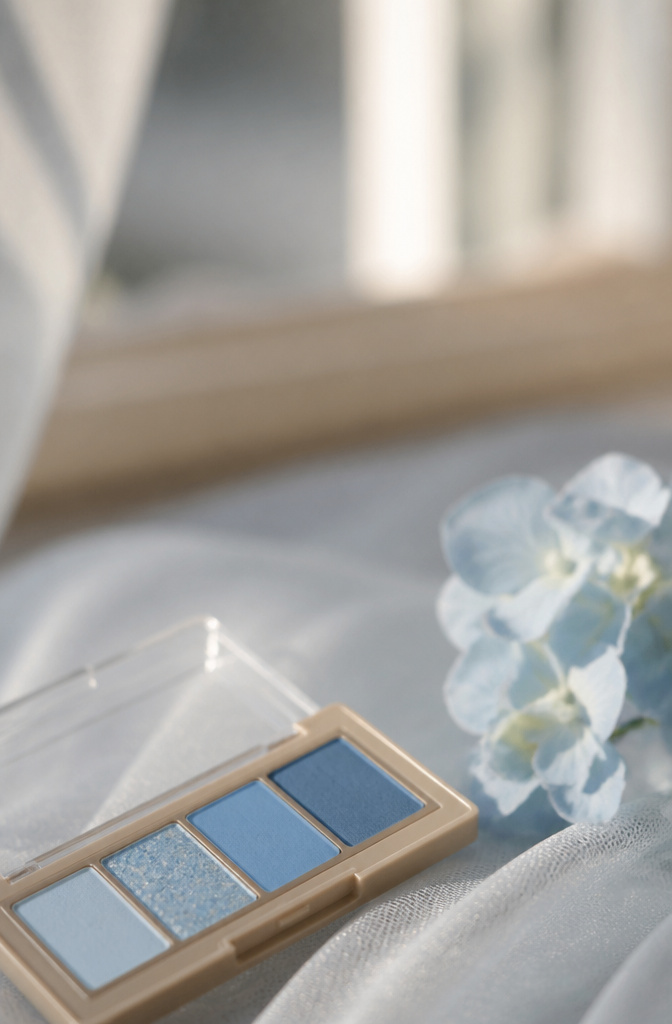
L’Oréal Paris Colour Riche Monos Eyeshadow in Argentic delivers the kind of sheer, cloud-like wash that makes baby blue wearable instead of costume-y. The payoff stays soft and romantic, almost angelic against the skin, rather than building to the opaque intensity you’d get from a pressed pigment.
Pale tones this light can shift chalky on deeper skin, which is where primer becomes non-negotiable. Miracle Prep Eyeshadow Primer anchors the color and keeps the finish even; without it, the white base in Argentic can sit on top of the skin instead of melting into it. I see the difference most clearly when I apply it to the inner corner versus the outer lid with no base underneath: the inner corner stays luminous, the outer lid turns ashy.
For a subtler take, sweep the shadow along the lower lash line in place of liner. The placement gives just enough color to read as intentional without demanding the full lid commitment. Either way, the formula rewards a fluffy brush and a light hand: layer in thin strokes and the blue stays airy; pack it on and you lose the delicacy that makes this shade distinctive.
6. Royal Blue Eyeshadow
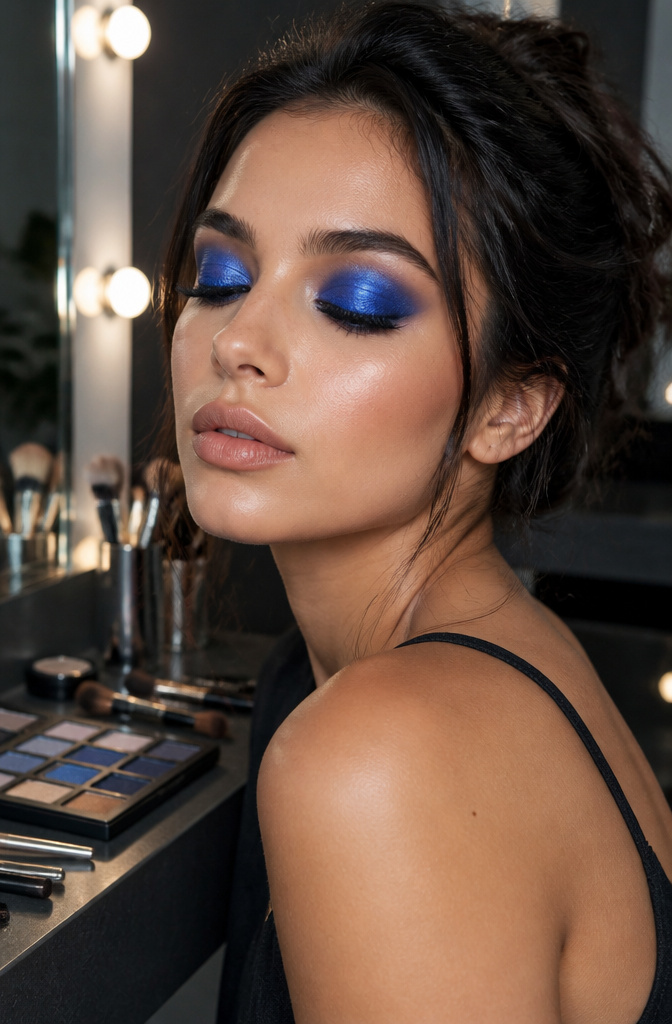
Royal blue sits at the deep end of blue shadow eye makeup, and saturation that strong will read as costume if the edges wander. The L’Oréal Paris Colour Riche Monos Eyeshadow in Grand Bleu is the shade I keep seeing referenced for this intensity, and the lesson that comes with it is simple: pack first, diffuse second, never with the same brush.
A flat synthetic brush deposits the pigment where you want it, lid to crease, without the bristles drinking up the color. That part is straightforward. The hard part is stopping before you blend. The clean brush, fluffy and dry, handles the perimeter. Buff the edges in small circles until the line softens, but keep the pigment concentrated below the crease unless you are deliberately building a graphic shape. The sources disagree slightly on how high to take it. One keeps the color tight to the lid for a subtle pop, another blends upward for drama. The difference is the occasion, not the technique. Either way, the clean brush is what saves you from a harsh stripe.
7. Bright Blue Eyeshadow
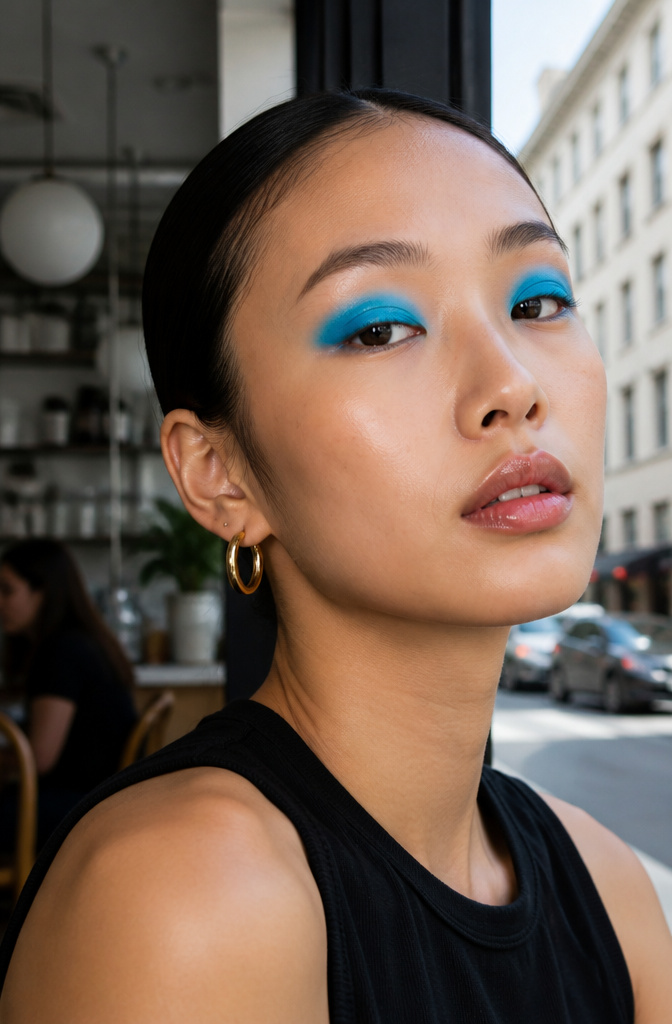
Bright blue eyeshadow demands the rest of the face stay quiet. The first time I tried it, I kept my usual brow pencil and berry lip, and the whole thing read costume party, not deliberate. Now I fill brows with a light hand and reach for a sheer gloss or nude lip, the same way I’d pair a bold red mouth with barely-there eyes. One feature gets the energy; the other steps back.
Primer is non-negotiable here. Bright blue creases more visibly than muted tones, and the pigment settles into lines within a couple of hours without a base. A light brown matte shadow above the crease adds soft structure so the blue doesn’t float on its own. Layer the bright shade across the lid, then build the winged outer corner with a medium or deeper blue to keep the shape grounded. A pale pink or neutral on the inner lid, plus a dot of highlight, keeps the eye open. The finished look is bold, but the restraint everywhere else makes it wearable past 7 p.m.
8. Navy Blue Eyeshadow
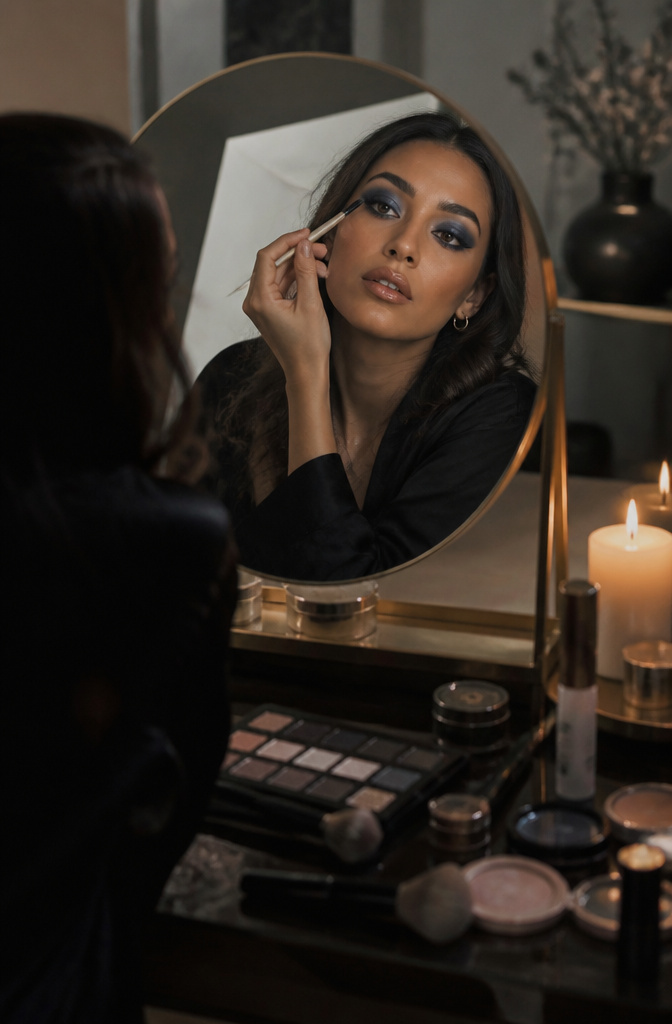
Navy blue eyeshadow sits right where you need it when black feels too severe. A small shader brush pressed into the lash line gives the same definition as kohl but reads softer on fair or mature skin, where solid black can pool in texture and read harsh.
For a full evening eye, blow the navy out through the crease and across the lid as your replacement for a traditional black smokey eye. The depth still reads as evening, but the tone stays gentler against skin that has more to say than it did at twenty. A touch of shimmer on top shifts the finish from flat to dimensional, more night sky than matte wall.
The crease work matters most here. Use the navy to deepen the socket line instead of reaching for black shadow, then keep the shape controlled with a sharp edge if you want structure, or let it feather for something closer to the 1960s mod reference without the cartoon severity. False lower lashes and a winged liner line finish the definition without pushing the color into costume territory.
9. Blue Glitter Eyeshadow
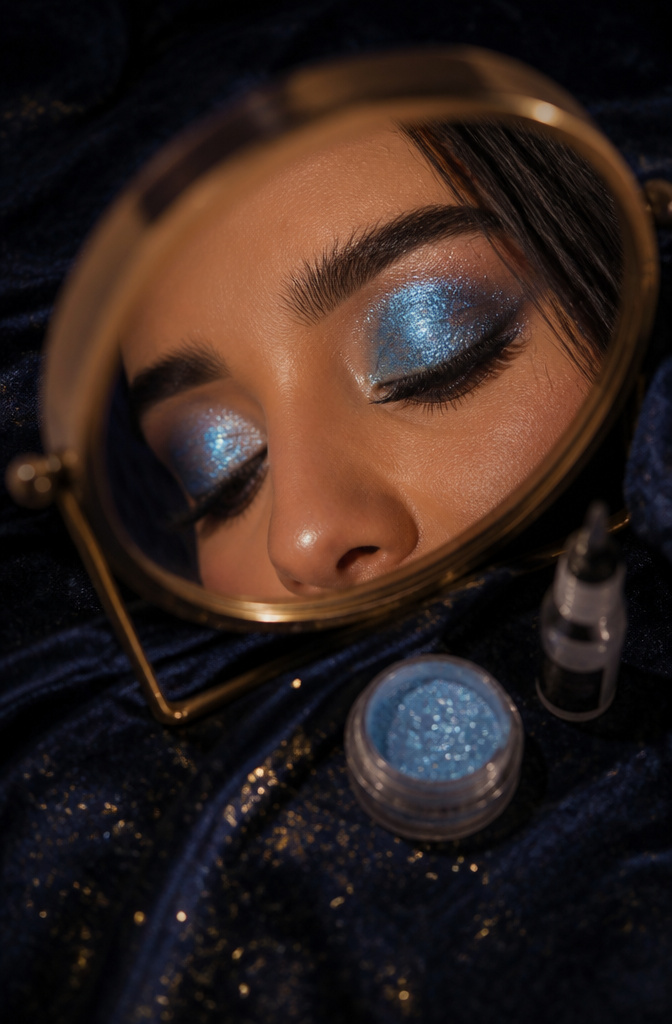
Pressed glitter on the eye needs something underneath it. Cream adhesive or liquid glitter glue, applied thinly across the lid with a fingertip, gives the particles something to grip. A fingertip presses the glitter flat; a brush only sprays blue micro-reflectives across your cheekbone and into your hairline. The mistake, which I made twice before it stuck, is treating pressed glitter like pressed shadow and reaching for a flat brush.
Removal is where the work actually sits. Bi-phase eye makeup remover, the kind you shake to mix the oil and water layers, breaks the adhesive without tugging. Hold the pad against the closed lid for a slow count of fifteen, then wipe downward in one pass. Rubbing back and forth across the same thin skin just embeds the particles deeper and leaves the lid pink for the next morning. Patience costs nothing; the remover does the job if you let it.
10. Blue and Green Eyeshadow
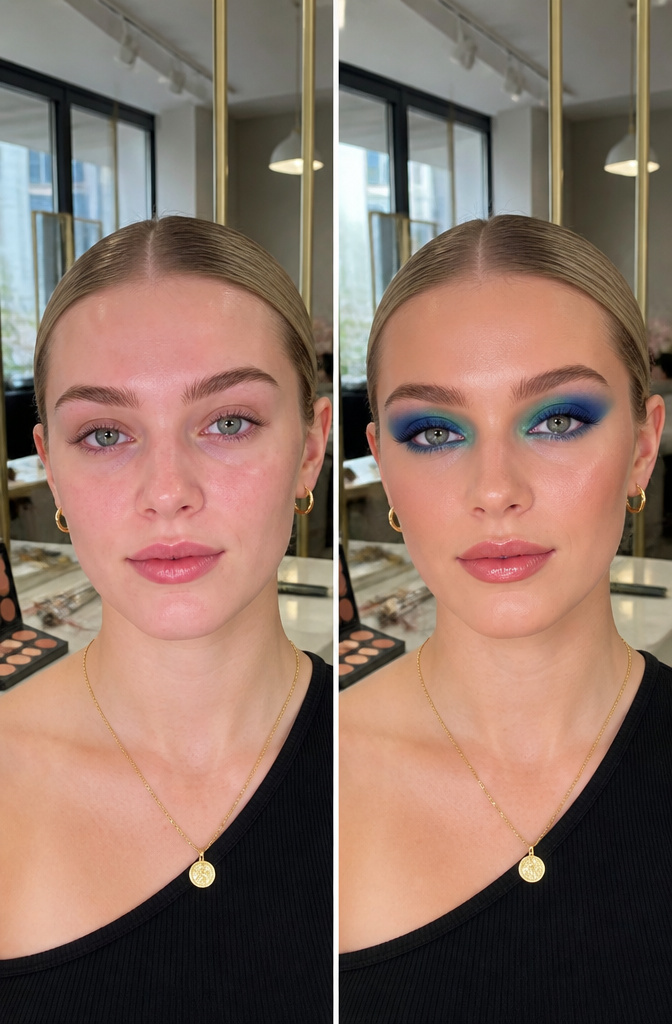
Teal sits dead center between blue and green on the color wheel, which means a gradient from cobalt through turquoise to emerald reads as intentional rather than muddied. The eye registers the progression as a single, continuous statement instead of two colors fighting for the same space.
Placement keeps it clean. Blue stays on the lid; green pulls upward toward the brow bone. The two shades should never share the same patch of skin or get blended together at the border. That overlap is where the look collapses into bruise territory.
A flat shader brush lays the blue across the lid from lash line to crease. Switch to a clean, fluffy brush for the green, sweeping it from the crease upward in soft, separate strokes. The gap between them, that quarter-inch of untouched skin where the color wheel does the work, is what makes the gradient look like skill rather than accident.
I learned the hard way that patting a touch of green over the blue to "soften the line" turns the whole thing into a single murky stripe. The two pigments sit on top of each other instead of shifting beside each other, and the result looks like you gave up halfway through.
11. Denim Blue Eyeshadow
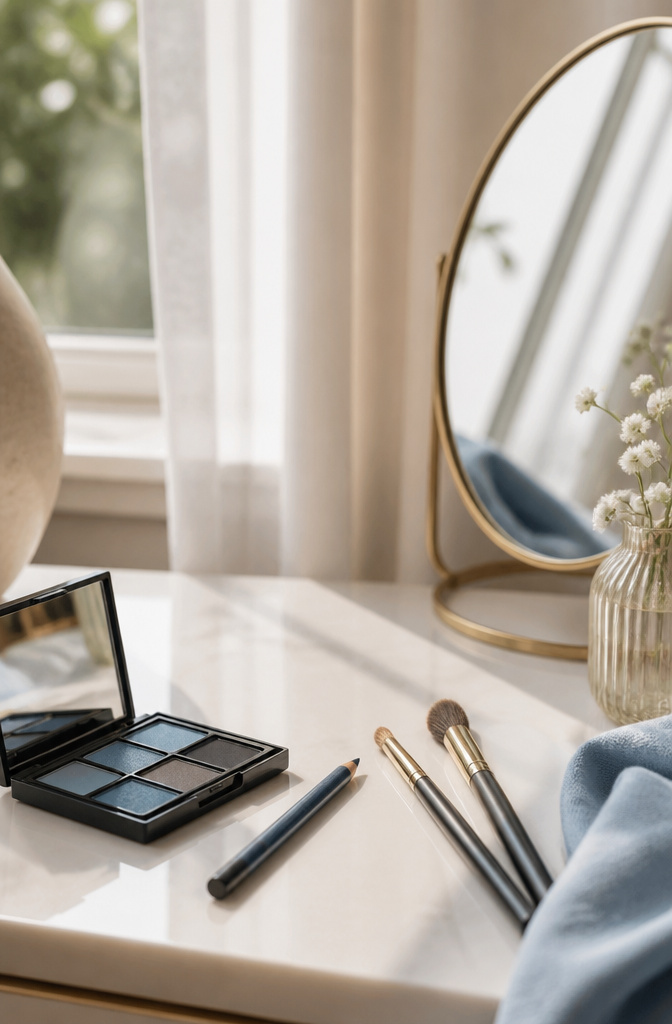
Denim blue eyeshadow sits in the quiet middle of the blue family, grayed down enough that it reads as neutral against khaki trousers or an olive jacket. The color does not shout for attention, which is exactly why it works five mornings a week.
I reach for it as a single wash across the lid when a video call pops up and I have ninety seconds. The tone quiets redness on the lid without registering as "eye makeup" to a laptop camera, so you look pulled together rather than made up. For evenings, the same pan functions as a crease shade: press a brighter cobalt or royal blue onto the center of the lid and blend the denim through the socket line. The muted base keeps the brighter color from tilting toward costume.
The mistake is treating denim blue as boring and packing on too much. It turns muddy fast. One thin layer, blended to the brow bone, is the whole point. Build slowly if you need more depth, but stop before the gray undertone turns ashy.
12. Icy Blue Eyeshadow Look
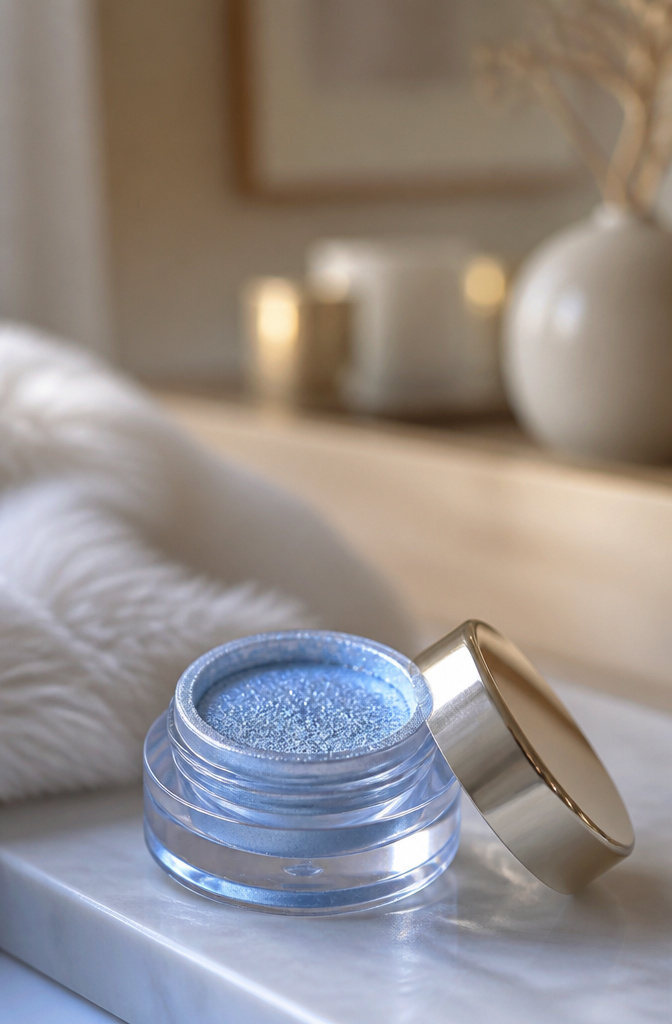
Frosted eyeshadow reads differently on every skin tone, and the palest blue-white shades make that especially clear. On cooler complexions, an icy blue shadow swept across the lid catches light exactly where you want it: the inner corner and the center of the lid become the focal points. Warm skin tones need more structure, or the look lands as stark and disconnected from the rest of the face.
The balance comes from a deeper blue pressed into the outer V and worked along the lash line. That darker anchor recedes visually while the frosted points advance, so the eye gets dimension instead of a single flat wash of color. I build this in layers, starting with the deeper shade and adding the icy tone last, because frost over dark creates a muddy gray that is hard to recover from.
Silver shimmer at the center of the lid intensifies the light-catching effect without shifting the color toward costume territory. White mascara, if you have it, extends the snow-queen mood L’Oréal Paris describes, though I find a single coat of black on the upper lashes keeps the look wearable for daylight. Matte skin and a touch of blush elsewhere keep the frost from reading as all-over cold, which is the mistake that dates this style back to its Y2K origins rather than letting it live in 2026.
13. Glossed Turquoise
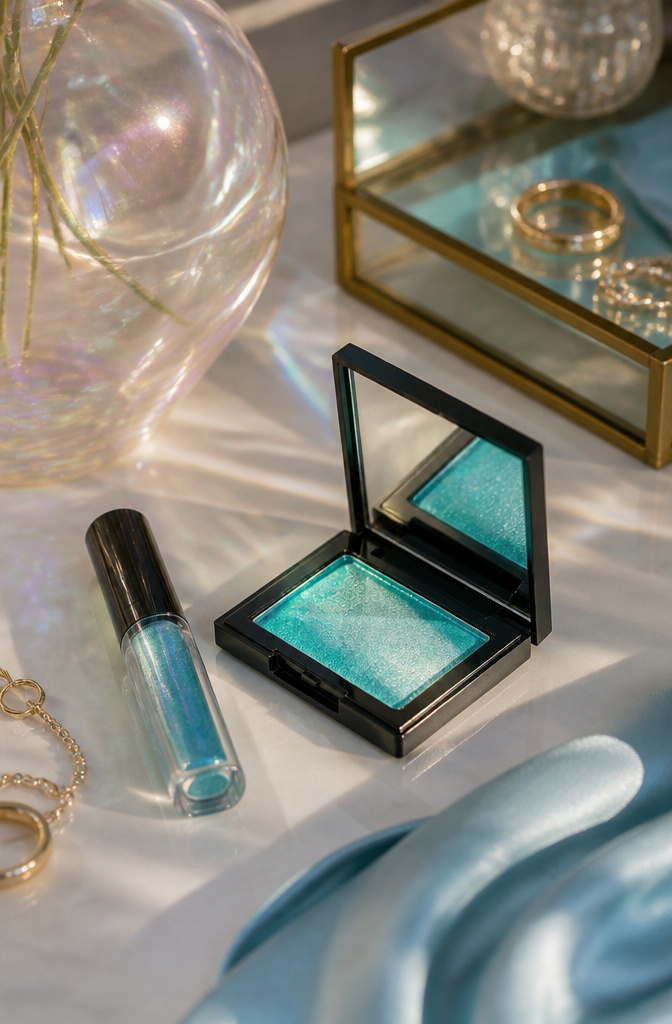
The wet-look trend for blue shadow eye makeup runs on two tracks. A cream shadow in turquoise sheered across the lid, then tapped over with clear eye gloss, builds the effect from products most people already own. Dedicated glossy eye products do the same job in one step. Either route gives that editorial shine, and turquoise in particular reads as intentional rather than costume because the gloss deepens it toward something like cerulean in certain light.
Apply less than looks right. Gloss travels. Within two hours it migrates toward the crease, collecting in the fold and breaking the even wash you started with. The first time I tried this, the amount that looked balanced in my bathroom mirror had pooled noticeably by the time I reached my car. Start at half that volume, especially if your lids have any natural warmth or fold at all. The sheen will still register; the migration just takes longer to announce itself.
14. Two-Tone Blue Eyes
Horizontal splits and vertical splits give blue shadow eye makeup two completely different moods. A lighter blue pressed on the inner half of the lid with a deeper tone on the outer half opens the eye and adds dimension. The vertical split reads softer, more forgiving if your hand wobbles. The horizontal approach, blue above the crease and silver or pearl below, feels sharper and more editorial, but the seam across the lid is where it lives or dies.
That line needs to read as intentional, not like two colors that wandered into each other. A small flat brush sprayed with setting mist lays down the edge clean and keeps the shadow from dusting past its border. The moisture grabs the pigment and locks it in place while you work the second shade up to it. Without that step, the division blurs into a single muddy hue by hour three.
15. Ocean Eyes
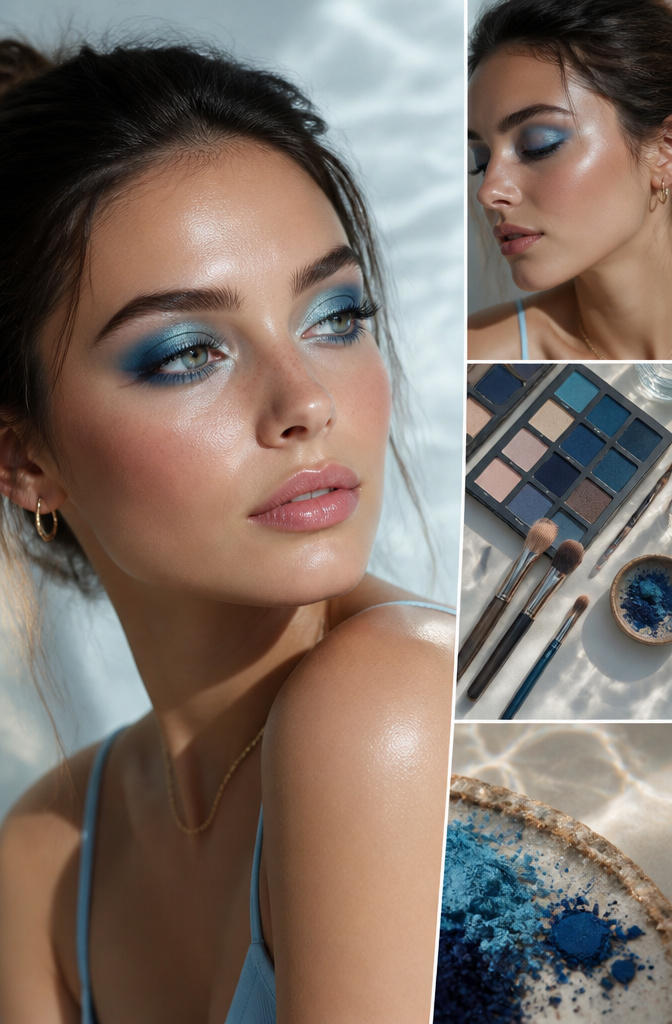
Deep navy pressed against the lash line reads almost black until you catch it in motion, and that is the trick this look turns on. I build it in four zones because the moment a single brush crosses two colors, the whole thing flattens into one muddy stripe. The medium blue goes through the crease with a clean, small blending brush, nothing fluffy enough to drift down toward the navy. Seafoam shimmer on the center lid catches the light like actual shallows, but only if you lay it with a finger or a flat synthetic brush; a blending brush turns it to gray dust. Pale aqua at the inner corner is the last step and the one most people skip, and their eyes look smaller for it.
The time cost is real. Four brushes minimum, maybe six if you want a spare for cleanup. I have rushed this in ten minutes and ended up with something that read as bruised rather than oceanic. The women I know who wear this well block out twenty-five minutes the first few tries, then settle closer to fifteen once the muscle memory sets in.
16. Modern Mod
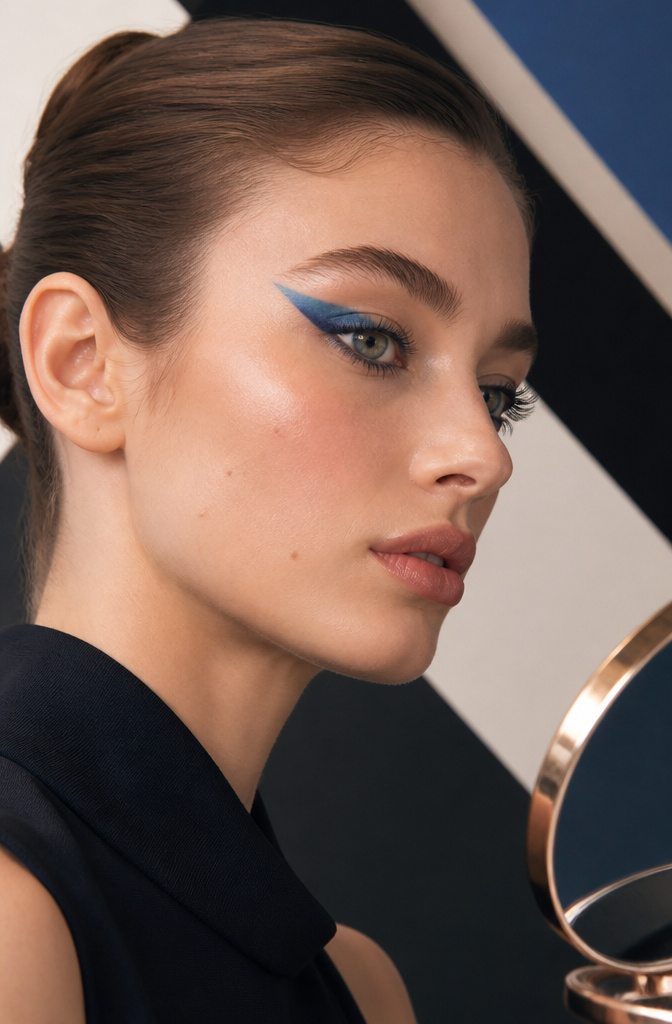
A sharp wing of blue shadow eye makeup lives or dies on the edge, not the pigment. I learned that watching a makeup artist rebuild a failed attempt in under three minutes. She’d drawn the shape first with concealer on a flat brush, tracing the block across the mobile lid and flicking it to a point at the outer corner. The concealer gave the blue something to grip and, more importantly, let her wipe and redraw until the angle held. Only then did she press the matte blue over the top, working in thin layers that sat flat instead of streaking.
The bare skin from crease to brow is the whole point of the look. It creates a graphic pause, a hard stop between color and nothing. Satin finishes read cleaner than shimmer here; anything reflective softens the edge you just spent ten minutes perfecting. The flat brush does the work your fingertip cannot, laying down even pressure for that paper-cut precision. Skip the concealer step and the blue migrates by noon, the wing blurring into something that reads as mistake rather than intention.
17. Frosted Inner Corners
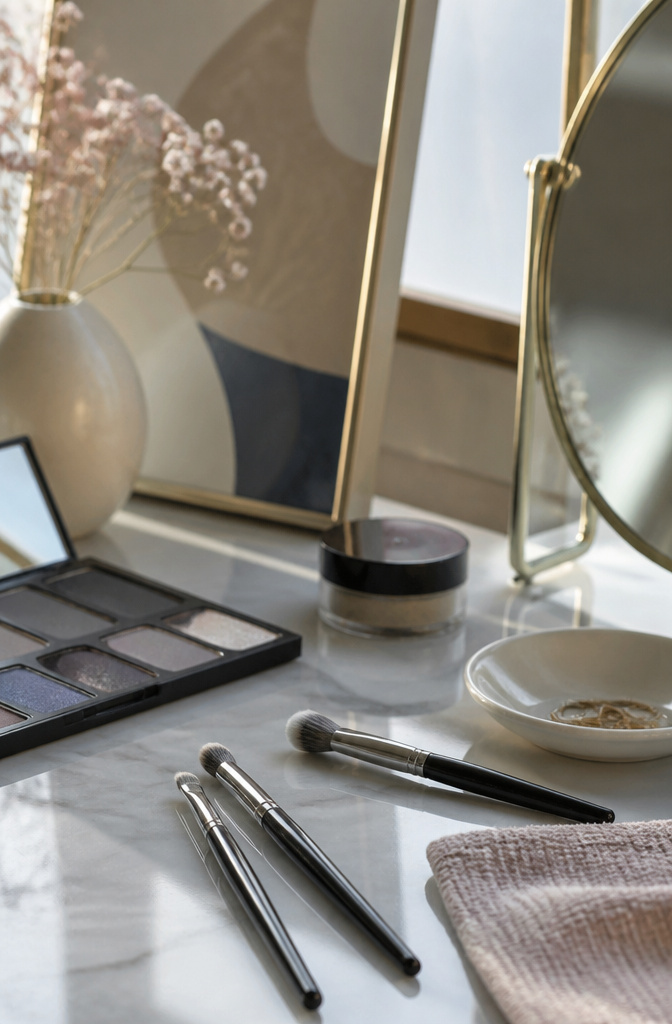
Icy white-blue shimmer pressed into the inner corner and swept along the lower inner lash line does more than catch light; it reshapes the eye. Round eyes read as more forward-set when that bright point sits closest to the nose, and the deeper blue packed on the outer lid pushes the shape back visually. Wide-set eyes narrow because the shimmer draws attention inward, closing the perceived gap between them.
The duochrome formulas that shift pearl to pale blue work best here, since a flat white can look chalky against deeper skin tones and a flat blue can read bruised. I apply the shimmer with a dampened pencil brush for density right at the tear duct, then fade it with a clean finger so no hard edge meets the deeper color.
The lower lash line is where this usually fails: dragging the shimmer too far out creates a raccoon stripe instead of a focused point of light. Stop at the midpoint, where the eye begins to round outward. The deeper blue on the outer lower lash line, applied with a flat definer brush, completes the narrowing effect without needing a wing.
18. Azure Wings
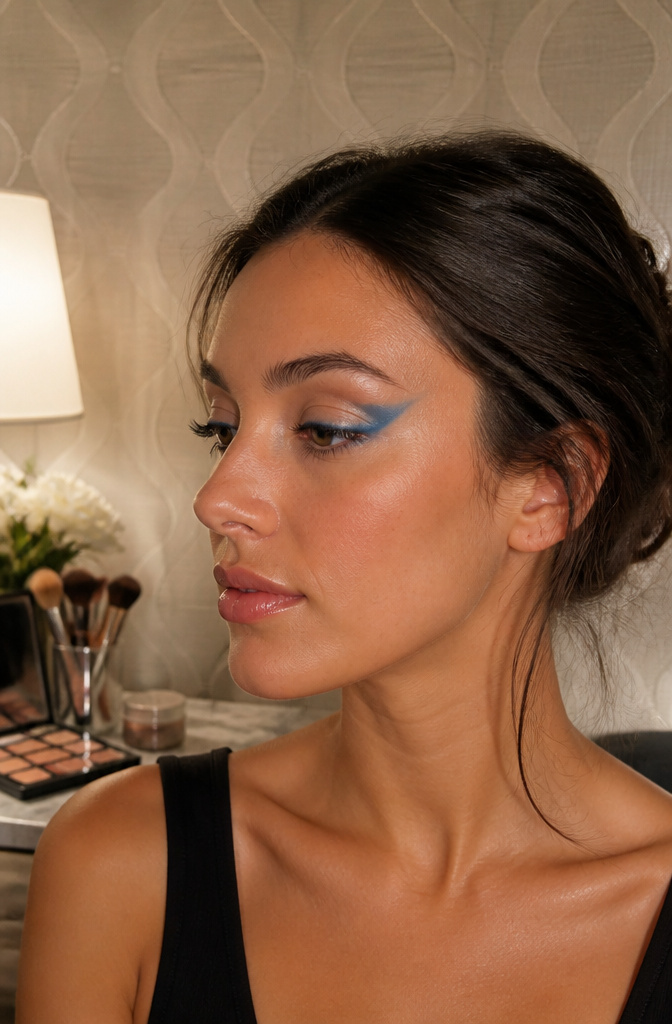
The extended wing with blue shadow is where the color lives past your outer corner, either sharpened to a point or kept soft and diffused. What separates this from a standard cat eye is the lid itself, which stays bare or carries only a whisper of something neutral. The blue does the architectural work, not the lid.
For hooded eyes, the placement changes. The wing has to be drawn with eyes open, looking straight ahead, or the fold will swallow the shape the moment you relax. What looks like a clean line with the brow lifted can disappear entirely once the lid settles. Mark the outer point where you want the wing to end while the eye is in its natural resting position, then connect back toward the outer corner with the brow neutral.
The sources describe two ways through this. One keeps the blue high, sitting slightly above the natural crease and pulled outward in a soft wing so the color remains visible when the eye opens. The other pairs that same blue wing with a pale pink lid and a brightened inner corner, though the core shape, the extended blue on the outer corner, stays identical.
I have watched this shape fail more often from placement timing than from color choice. Drawing with the eye closed or the brow raised gives a false map. The mirror tells the truth only at natural rest.
19. Monochromatic Blues
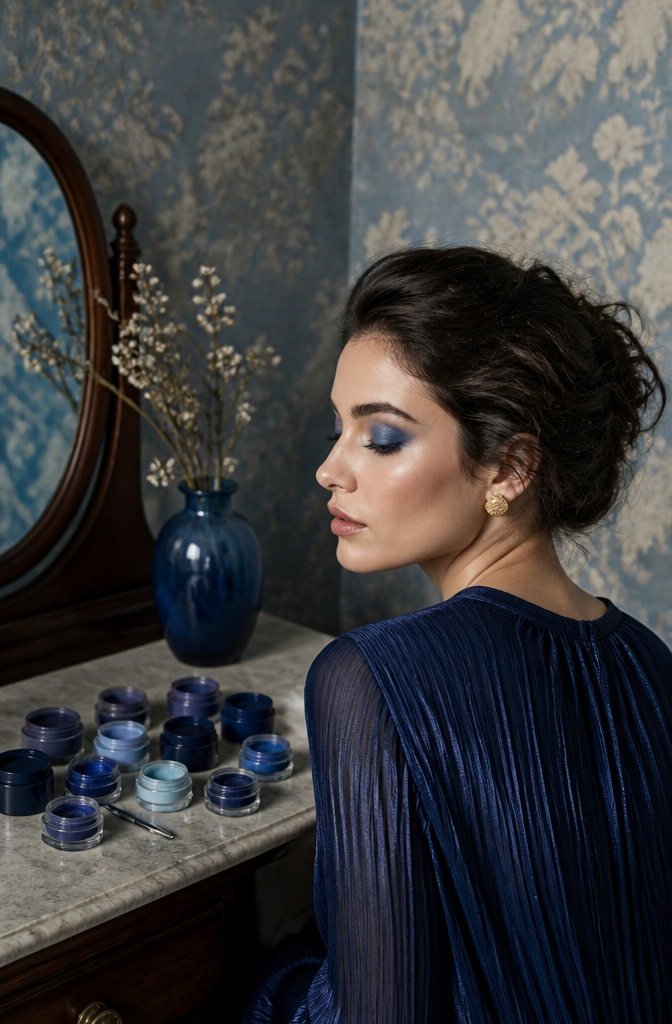
A single blue family across the whole eye reads intentional if the finish changes. Matte on the lid, satin through the crease, and a pinpoint of shimmer on the brow bone keep the look from flattening into one dimension. The gradation happens in intensity, not hue: the darkest tone hugs the lower lash line, the mid-tone fills the crease, and the lightest lifts the arch.
Patchy color usually comes from competing undertones. A cobalt lid fighting a teal crease turns muddy at the overlap. Staying within one family erases that border problem entirely. The risk is boredom, which texture variation fixes without introducing new color.
I learned this the hard way after three hours of blending a navy-to-sapphire gradient that looked sophisticated in the pan and bruised in the mirror. One family, three finishes, five minutes of work, and the result held together under fluorescent office light. The lower lash line needs the darkest matte to anchor the shape; skip it and the eye floats.
20. Navy Cat Eye
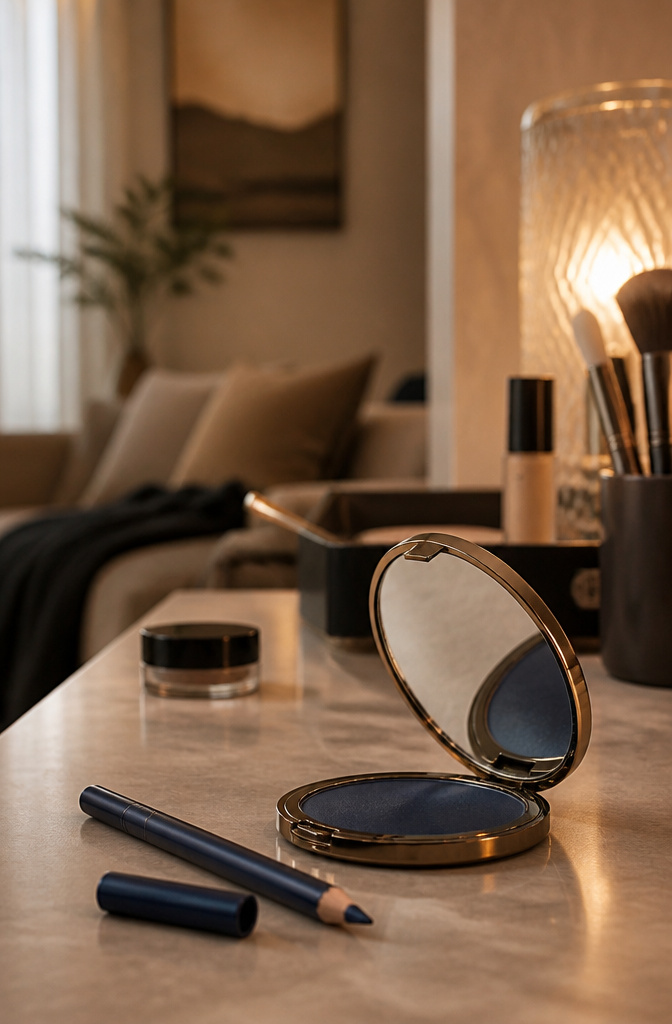
Navy shadow pressed into a winged line gives the cat eye structure without the harshness of black. I lay tape from the outer corner toward the temple, then work an angled brush into deep navy shadow and stamp it along the upper lash line, extending past the corner in one clean motion. A sealant mixed into the shadow keeps the line from migrating by midday.
The waterline beneath the navy wing needs a lighter blue to read intentional, not accidental. L’Oréal Paris Infallible Grip Mechanical Gel Eyeliner in Turquoise does this precisely. It sits just bright enough against the deeper wing to lift the eye open. Peel the tape after a quick spritz of setting spray. The edge comes out sharp every time.
Frequently Asked Questions
Can blue eyeshadow work on deep set or hooded eyes?
Yes. Place the blue slightly above the natural crease and pull it outward in a soft wing so the color stays visible when your eyes are open. For the extended wing shape specifically, mark the outer point with your eye in its natural resting position, then connect back toward the outer corner with the brow neutral; drawing with the eye closed or raised gives a false map that the lid fold will swallow.
How do you make blue eyeshadow look wearable?
Keep the rest of your face quiet and let the blue carry the energy alone. Fill brows lightly, reach for a sheer gloss or nude lip, and add a light brown matte shadow above the crease so the blue does not float without structure. Bright blue creases more visibly than muted tones, so primer is non-negotiable if you want it to last past a couple of hours.
What can I use if the original NYX palette is discontinued?
Look for any palette that contains a clear blue, a soft pink or light neutral shade, and an inner-corner shimmer. You do not need the exact same product; those three elements are what let you recreate the core look.