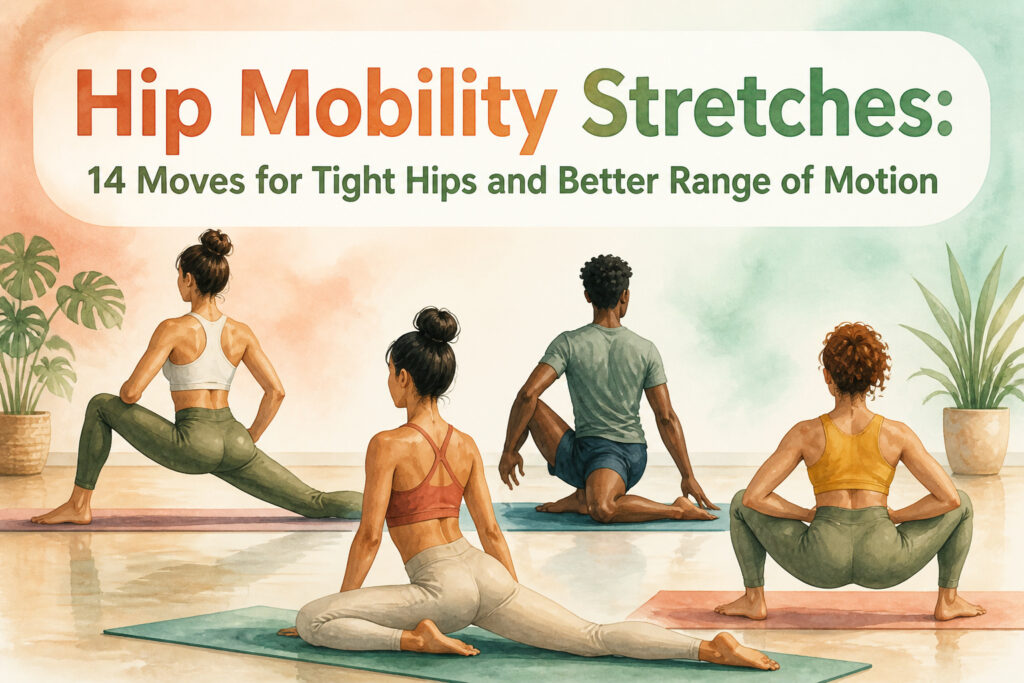
Hip mobility stretches are deliberate movements that restore range of motion to the ball-and-socket joints connecting your legs to your pelvis. They only work if you match the type to the timing; dynamic moves like leg swings belong before a workout, while static holds like pigeon pose need warm tissue to release. Nearly one in four American adults sits for more than eight hours daily, and that shortened hip flexor position is exactly why the 90/90 stretch, which hits both front and back legs in one position, appears in so many routines for tight hips.
Pigeon Pose
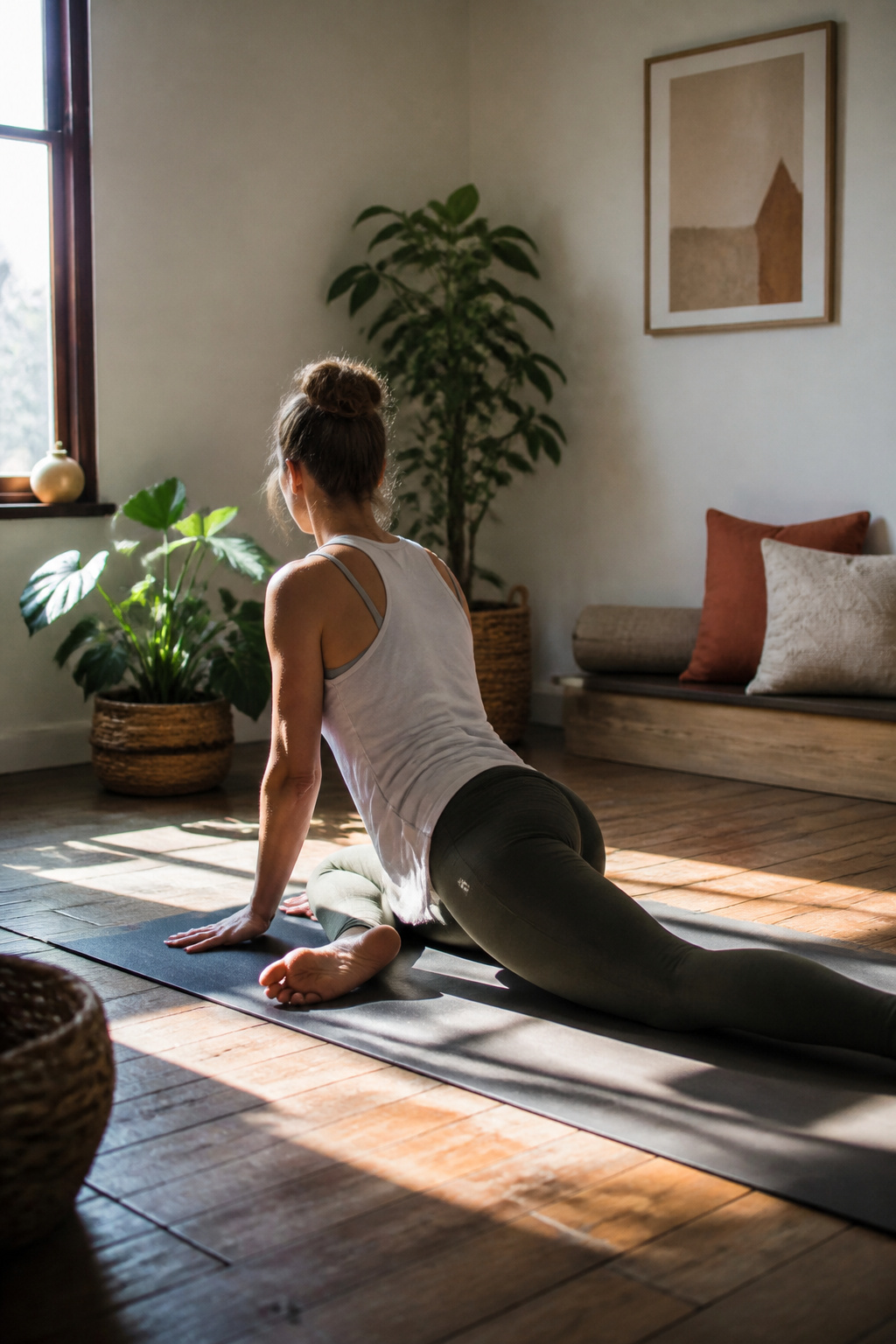
Pigeon pose lands hard on the glutes and the hip external rotators, the cluster of muscles including the piriformis and gluteus maximus that let your thigh rotate outward. That focused hit makes it one of the most commonly recommended hip mobility stretches in the research base, backed by seven sources.
The setup starts on all fours. Bring one knee toward the opposite wrist so the front leg partially wraps across your body, the back leg extended behind you. Lean forward to settle weight onto that front hip. Arms can drop for support. Upright or folded, hold for 10 to 30 seconds.
You should feel a deep stretch through the outer hip and buttock of the front leg, not a sharp pull in the knee or lower back. If the knee protests, a folded blanket underneath helps level the pelvis. The hip itself does the work, the glutes release, and the external rotators get the opening they rarely find after twelve hours of sitting.
90/90 Stretch
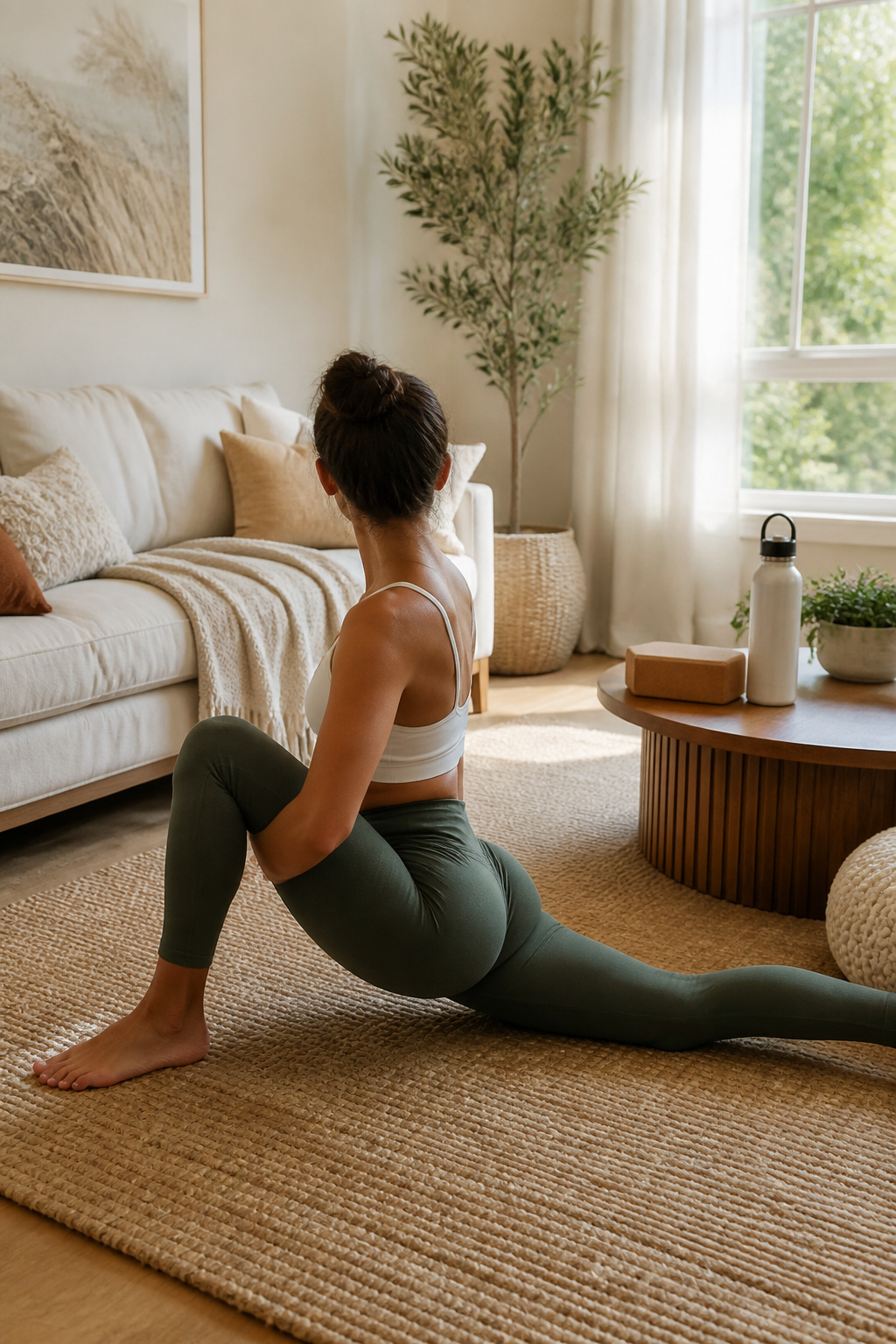
The 90/90 stretch targets the hip flexors on your front leg and the glutes plus external rotators on the back leg, which makes it one of the more efficient hip mobility stretches when time is tight. You can use it dynamically before a workout or hold it statically afterward, and the same position serves both purposes.
Setting up takes attention to angles. Both knees bend to 90 degrees, front foot flat, back knee grounded. From there, hinge forward from the hips with a flat back to feel the stretch through the glutes and outer hip of the front leg. To hit the hip flexors on the back leg, rotate your torso over that rear thigh, keeping the knee anchored. Some prefer adding a slow side-to-side sweep if they’re treating it as a dynamic warm-up, while others settle in and hold. Ten reps per side works well for the moving version; hold times depend on whether you’re using it post-workout or as standalone mobility work.
Hip Flexor Stretch
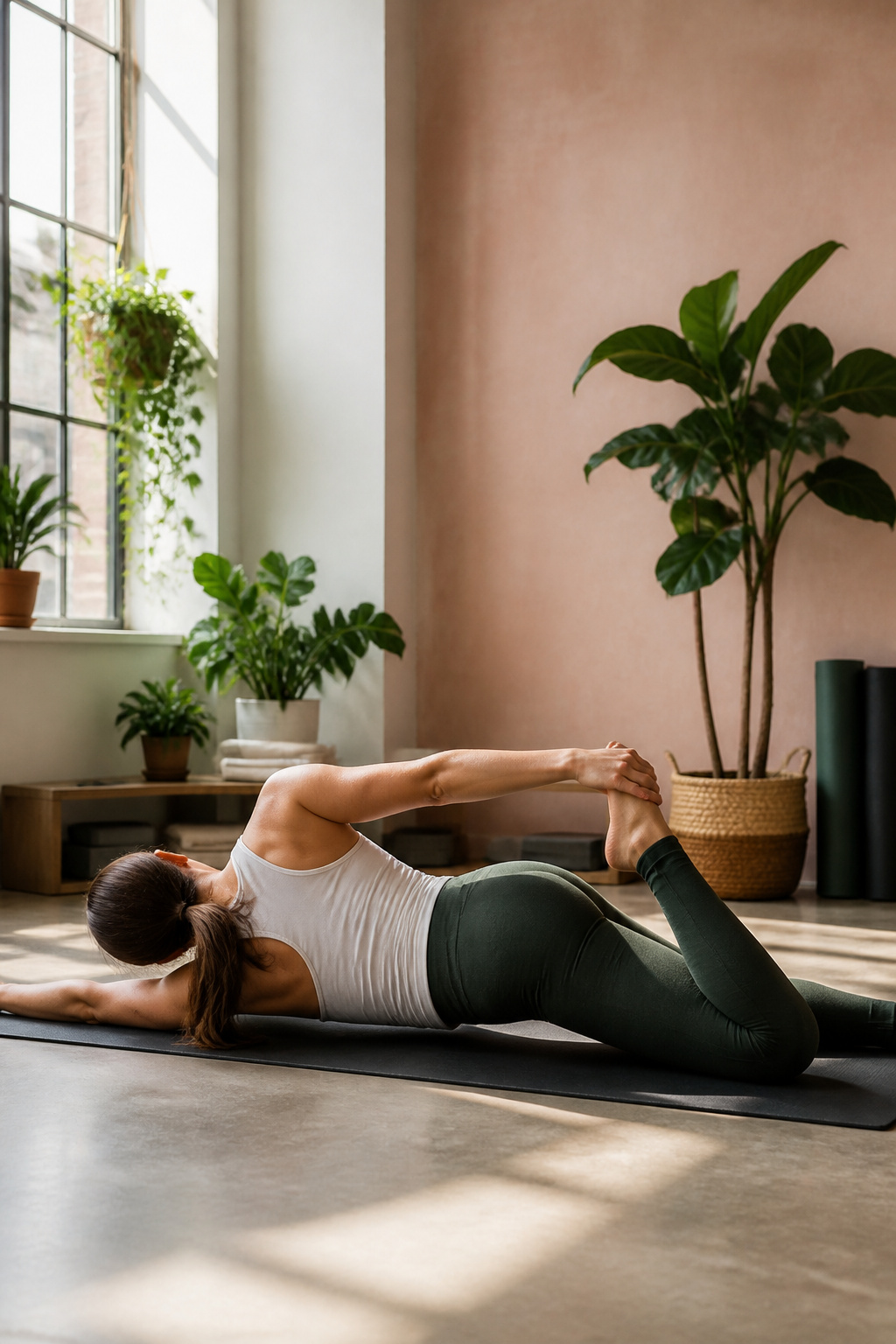
The iliacus and psoas major are the primary hip flexors, working together to flex and stabilize the hip while pulling thigh and torso together whenever you walk, run, sit, or stand. Tightness here typically shows up as discomfort in the front of the hip that worsens after prolonged sitting or repetitive motion like cycling.
For isolating these two muscles, tuck your pelvis under and avoid arching your back. That small adjustment keeps the stretch from drifting into the lumbar spine and keeps tension where it belongs. A side-lying version works well for this: lie on your left side with knees bent to 90 degrees in line with hips, then move your right foot backward, grasp the ankle, and gently pull the leg behind you while maintaining that tucked pelvis. The stretch should land squarely in the front of the thigh and hip flexor on the straightened side.
A lunge-based flow can also hit the psoas and iliacus while adding movement. Step forward into a lunge, sink the hips forward to open the front of the hip, then lean back to lengthen the hamstrings. The forward portion targets the anterior chain, the lean back covers the posterior, and the motion between the two builds usable range rather than static length.
Butterfly Stretch
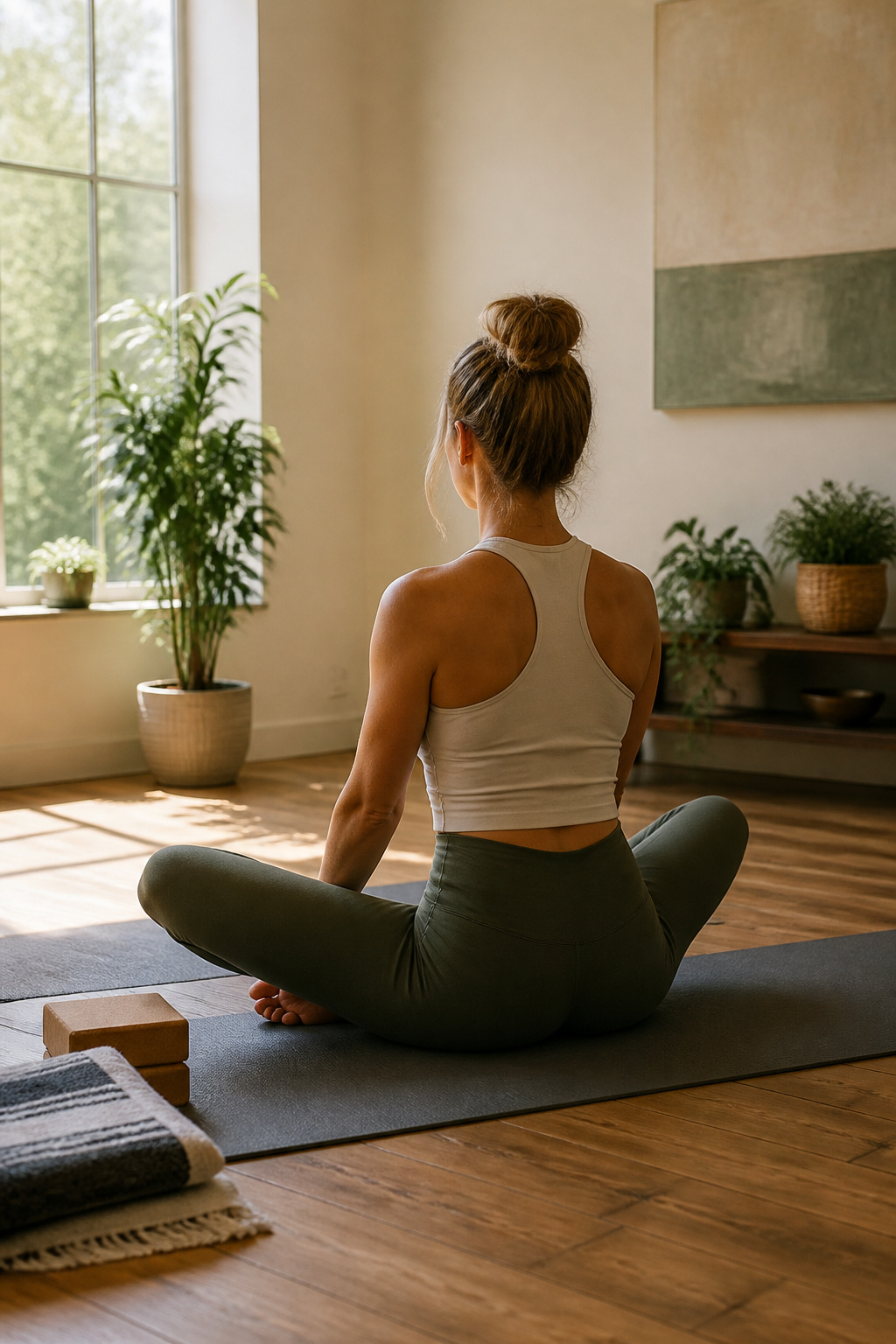
The butterfly stretch is one of the most accessible hip mobility stretches for opening the inner thighs and hips, and four major fitness guides include it in their routines. Gravity does most of the work once you are positioned correctly, which makes it forgiving for most fitness levels.
Sit with the soles of your feet pressed together and your knees falling outward like wings. Keeping your spine straight, let your weight settle so the hips release gradually. Some guides suggest resting your sitting bones on a folded blanket to support the pelvic tilt, or sliding blocks beneath your thighs if the stretch feels too intense. You can interlace fingers under your feet for light leverage, or use your elbows to gently press the knees closer to the floor for a deeper opening. Hold for 30 seconds, then fold forward and stay up to a minute if the added release feels useful. Bringing your heels closer to your body deepens the stretch, but the basic position already does the job without that modification.
Couch Stretch
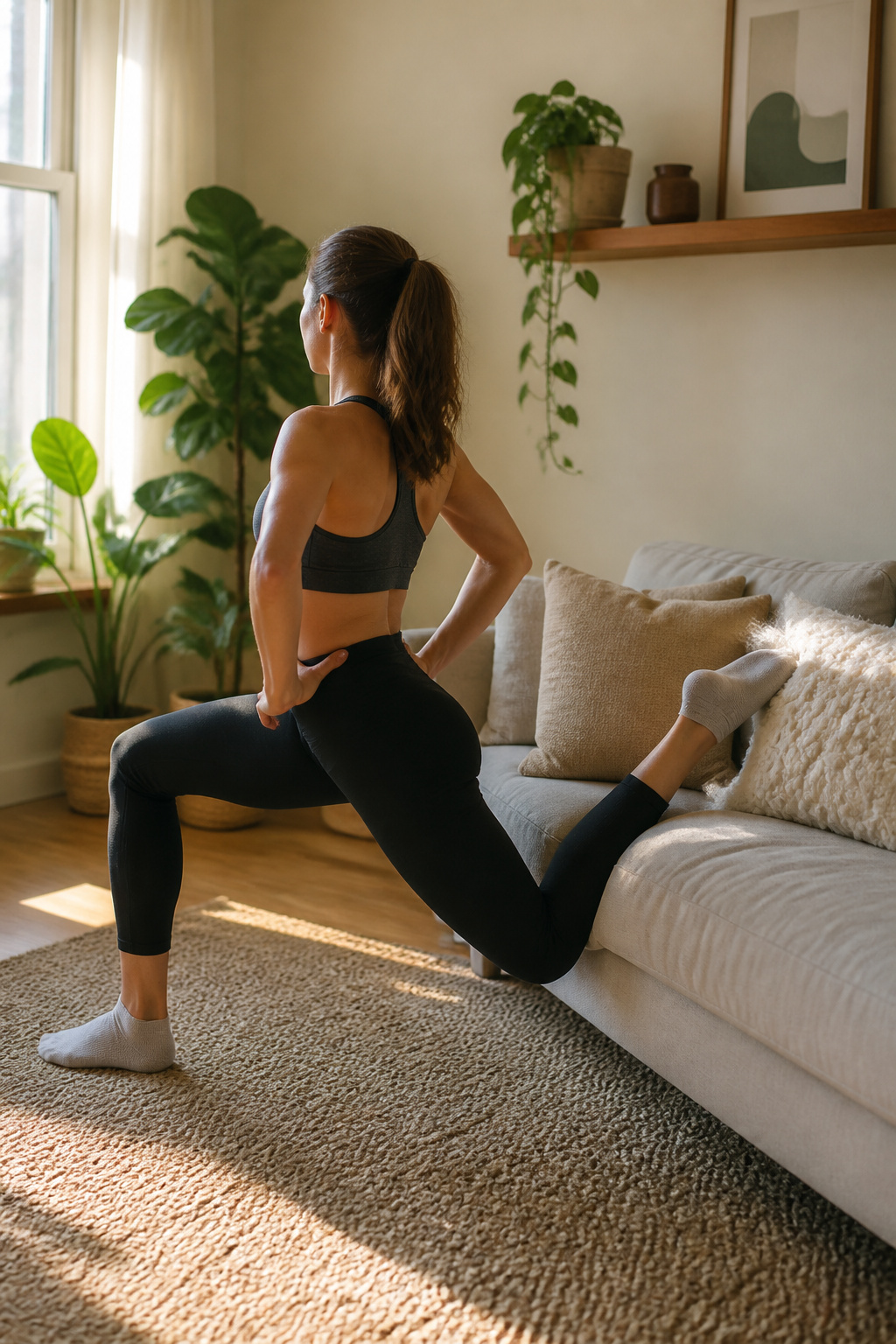
The couch stretch pulls both the hip flexors and quads into one movement, which is why it shows up in so many routines for tight hips. I set this up by placing a couch or sturdy bench behind me, then bending one knee so the top of my foot rests flat against it. The other leg steps forward into a lunge, knee tracked over the ankle, and I sink the hips until the back knee touches down. If the hips are tight, a pillow under that back knee keeps the stretch from turning into a strain. The depth comes from shifting the hips forward, not from arching the back; the torso stays tall, weight pressing through the front heel. I hold for five to eight breaths, stand to reset, then switch sides. Some versions keep both hands on the front thigh for balance, others reach the back-side arm overhead and angle it away to lengthen the whole front line. The kneeling position can bother sensitive knees, so a folded towel or switching to a lying variation is the better call when pressure builds.
Figure Four Stretch
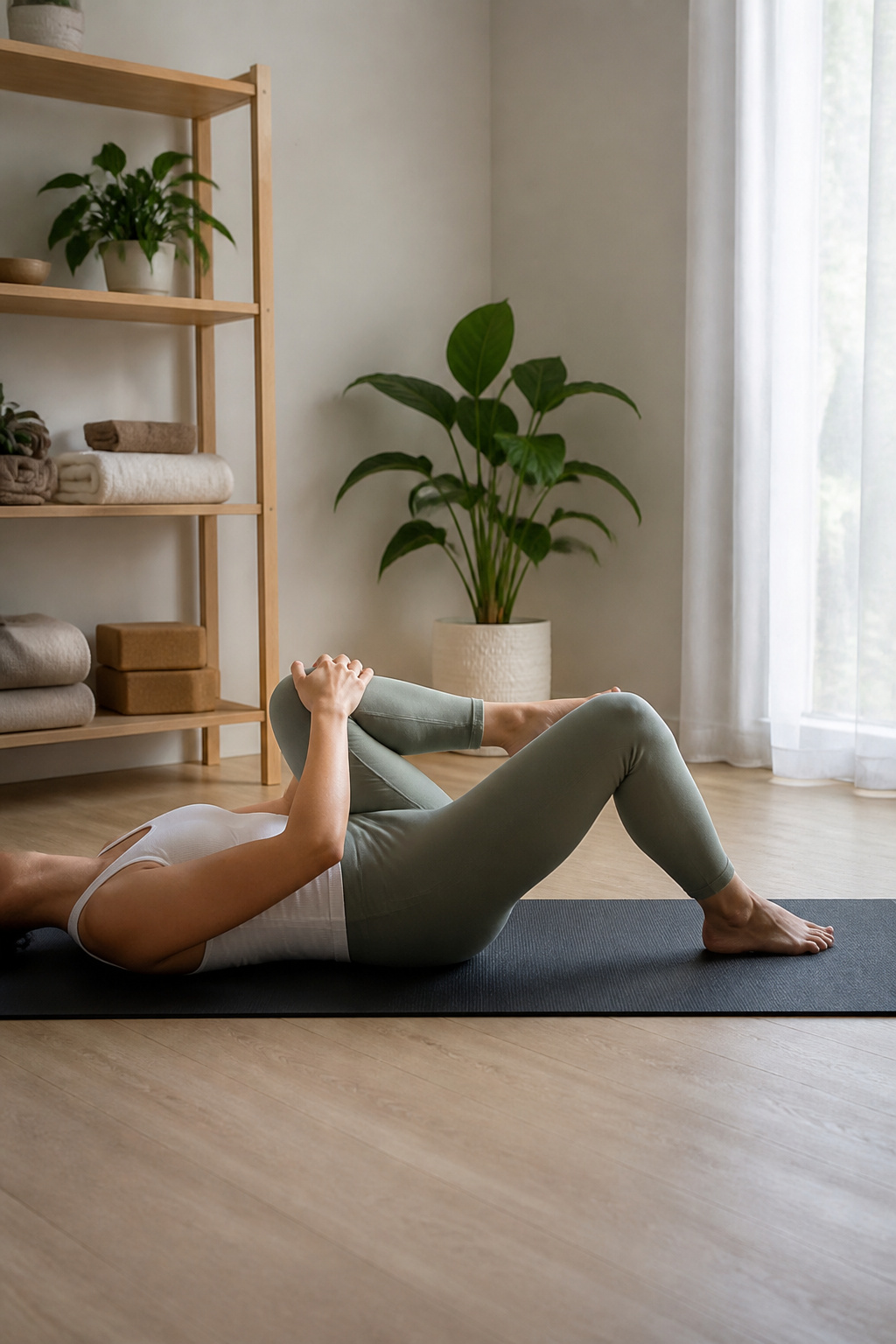
The figure four stretch lands exactly where most of us feel the tightest: the glutes and outer hips. Lying on your back with knees bent and feet drawn in toward your hips, you cross one ankle over the opposite thigh just above the knee. That ankle placement is what creates the four shape and opens the hip externally.
From there, the move is a slow pull. Thread your hands around the supporting thigh or shin and draw the leg in toward your chest until you feel controlled tension through the glute of the crossed leg. Hold that for up to one minute, then switch sides. Some variations have you reach under the thigh while gently pressing the crossed knee away for a deeper stretch, and the difficulty climbs if you straighten the lower leg.
What sold me on keeping this one in rotation is how precisely it hits the piriformis and surrounding rotators without asking the lower back to do much at all. If your outer hip pinches during pigeon pose, the supine figure four is the safer entry point with the same payoff.
Low Lunge
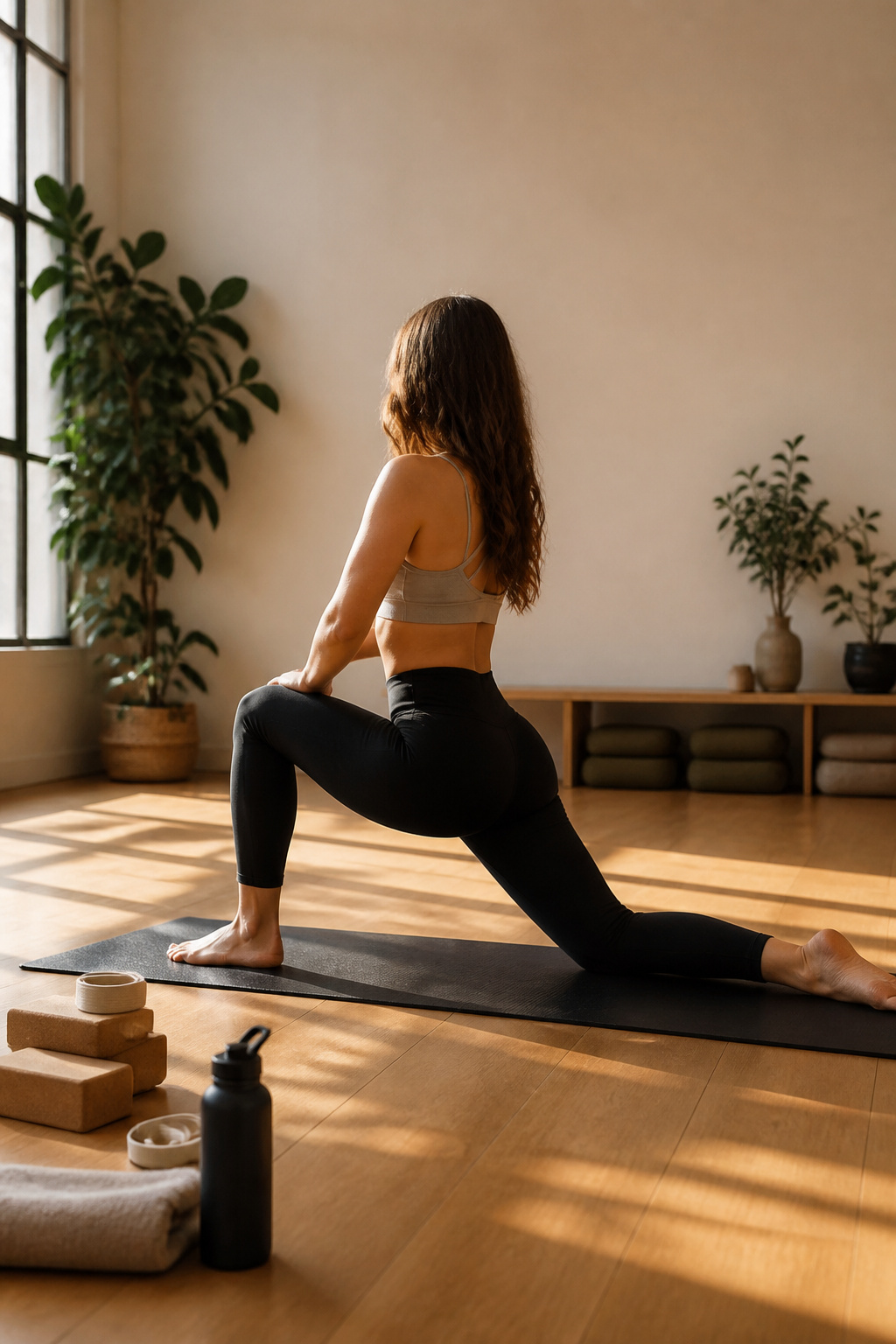
Low lunge hits the hip flexors hard because the position forces the front of the thigh into extension while the pelvis tilts forward. The iliacus and psoas major, two primary hip flexors that attach to the pelvis and lower back, lengthen under that load. After sitting all day, those muscles tighten and shorten; this stretch reverses that pattern actively rather than passively.
The forward step sets the angle. Plant the front foot so the knee stays vertical above the ankle, not drifting past the toes. The back knee drops to the ground, untucked, which keeps the pelvis from rotating away from the stretch. Hands rest on the front thigh as the chest lifts and the hips drive forward. The tailbone drops slightly to protect the lower back from overarching. The torso stays upright, not leaning, so the stretch stays in the hip flexors instead of shifting elsewhere.
What makes this different from static stretching is the engagement required. The back leg presses gently into the floor, the core braces enough to keep the pelvis level, and the whole position demands control. Leaning the front leg an inch or two toward the same-side hand deepens the opening in the outer hip if needed.
Sitting for long periods of time causes the hip flexors to tighten and shorten, and that can lead to stiffness and discomfort.
For anyone who sits through work, that tightness translates directly into harder pelvic rotation and often low back pain. The low lunge addresses the source with a stretch that stays active enough to translate into actual movement patterns. Hold until the edge softens, then switch.
Glute Bridge
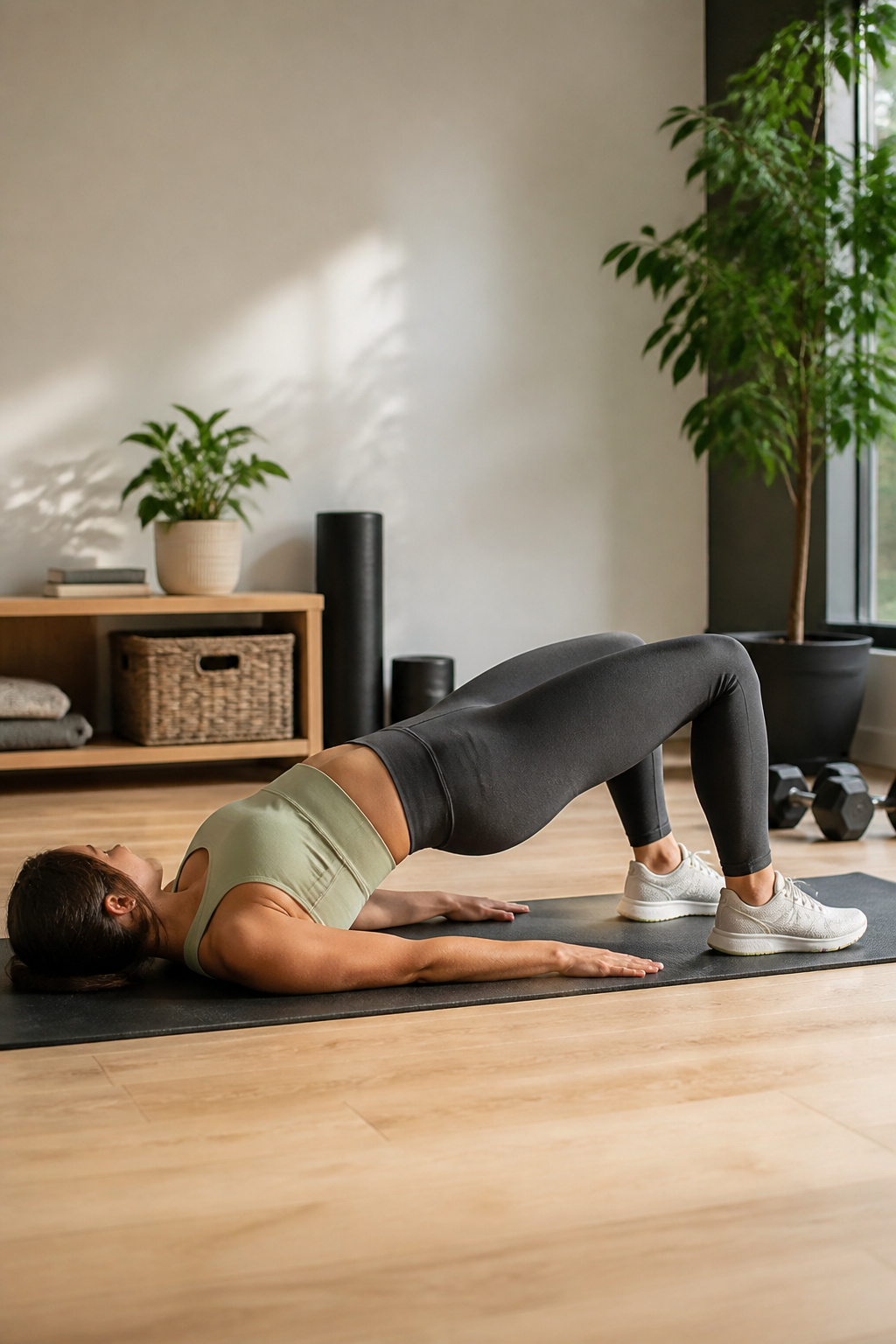
The glute bridge builds strength where most sitting-heavy routines leave you weak, and that active contraction is what lets the hip flexors release on the other side of the joint. Lie on your back with knees bent and feet about shoulder-width apart, toes pointing forward in line with your body. Press your palms into the floor alongside you for steadying, then lift your hips until your torso and upper legs run parallel to each other. Squeeze your glutes and core at the top, hold for five to eight breaths, then lower with control.
Three to five reps is a solid starting place. What changed the feel for me was understanding that the bridge is doing two jobs at once: the glutes fire to raise you, and that same engagement creates a passive lengthening through the front of the hip that no static stretch quite matches. For extra support, slide your hands underneath your lower back or butt, elbows staying grounded. The single-leg version, with one leg extended straight, stretches deeper and works the standing-side glute harder; hold that variation for 30 seconds and do two to three rounds per side if you want more load.
Leg Swings
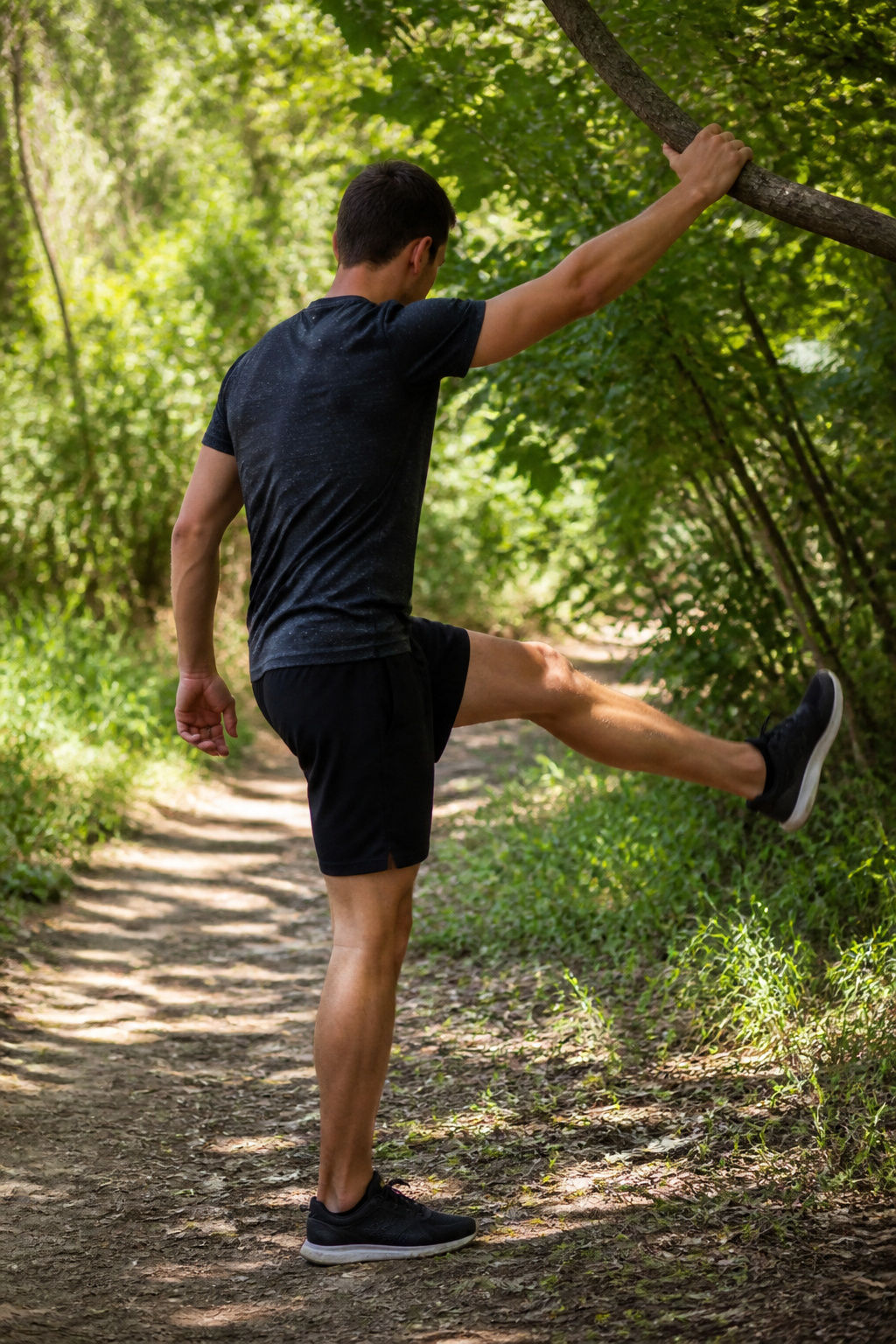
Stand on one leg and hold something stable with the opposite hand; the other leg swings front to back so the hip moves from fully flexed to fully extended. Control matters more than height. I used to treat this like a momentum exercise and ended up just twisting my lower back, which defeats the purpose entirely. The hamstring and the front of the hip both open up when the movement stays deliberate.
Swing the same leg side to side for a different angle. Forward-back and lateral versions together cover the range a run asks of you. Dynamic leg swings belong at the start of a session, not the end; static holds like a couch stretch or pigeon pose fit better afterward when the tissue is warm and ready to lengthen without resistance. Before a run, the goal is preparing the joint for smooth, powerful movement rather than forcing extra range.
Hip Circles
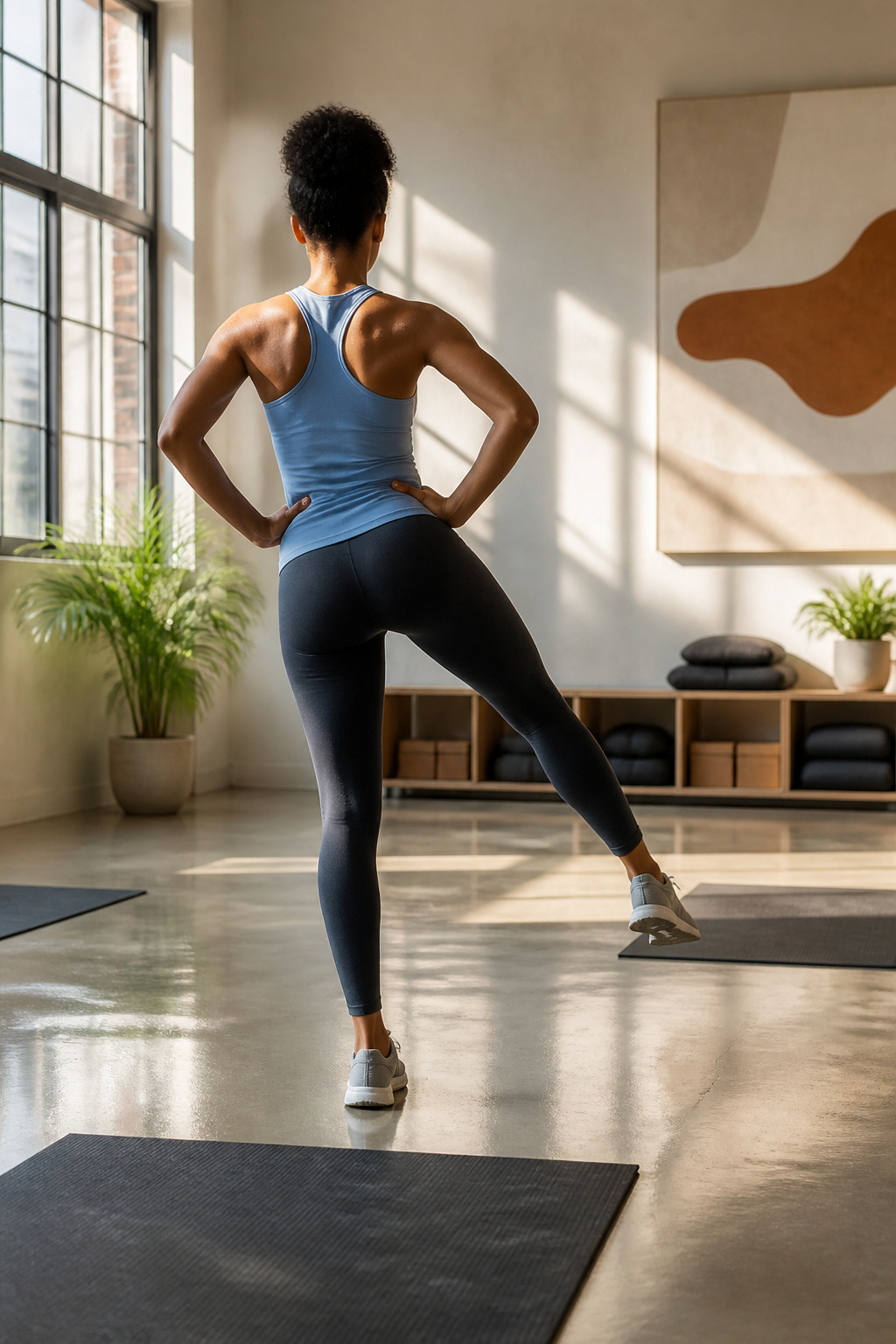
Hip circles move the joint through its full rotational range, which is exactly what a ball-and-socket joint needs to stay healthy. The femur’s rounded end sits in the hip socket and is meant to travel in circles, yet most daily walking keeps that motion narrow. Opening it up intentionally distributes synovial fluid across the joint surfaces and keeps the surrounding capsule from stiffening into a smaller pattern.
I start these from a standing position, feet in line with my hips, hands on my hips for balance. Lift one knee to hip height, then trace a circle outward: open the hip so the knee points sideways, sweep the foot back at knee height, then bring it down to start. Ten seconds clockwise, then reverse for another ten. The sources vary on whether to keep the rest of the body still and contracted or to let the hips shift naturally; I find the stricter version harder and more useful, but the looser version works fine as a morning warm-up. Either way, gradually increasing the circle size over weeks matters more than forcing a big arc on day one. I also add brief holds at the back or side of the circle when I want more strength through the range, not just passive motion.
Deep Squat
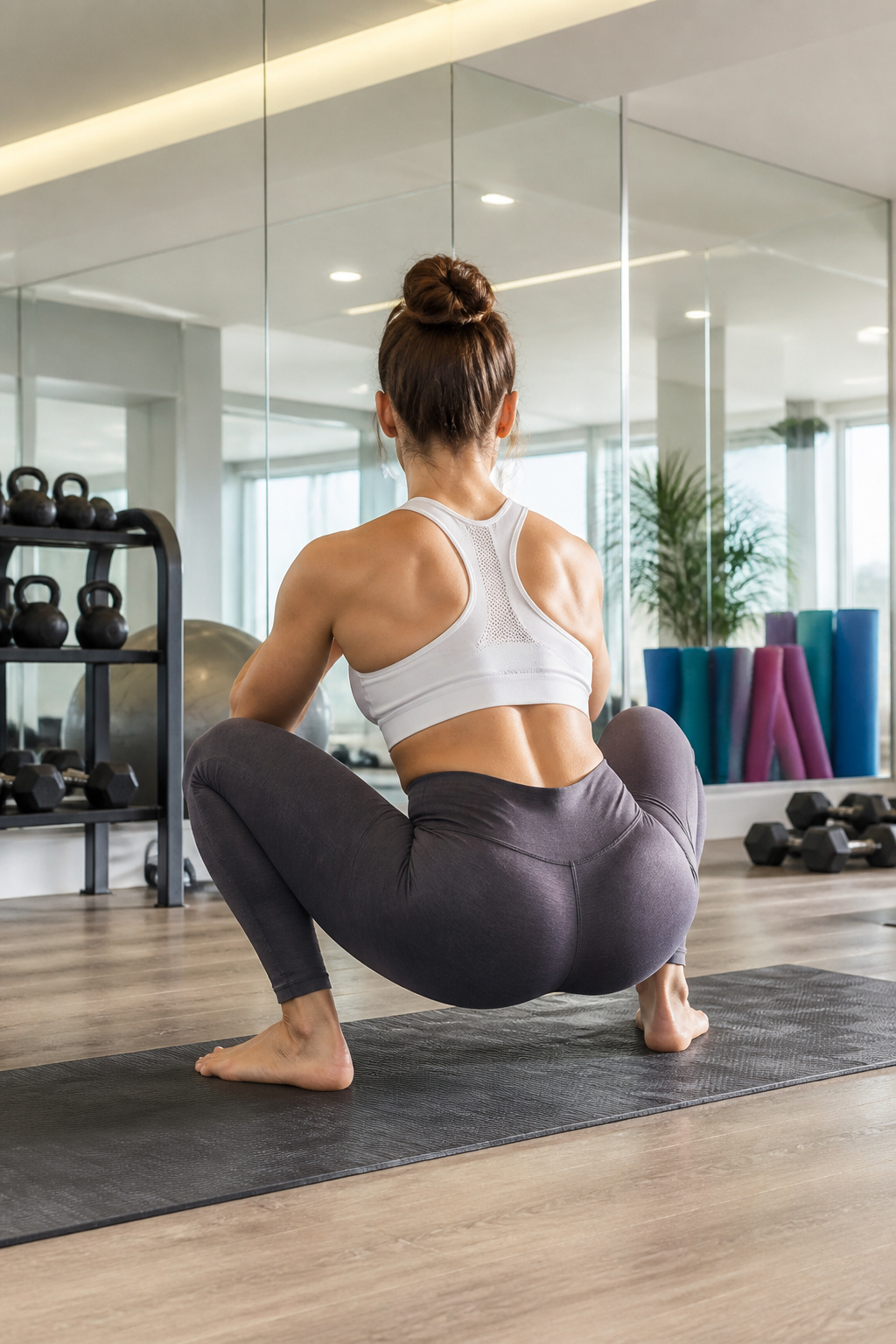
A deep squat asks the hips to bend fully while the whole body stays under load, which is why it builds flexibility and strength in the same minute. The hips have to open at the bottom of the position, but they also have to hold you there. Research on loaded movement generally supports this: full-range exercises strengthen tissue in the lengthened position, while partial ranges teach the joint to stay stiff.
Feet slightly wider than the hips, turned out. Sink until the hip crease drops below the knee, keeping the heels flat on the floor. That heel contact is non-negotiable; once the heel lifts, the stretch shifts to the ankle and the hip loses the work. Hold the bottom for 10 seconds at first, then stand.
If the heels won’t stay down, grab a door frame or suspension straps for counterbalance. The support lets you sit deeper without cheating the position. I read accounts of people using this assisted version daily and eventually dropping the help, but the timeline varies enough that I won’t invent one. The burn the sources mention is real, and repeating the hold is what earns the range.
Single-Leg Downward Dog to Pigeon Pose
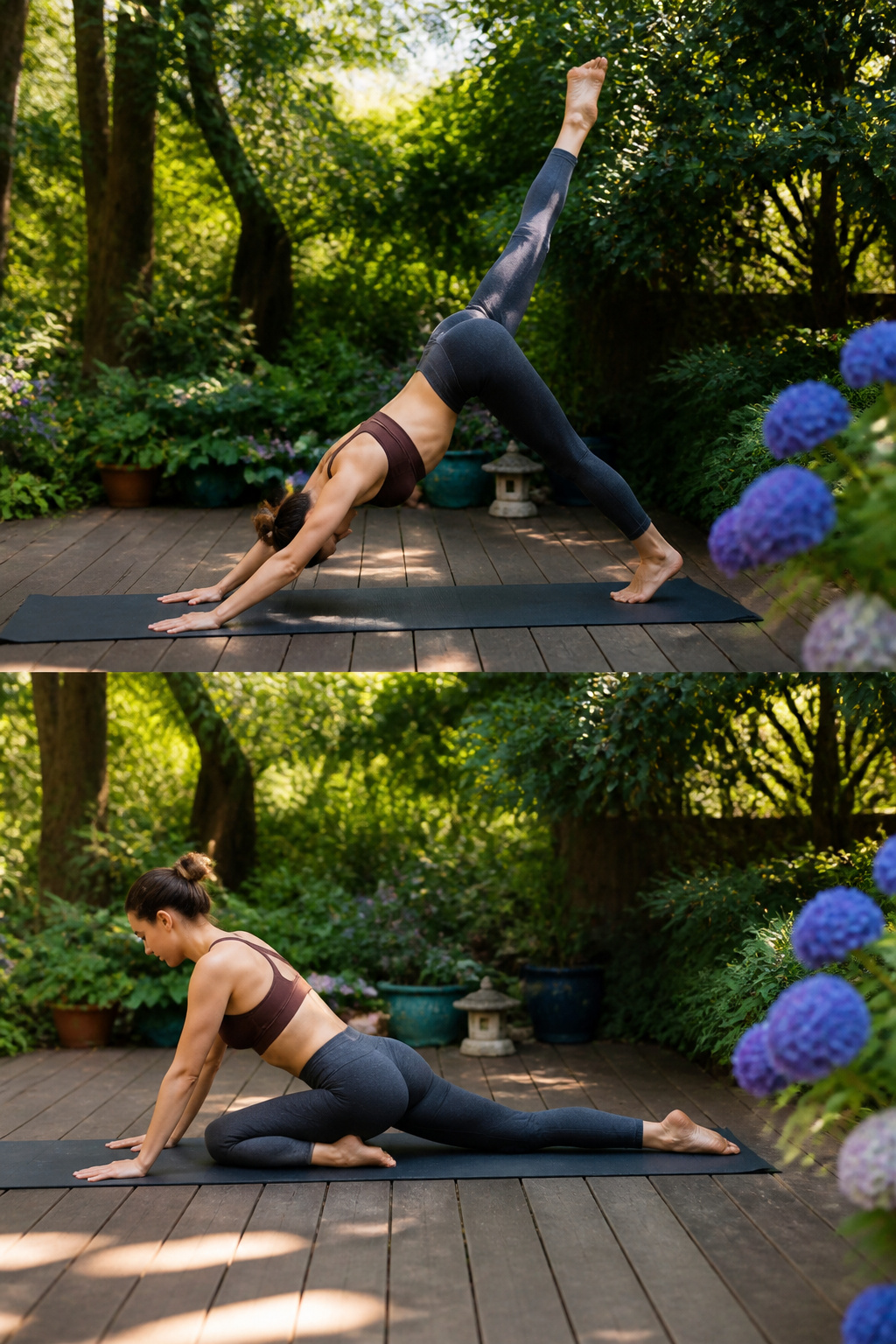
The single-leg downward dog to pigeon pose flow works the hips through two distinct angles before you even settle in. In the inverted V, lifting one leg fires the glute of the standing leg while the hamstring of the raised one lengthens; that activation matters because a muscle that just woke up releases differently than one asked to stretch cold. Sweeping the lifted leg forward into pigeon drops the same hip into external rotation, and the shin angle changes which fibers of the glute and deep rotators take the load.
I hold the downward dog split for a breath or two, enough to feel the standing leg work, then bring the knee toward the opposite wrist and lower. The back leg stays extended, and the torso can stay upright or fold forward onto the elbows for more intensity. Thirty to forty seconds in the pigeon side lets the tissue release; rushing it just tightens things back up. Repeat the full flow on the second leg, and the whole sequence covers sagittal, frontal, and transverse planes in one continuous move.
Standing Hip CARs
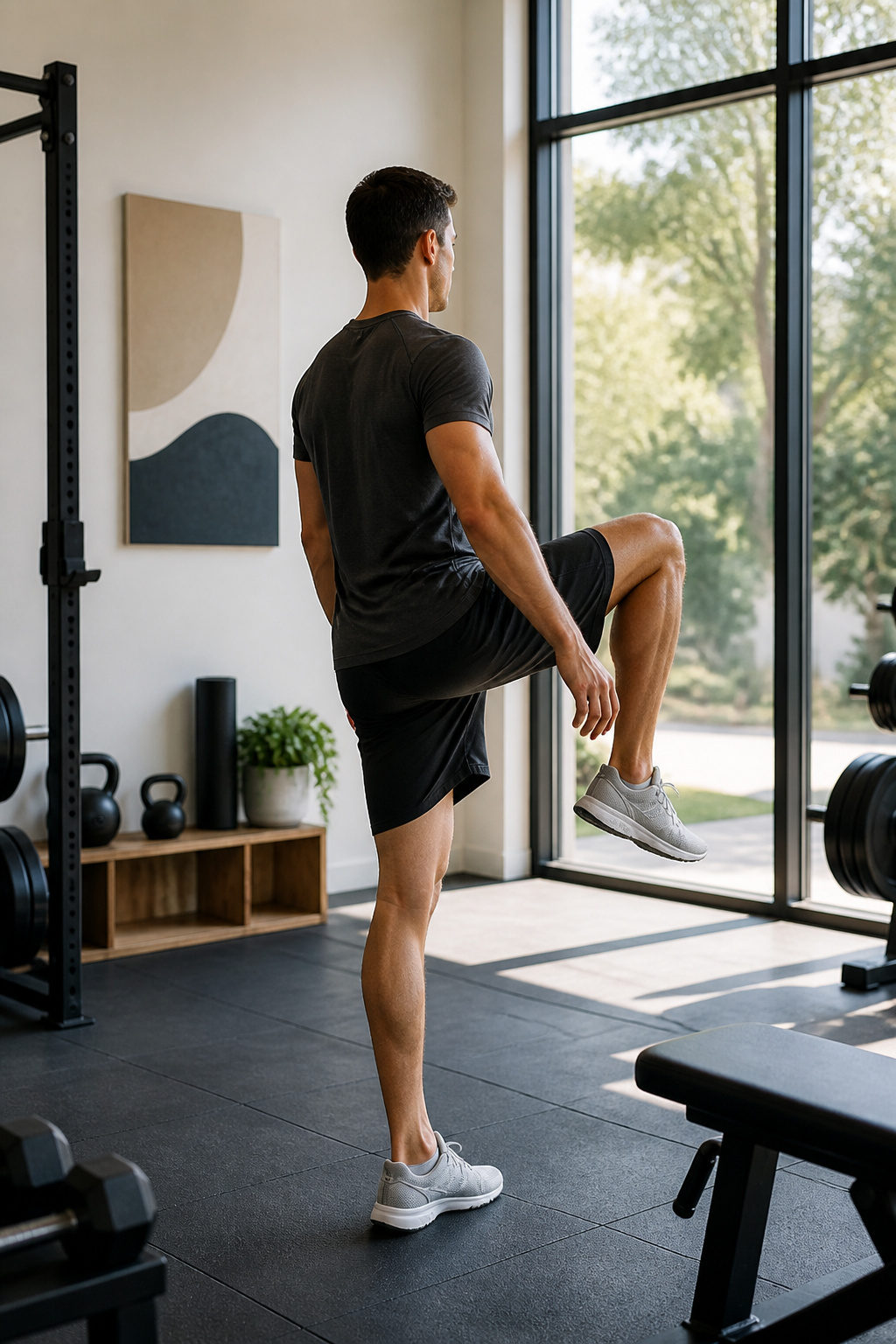
Controlled articular rotations, or CARs, ask the hip joint to trace a full circle while everything above the waist stays locked in place. The standing version is the one I return to most mornings, partly because it demands so little floor space and partly because the feedback is immediate: the knee either tracks a clean arc or it wobbles and cheats.
The setup is simple. Feet line up under the hips, posture tall. One knee lifts to hip height, then the leg opens outward so the knee points to the side. From there the foot travels behind you, knee still bent, before extending back and lowering to start. The entire path should be deliberate enough that you could pause at any point without collapsing. That slowness is what separates a CAR from a casual leg swing; the joint itself does the work, not momentum.
I treat these as a diagnostic first, a warm-up second. If my standing hip CARs feel gritty on one side, I know that hip needs more attention before any loaded work. The sources agree on placement: dynamic rotations like this belong before a run or strength session, when the goal is to expand range of motion rather than hold it. For progression, the circle can widen over weeks, or you can add brief stops at the sticking points to build isometric control where the joint feels weakest.
Active Deep Squat
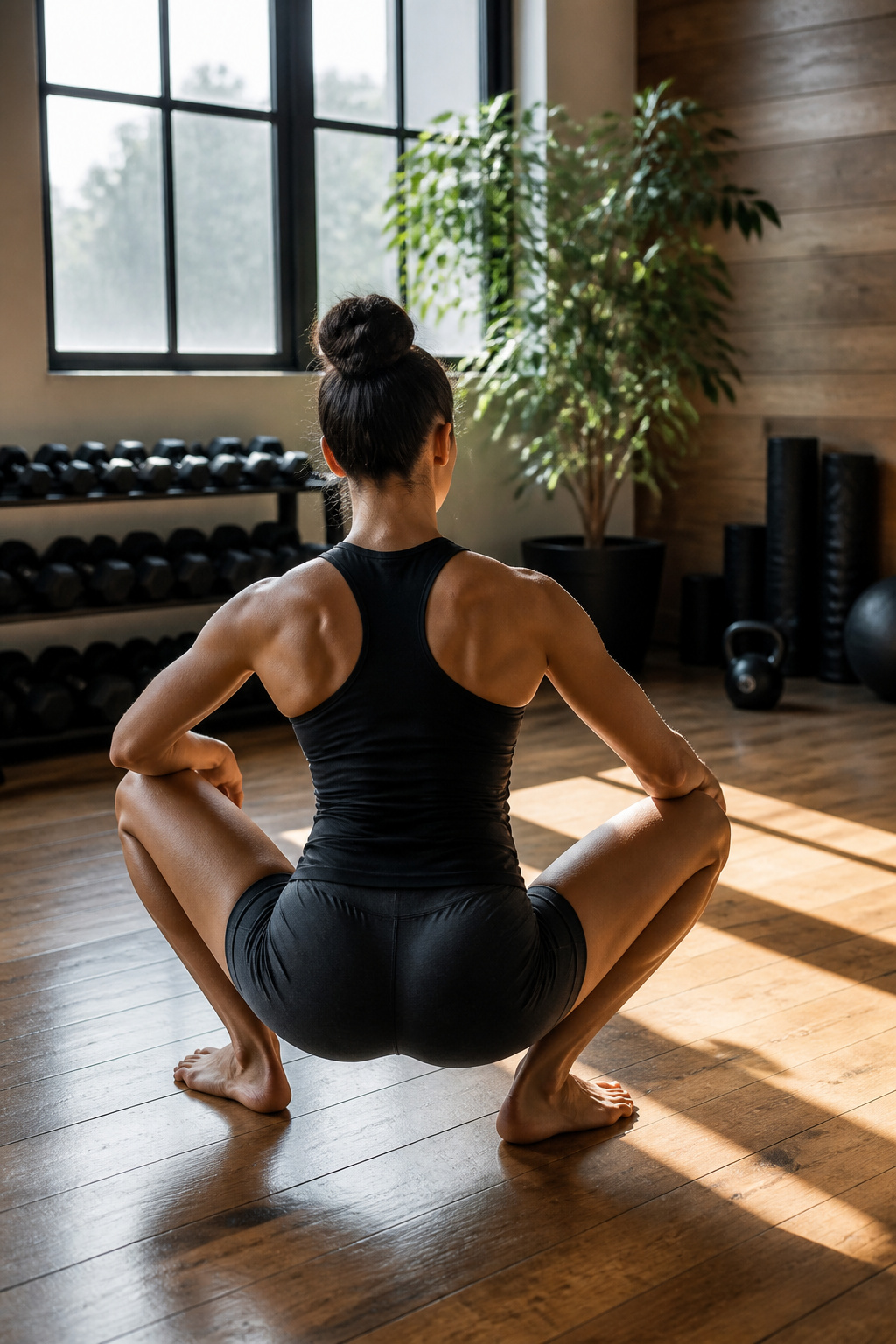
The active deep squat asks more of the hips than simply sinking and holding. Static versions build tolerance at one angle, but the moving bottom position forces the entire hip complex to stabilize while shifting through depth. I keep a light oscillation going, swaying side to side or pressing one knee out farther than the other, and that small change makes the joint work dynamically instead of settling into passive rest.
Three approaches line up behind this distinction. Full-range resistance training through squats and lunges strengthens hips while reinforcing mobility, but partial-range work or machines train the joint to stay stiff and shortened. Priming the hips with movement before loading them, then using complete range during the session, restores the balance that sitting steals away. The oscillation at bottom acts as that primer and the loaded work combined into one drill.
A static hold has its place for endurance, yet control through the full arc matters more for daily life. Walking, squatting, changing direction, all ask the hip to manage weight while moving, not while frozen. The active squat builds that readiness directly.
Why Hip Mobility Matters
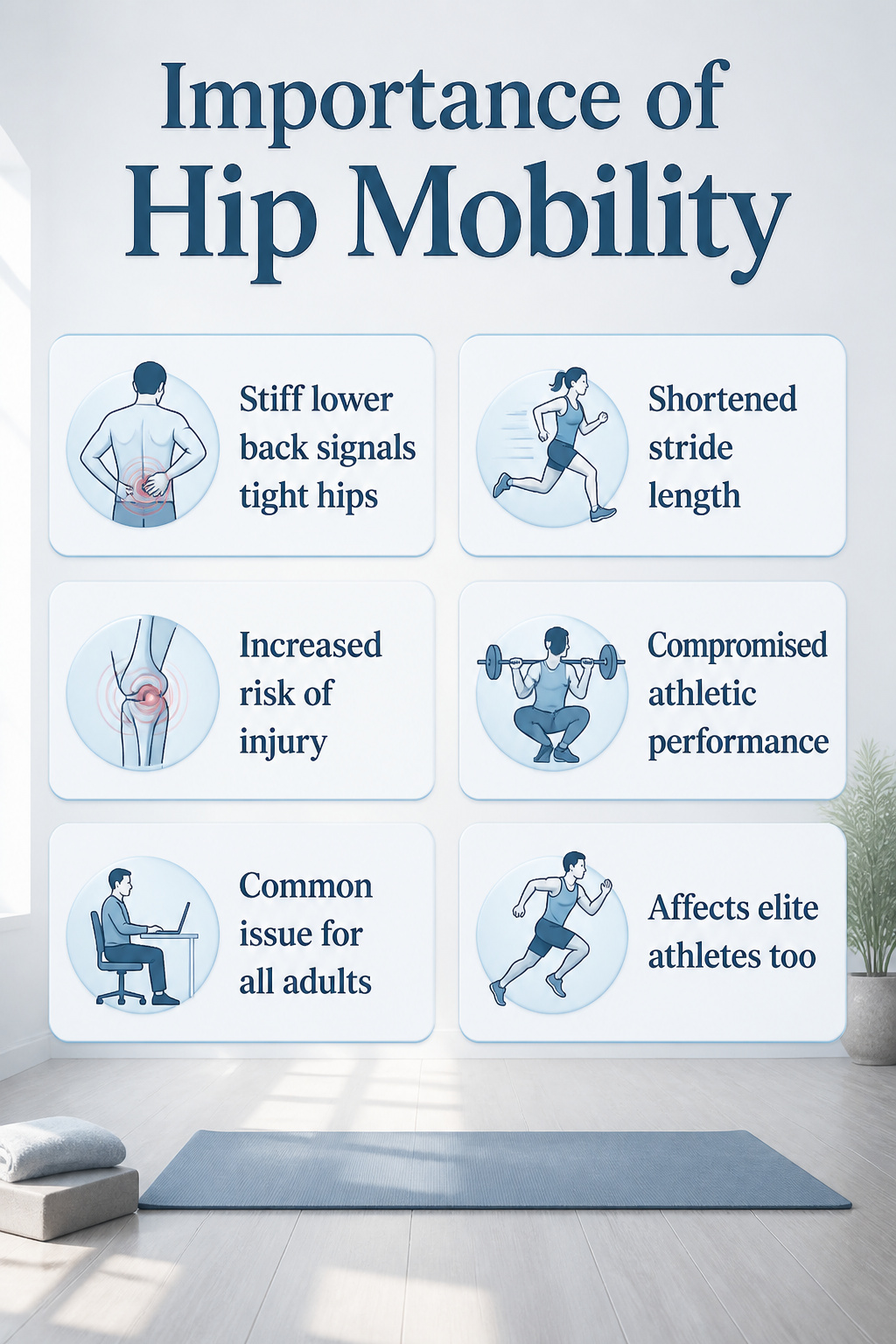
Tight hips rarely announce themselves as the problem. The signal usually arrives somewhere else: a stiff lower back after sitting through a meeting, or a knee that flares after an otherwise easy run. That pattern of compensation is exactly why hip mobility deserves attention before pain shows up.
When the hip flexors, particularly the psoas that connects the femur to the lumbar vertebrae, lose their full range of motion, the body borrows movement from the joints above and below. The lower back arches to make up for hip extension the hips can no longer provide. Stride length shortens, and the knee absorbs torque it was not built to handle. Over months and years, these small substitutions become overuse injuries.
The same restriction undermines performance even without acute pain. Squats stop at parallel instead of dropping deep. Running uphill demands more energy for the same pace because hip extension is limited. Power drops because force production starts from a compromised position.
What convinced me, reading through the sources on this, was how universal the problem is. Even elite athletes struggle with hip mobility according to physical medicine specialists; the modern amount of sitting affects nearly everyone. The hips are the body’s central hinge. When they are mobile, power transfers cleanly from the legs through the core. When they are not, the surrounding joints pay the price.
What Causes Tight Hips
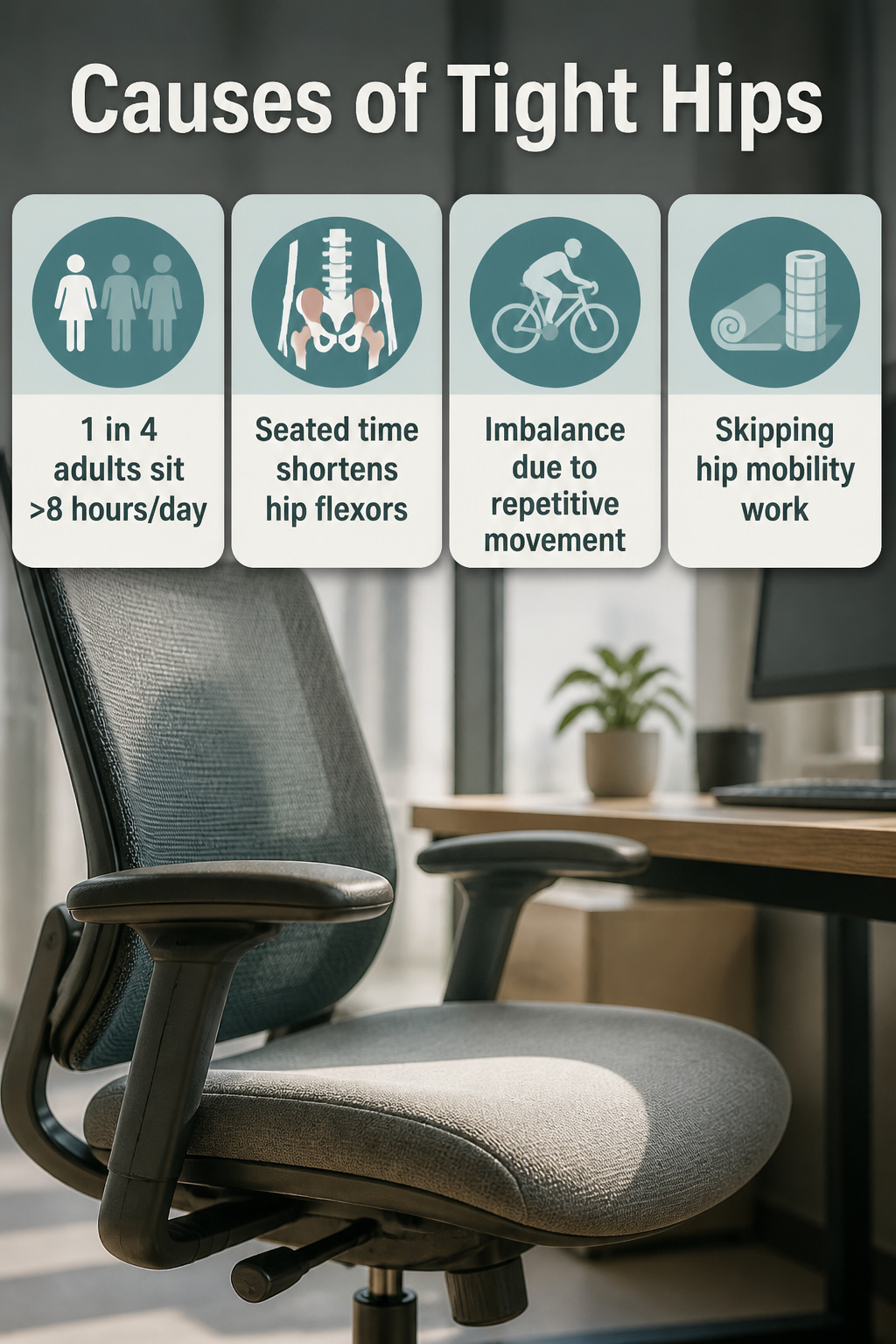
Nearly 1 in 4 American adults sit for more than eight hours a day, and those hours add up in ways the body does not forget. The hip flexors, the muscles running along the front of the hip, spend that seated time in a shortened position. Over months and years, they adapt by staying short, which limits how far the pelvis can rotate and often feeds stiffness into the lower back.
Repetitive movement without balance does similar damage. Runners, cyclists, and anyone whose sport keeps the hip flexors and quadriceps working in the same pattern can overwork those muscles while the glutes fall behind. Weak glutes then leave the hip flexors compensating to stabilize the pelvis and spine, so tightness becomes a symptom of imbalance rather than simple overuse.
What convinced me, reading through the sources, is how often the fix gets skipped. Poor pre-workout hip mobility work and skipped post-workout drills let the problem set in before anyone notices. The hips do not complain early; they simply tighten until a squat feels wrong or a morning walk starts stiff.
When to Stretch and For How Long
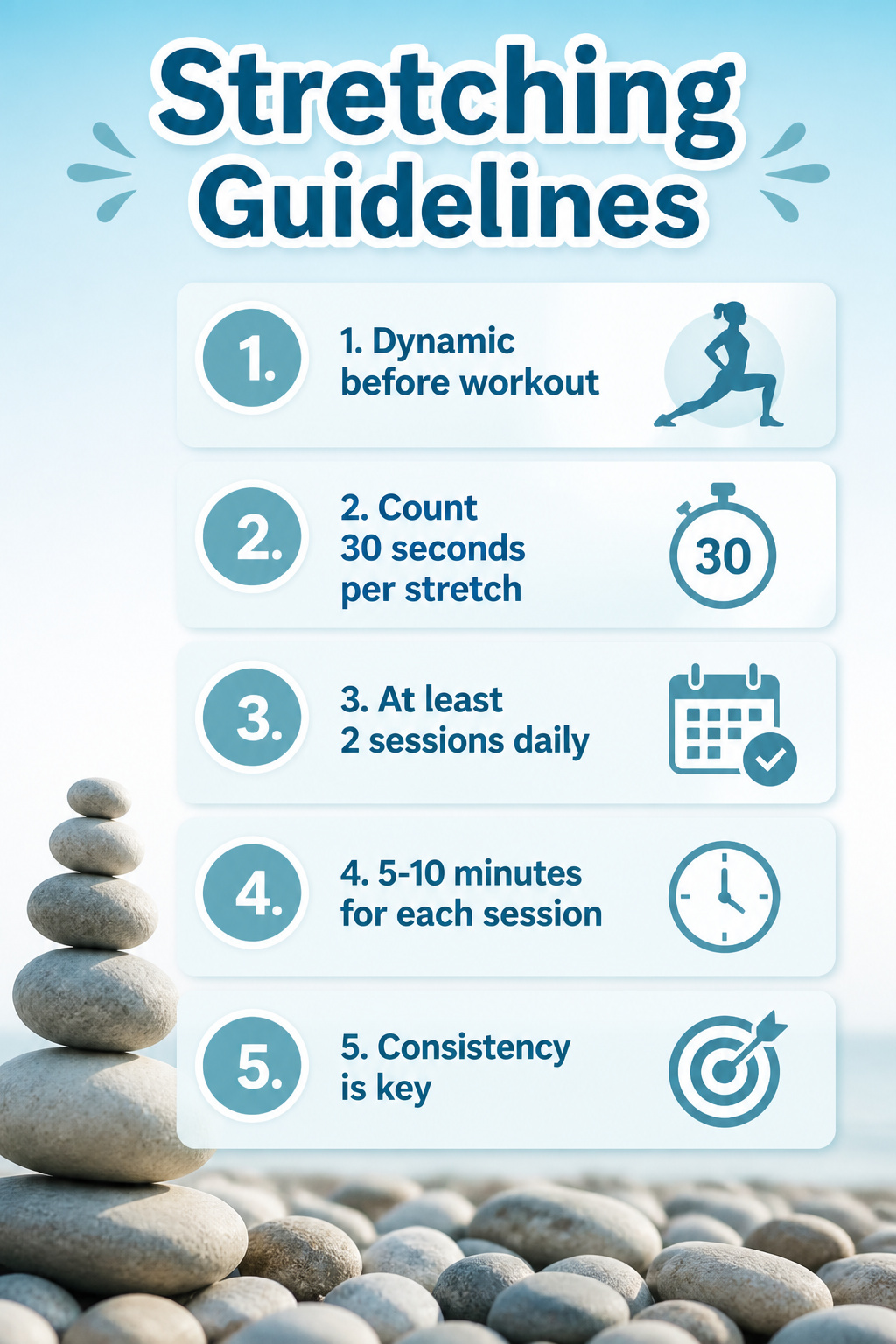
Dynamic stretches belong before a workout, static stretches after. That sequencing took me a while to accept, since my college track days left me holding hamstring stretches on cold muscles like a ritual. These days, leg swings and controlled articular rotations open my hips before a run; afterward, pigeon pose or a couch stretch gets the real hold time.
Hold each stretch for 30 seconds, and count it honestly. I used to rush through fifteen-second counts and wonder why the tension never released. Most sources land on the same prescription: at least two sessions daily if you are serious about change, with three times weekly as your floor. A single session runs five to ten minutes, which sounds slight until you realize that is thirty to sixty minutes of deliberate hip work across a week. Consistency beats duration, and the people who see results treat it like brushing teeth rather than a weekend project.
Frequently Asked Questions
What are hip flexors?
Hip flexors are a group of muscles that help you bend and lift your legs smoothly when you walk, run, climb stairs, sit, and bend over. The two primary muscles are the psoas, which runs from your lower back to your thigh bone, and the iliacus, which runs from your pelvis and hip to your thigh. Other helpers include the rectus femoris down the front of your thigh and the sartorius, which runs diagonally across it.
How often should I stretch my hips?
Most people benefit from 5 to 10 minutes of hip mobility work several times per week, with at least three sessions weekly as your floor if you are serious about change. If you train lower body or play a sport involving running, jumping, or changing direction, do hip mobility stretches before each session. Consistency matters more than duration; a single session runs five to ten minutes, and two sessions daily will speed progress.
What causes tight hips in active people?
Tight hips come from long periods of sitting, high-volume training, limited rotation, or muscular imbalances between the hip flexors and glutes. Nearly 1 in 4 American adults sits for more than eight hours a day, which shortens the hip flexors over time. Runners and cyclists can overwork those same muscles while the glutes fall behind, creating a compensation pattern that locks the hips down.
Is it normal for hip stretches to feel intense?
Hip stretches often feel strong because the tissues are thick and powerful, but the sensation should land as controlled tension, not sharp pain. If a stretch bites or stings, back off and check your form; a folded blanket or pillow can level the pelvis or cushion a sensitive knee. The goal is release, not endurance.